

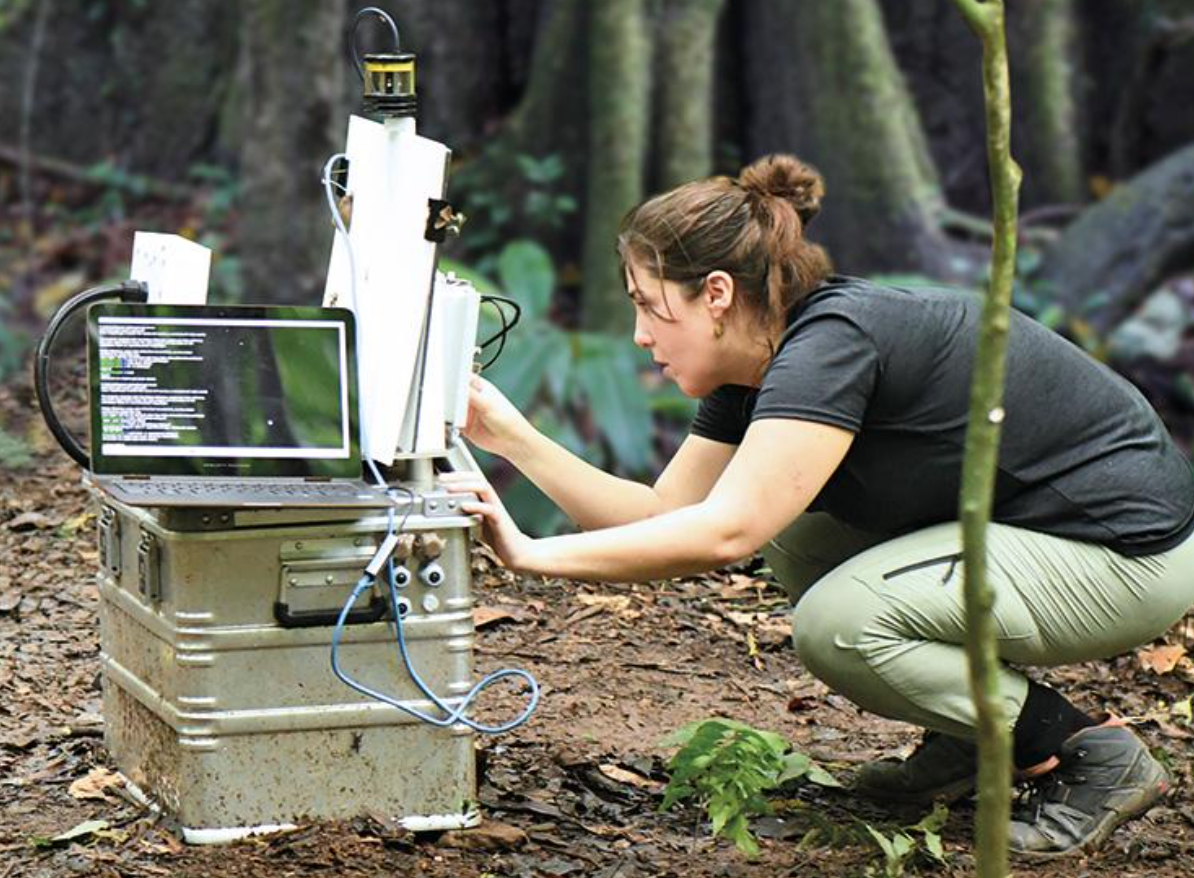
I was happy but surprised at the offer of an invited talk slot at 2025’s HPC-AI Advisory Council Annual Conference, hosted by SFTC DiRAC, on my SSI Fellowship theme of “Better Hardware, Better Research” - applying the principles of open source software to hardware, specifically in environmental science. The theme was “Trustworthy computing at a range of scales”; talk of open source microsystems feels a world away from massive HPE supercomputing clusters. But I gamely went along, and really enjoyed the event. The rest of this post is a condensed summary of the talk.
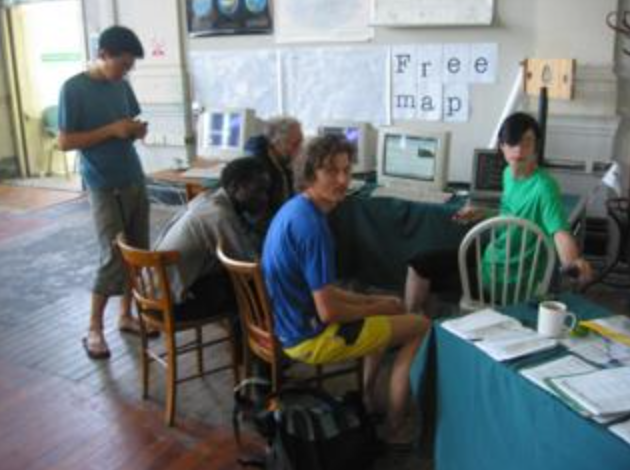
This picture is the best credential I’ve got to offer - 20 years ago, on the right in the green t-shirt, at Map Limehouse, coordinating the first OpenStreetmap mapping party. I may not have changed much, but the tech looks pretty retro now!
I got involved with OSM through local community wireless networks. These were the days before home broadband was widespread, or "smart" phones existed. A network of idealistic artists and hackers set up consume.net, then later Wireless London; our London Free Map project which got folded into OSM was a spin-off from that.
I was a software artist then, but I'm a "Research Software Engineer" now, working my way through different kinds of land survey organisations to end up at the UK Centre for Ecology and Hydrology. UKCEH has some lake environmental monitoring projects continuously in place since the 1940s! Monitoring work takes in atmospheric chemistry, air and water quality, biodiversity, and land use change. It's field samples, lab-based work, and electronic monitoring, as well as a lot of modelling.
UKCEH also hosts an Engineering Workshop, a kind of in-house hackerspace where a group of engineers collaborate with researchers on prototypes. Their best inventions aren’t electronic - like this river flume, designed neither to float or sink, that collects algae on ceramic plates infused with different chemicals. There are training courses in developing and debugging field electronics and sensors
There are "pockets of excellence" whose work is either inspired by open source hardware (the AMI+ system, a setup similar to the open source MothBox and growing some elements of the AudioMoth) or directly reusing it (bioacoustics surveys using the MicroMoth). Colleagues follow the progress of open source research hardware projects with intense interest, motivated by the potential of AI-assisted research - automating manual tasks, or aggregating many data sources to analyse whole landscapes or soundscapes.
But for larger infrastructure projects, the organisation still buys in proprietary dataloggers and devices. A few months after I joined UKCEH, I sat in on a project kickoff meeting, wondering why research hardware wasn't being considered in the same way as research software - open, collaborative, reproducible at minimal cost, with funder incentives to do so.
When the Software Sustainability Institute announced its call for Fellows for 2025, and a colleague encouraged me to apply, I didn’t have to think very long about the theme. I proposed to coordinate a series of workshops bringing together field researchers with hobbyist hardware hackers. I enlisted Libby Miller as a collaborator, bringing their model of participatory, hands-on, community-oriented “social invention” developed at BBC R&D.
I was full of visionary optimism, and soon discovered not only how much I don't know, but how much prior art and groundwork has been done. I want to highlight the work of Julian Stirling, the founder of the Open Flexure high resolution microscopy project. They say it all in Open instrumentation, like open data, is key to reproducible science. Yet, without incentives it won’t thrive.
Open Flexure is redistributed in the UK by Labcrafter, a startup founded by Margriet and Gerrit Nielsen, focused on open research hardware. It was when I read that Open Flexure had been supported by the NLNet fund for next generation internet infrastructure that I got an inkling of why my talk had been welcomed by the HPC-AI Advisory Council.
The work of the Open Source Hardware Association is essential here. The OSHWA certification programme offers a hardware equivalent of the Open Definition for data. If it’s OSHWA-certified,is reproducible and reusable without constraints.,
As an RSE, exploring hardware is a route away from "stick a camera on it" solutions, and approaches that reuse image deep learning architectures. To ask the same questions, gather the evidence, act on the answers, in ways that don't need as much data, storage, bandwidth, power or scale.
I’m also seeing from the perspective of the art practice of locative social media in the 2000s. The idealised future of "locative, ubiquitous and pervasive computing" has become a behaviour modification surveillance infrastructure. As technologists, it’s on us to plan for a built-in resistance, to consider whose hands our work could end up in, how it could be used.
The tendency to foresee the unexpected negative applications of new inventions put me off doing any creative technology work for a long time. I definitely have a tendency towards terrible inventions. This is one of my most least-favourites: a dog backpack LoRaWAN gateway/aggregator. The dog's going for a walk and gathering at the trees where its peers gather anyway. Why not collect and deposit telemetry on the way? As terrible inventions go, #dogtech relatively benign.
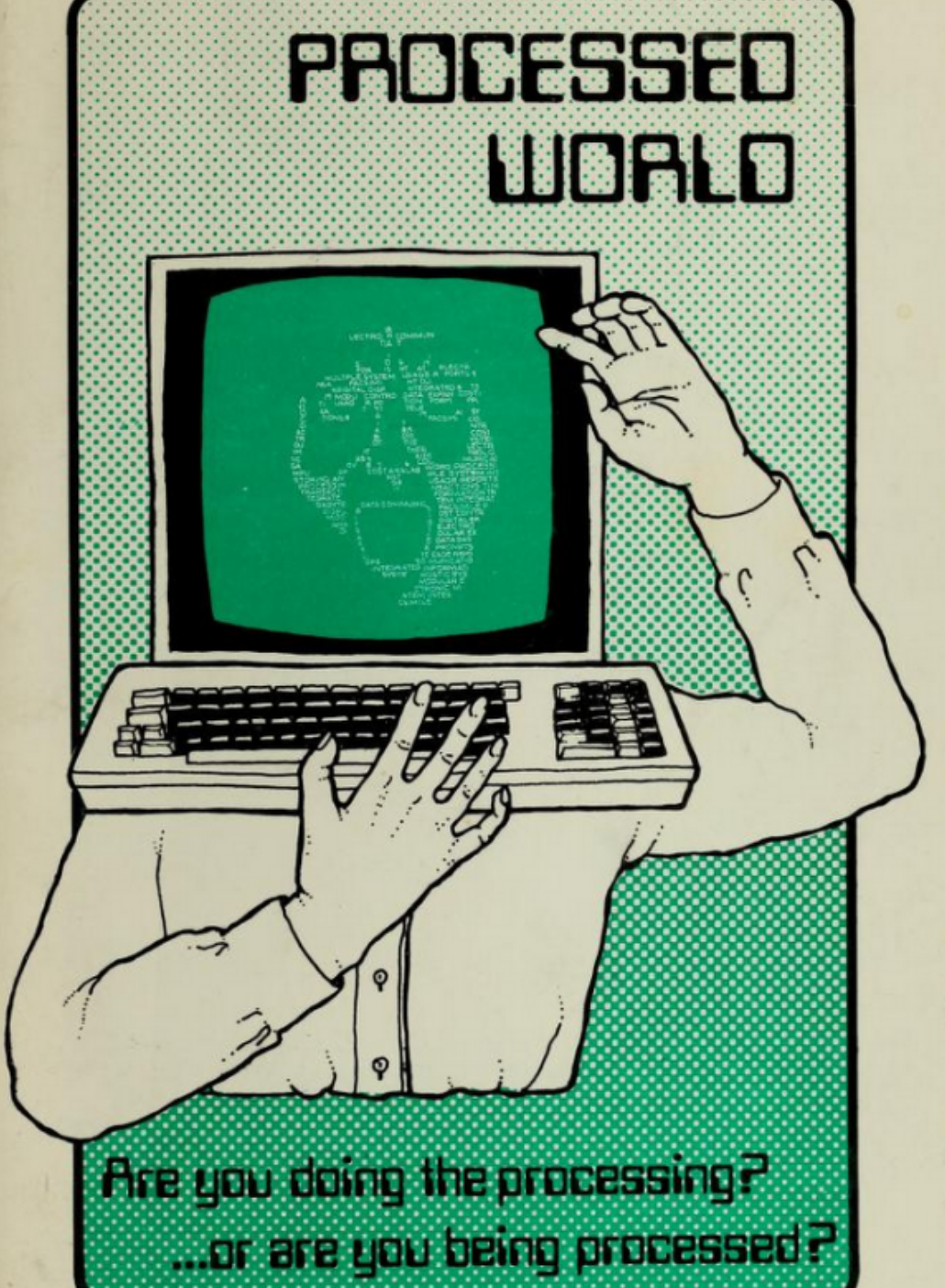
I'm inspired by the recent work and speaking of Dan McQuillan here, on the topic of "Decomputing" - Decomputing takes the idea of ‘computing within limits’ to refer not only to the scale of computational machinery but to limits of extractive and colonial logics, limits to a biosphere’s ability to recover, limits to our Western knowledge systems and limits to tech solutionism… rejection of scale as a heuristic for the way forwards".
As Libby Miller writes, "Change comes from coalitions of groups with the same interest" - but when you're interested in so many things, how do you find the smallest core of shared interest to move forward from? I visited the Gathering for Open Science Hardware to learn. And there are so many different kinds of interests there! Folks working on genomics, on lab instruments, in materials engineering. Glimpses of untapped potential for fundamental change in how we react to and modify our environment, at a scale that's hard to take in.
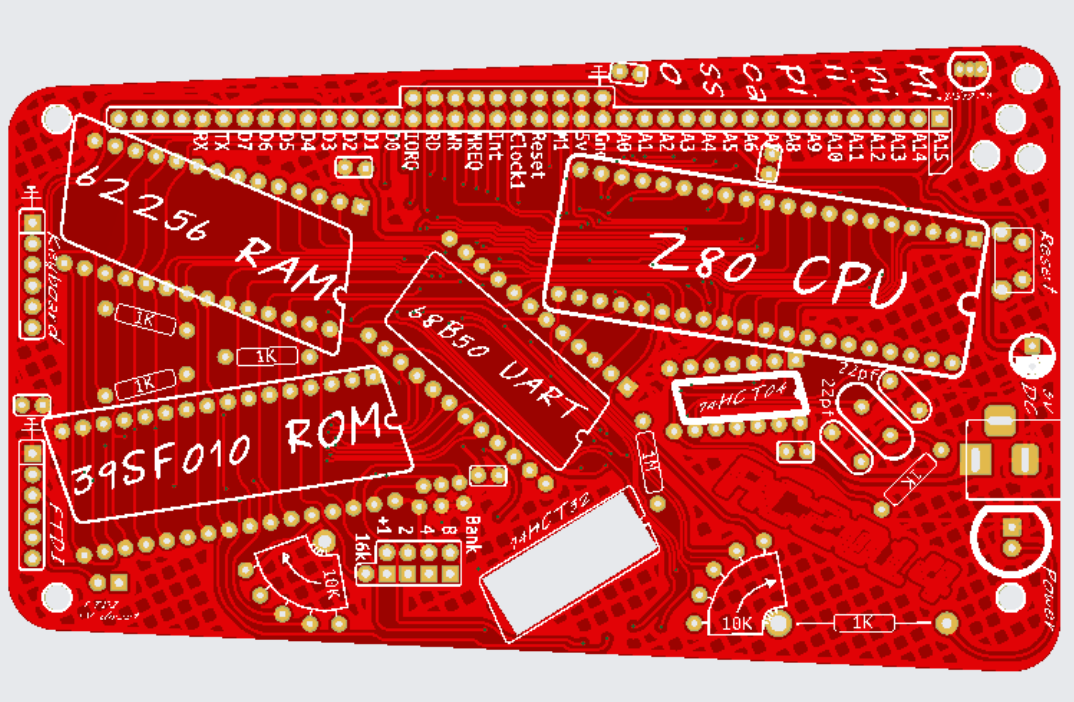
I wanted to end the talk on an up note, so offered this - the RC2014 Mini II Picasso. It's an open source hardware art project that was launched as an April Fool's joke that's also a shippable product serious. A beautiful piece of retro hardware design by a practitioner with a loyal interest community, a project full of joy and care. (I'm still halfway through building mine - I solder slowly!) For me, Open Source Hardware is as essential to joyful art computing, as much it is a conceptually essential part of Digital Research Infrastructure that supports open and collaborative science.