Blog originally published on DIRECT's LinkedIn page.
Ahead of our lightning talk at the OER26 event by the Association for Learning Technology in Milton Keynes (22–23 June 2026), we sat down to answer a few questions about the DIRECT Framework and why it belongs in a conversation about openness as a project of social transformation.
What is the DIRECT Framework and who is it for?
DIRECT is a community-driven, openly developed resource designed to define, visualise and track the progression of skills across a range of digital Research Technical Professional (dRTP) roles. It offers a structured set of competencies – both technical and non-technical – organised into four levels broadly mapped to Bloom's taxonomy, along with a webapp for visualising where individuals and teams sit within that landscape. It is for anyone who builds, supports or sustains the digital infrastructure of research and teaching in higher education: Research Software Engineers, Learning Technologists, Data Stewards, Digital Archivists, and the many academics who do this work without holding any of those titles.
Why do roles like Learning Technologists and Research Software Engineers struggle to define and articulate their skills; and why does that matter?
These roles are genuinely multidisciplinary, sitting at intersections that institutions don't always have tidy boxes for. Learning Technologists, whose distinct professional identity began emerging around 2004, blend pedagogy, technology, project management and communication in ways that resist simple job descriptions. Research Software Engineers face similar challenges: highly skilled, deeply embedded in research, yet often invisible in the structures that recognise and reward academic contribution. When you can't clearly name what you do, it becomes harder to make the case for investment, career progression or even a permanent contract. That invisibility is not just a personal inconvenience; it is a structural problem that affects who stays in these roles and who never makes it in.
How does openness drive the way DIRECT has been built; and why does that matter for its credibility and sustainability?
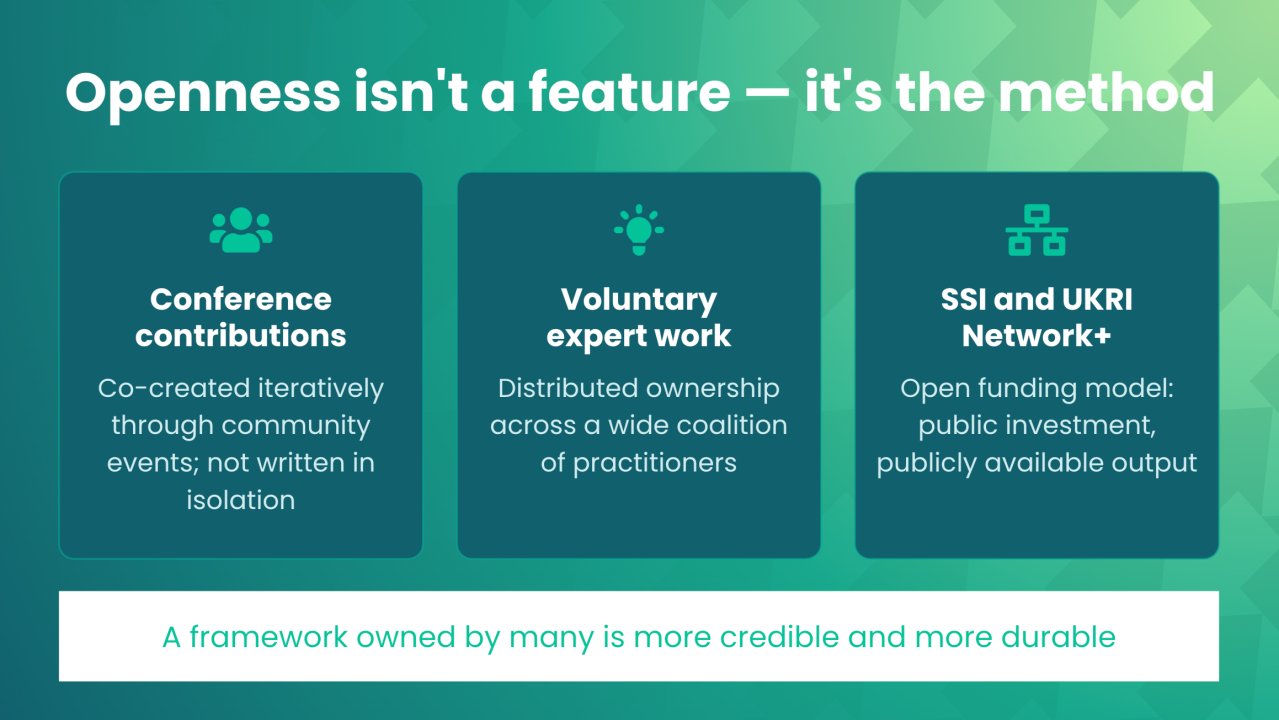
DIRECT has been shaped by voluntary expert contributions, developed iteratively through conference engagements, and supported by the Software Sustainability Institute and UKRI Network+ funding; a model that distributes ownership rather than concentrating it. That openness is not incidental; it is what makes the Framework credible to a diverse community, because the community helped write it. It also makes it more durable. Frameworks that are owned by a single institution or vendor tend to calcify or disappear; one that grows from a broad coalition of contributors is far more likely to remain relevant and maintained as the landscape shifts.
The Framework is reaching into communities around green research, community management, mental health, neurodiversity and teaching; how does that happen, and what does it reveal about who "counts" as a dRTP?
It happens because openness creates an invitation. When a framework is genuinely accessible and community-led, people bring their own contexts to it rather than waiting to be included. Researchers working on sustainability, practitioners advocating for neurodivergent colleagues, those thinking carefully about wellbeing in high-pressure research environments; all of them are finding that DIRECT's competency language speaks to something in their work. What that reveals is that the boundaries around "technical" roles have always been somewhat artificial. The people who keep research and teaching functioning are a much wider and more diverse group than the original RSE framing suggested.
What would it look like if every institution genuinely recognised and supported the full range of digital research technical professionals; and is DIRECT a step towards that?
It would look like institutions coordinating across departments to establish agreed job descriptions – recognised within HERA – so that dRTP roles are consistently defined, fairly graded, long-term, and no longer reinvented from scratch each time a post is created. It would mean academics who do dRTP work alongside their research being able to name and claim that contribution. DIRECT cannot deliver all of that on its own; structural change in higher education requires institutional will and policy commitment. But a shared, open, community-owned framework for articulating these skills is a necessary precondition. You cannot advocate for what you cannot describe. In that sense, yes; DIRECT is a step, and an openly made one.
The lightning talk "DIRECT Framework: defining and visualising skills for digital Research Technical Professionals" is part of the track "Openness as a project of social transformation" at OER26, hosted by the Association for Learning Technology in Milton Keynes, 22–23 June 2026. Find out more at directframework.com.