


Image: Increasing funds. Photograph: Kschneider2991 via Pixabay
The SSI Fellowship has given me many opportunities to develop and supplement my diverse set of skills while being part of a community; developing the DIRECT Framework. However, the long term sustainability of this and many other projects is of course dependent on access to funding. I have worked on funding applications before: within my University, as part of national and international calls, and in a voluntary capacity to run cookery workshops and live music events. There are parallels between academic and third-sector funding applications, and I have not had formal training in either.
I booked on a course, suggested by my SSI mentor, titled ‘Writing a Successful Funding Application’ from School for Social Entrepreneurs. In their own words:
“This short course provides a beginner’s guide to how to write a successful funding application… It is designed for people who haven’t written a funding application before, or want a refresher on the fundamentals of writing a successful application in a competitive funding landscape.”
I don’t quite fit into their target audience, however, I thought there would be enough common ground and transferable learning outcomes to be worth registering.
Applying transferrable skills
There were several items on the agenda which I could directly use in my academic-related work:
- Describing activities, outcomes and impact, and the differences between these terms.
- Writing clearly and concisely, re-fitting to a tight word limit only after you have answered every part of the question.
- Defining a budget template, evidencing costs, even if you do not include all the details in the submission.
A welcome component of the course was a completed application to the Awards For All fund, as it is unusual for successful applicants to share the details in a highly competitive environment. I was able to see examples of the course lessons in a real scenario, helping me to understand the guidance.
Next steps
The 3-hour course was a good use of my time. Even though the example given was for a National Lottery Community Fund which I am not likely to apply for (again*), I am able to transfer lessons of best practice to my work. This will help me to work more efficiently and effectively immediately when applying for funding.
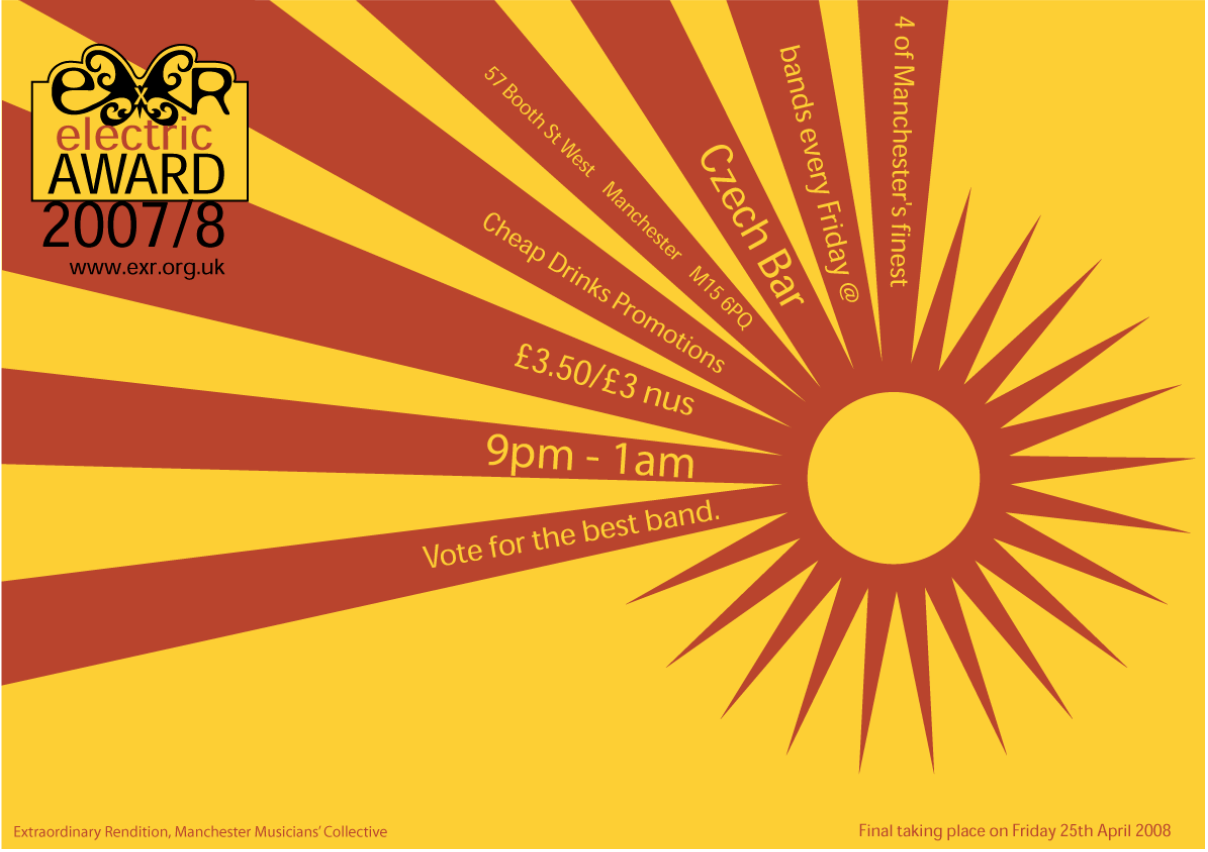
Image: Poster for the 2007 Lottery-funded “EXR Electric Award” battle of the bands series.
Footnote: *I have successfully applied for National Lottery funding before, in 2007, when I put on a “battle of the bands” series, enabling local photographers and recording studios to work with emerging music acts. The “EXR Electric Award” was hosted at Czech Bar then The Carlton Club in Manchester, and ran for 23 weeks.