Skip to main content Site map
Old Tag
Hackdays
HomeNews and blogs hub

Register now for the UNIVERSE-HPC Hackathon

Bookmark this page Bookmarked

Register now for the UNIVERSE-HPC Hackathon

Author(s)
Denis Barclay

Denis Barclay

Communications Manager

Posted on 17 April 2024

Estimated read time: 2 min
Sections in this article
Share on blog/article:
LinkedIn

Register now for the UNIVERSE-HPC Hackathon

Universe HPC logo

UNIVERSE-HPC will run their first Hackathon on Friday 26 April from 10:00 to 16:30 BST. The event will take place in person in Oxford and online. This one-day Hackathon aims to enhance the course materials that UNIVERSE-HPC have been developing over the past couple of years. This will be a great opportunity to network with people interested in training for RSEs, contribute to training materials, and learn about Gutenberg, a new training platform! 

There will be three strands that you can get involved in and contribute to: Course content, from beginner to advanced topics; Infrastructure, enhancing/extending/contributing to the Gutenberg training platform; and Pedagogy, creating learning objectives for lessons. You can already have a look at the list of open issues if you’d like, though you’re by no means restricted to this list. 

This will also be a fantastic opportunity to learn about using and deploying Gutenberg, an open-source teaching platform developed at the University of Oxford, that you could use in your own teaching. Gutenberg uses course materials written in Markdown and offers the features of a learning management system, for example, giving access to a specific group of enrolled students and tracking their progress through a course. Have a look at an example deployment from Oxford

Don't miss out on this exciting opportunity to enhance your skills, contribute to training materials, and network with people interested in training for RSEs. Register now to secure your spot!

HomeNews and blogs hub

FAB23: A Journey to Bhutan's Fab Lab Conference

Bookmark this page Bookmarked

FAB23: A Journey to Bhutan's Fab Lab Conference

Author(s)
Saranjeet Kaur Bhogal

Saranjeet Kaur Bhogal

SSI fellow

Posted on 14 March 2024

Estimated read time: 5 min
Sections in this article
Share on blog/article:
LinkedIn

FAB23: A Journey to Bhutan's Fab Lab Conference

FAB Bhutan Logo

Established in 2009, the Fab Foundation was created with the aim of fostering and nurturing the expansion of the global fab lab network and the establishment of regional capacity-building organisations. Originating from MIT’s Center for Bits and Atoms Fab Lab programme, the foundation's mission revolves around granting access to tools, knowledge, and financial resources to facilitate education, innovation, and invention through technology and digital fabrication. This enables individuals to create (almost) anything, generating opportunities to enhance lives and livelihoods globally. The primary beneficiaries of the Fab Foundation are community organisations, educational institutions, and non-profit entities.

In July 2023, I had the opportunity to attend my first Fab Lab conference, FAB23 in Thimphu, Bhutan. This 19th edition of the international Fab Lab Conference and Symposium encompassed the Fab Bhutan Challenge, the Fab Festival Thimphu, the FAB23 Conference, and the Fab City Summit. My participation extended across the Festival, Conference, and City Summit. 

Main theme and Pillars

Guided by the theme "Designing Resilient Futures," FAB23 delved into Bhutan's transformative journey, exploring the interconnected pillars of Technology, Youth and Education, Economic Opportunity, and Innovation, Sustainability, and Community. The overarching goal was to maximise the conference's impact and address the evolving challenges with a forward-thinking approach.
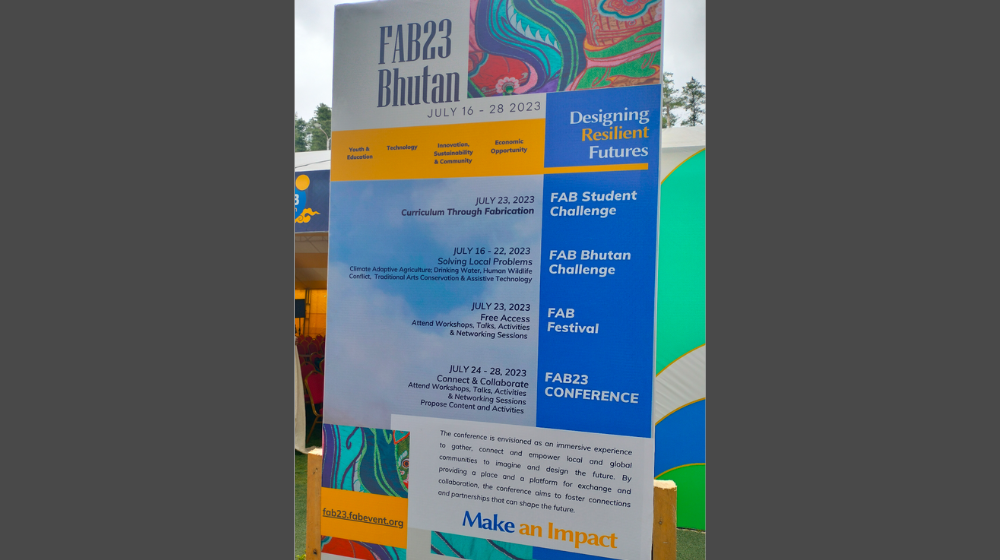
FAB23 Bhutan bannerFAB23 Bhutan banner

Fab Festival: Inspiring Local Communities

On July 23rd, 2023, the Fab Festival took place in Thimphu, Bhutan, serving as a one-day public celebration dedicated to showcasing digital fabrication to the local community. This event actively encouraged makers and their families to engage in various activities, such as hands-on workshops, playful competitions, and technical talks delivered by notable makers and innovators. The festival's primary objectives were to inspire and empower the local community while highlighting the diversity of makers and their contributions from Bhutan and worldwide. Beyond its celebratory nature, the festival served as an educational platform, providing an opportunity for attendees to gain insights into digital fabrication and its potential to foster sustainable solutions for local communities. 
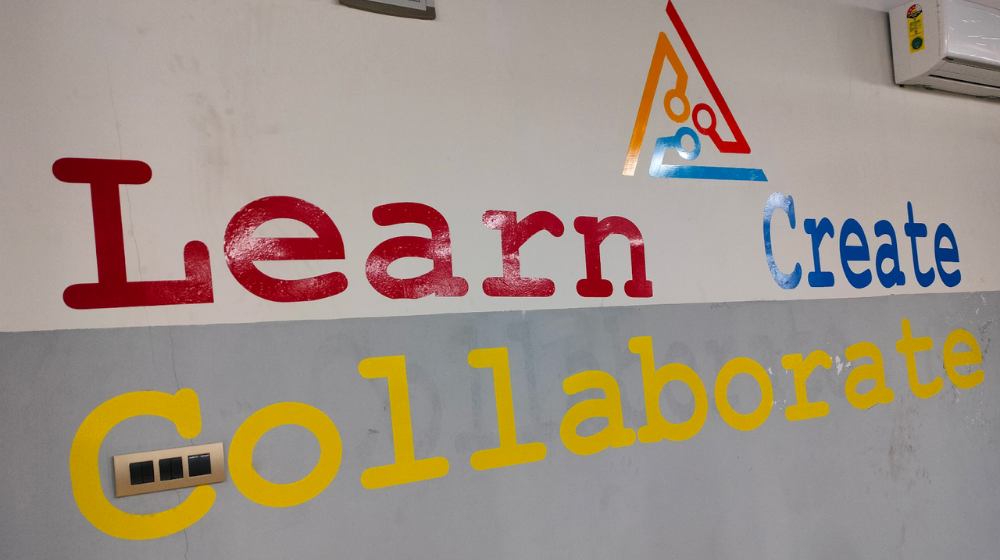
Learn, Create, CollaborateLearn, Create, Collaborate

FAB23 Conference and Symposium

Taking place from July 24th to 27th, 2023, the FAB23 conference was held at the Jigme Namgyel Wangchuck Super Fab Lab (JNWSFL) in Thimphu, Bhutan. This conference served as a platform for participants to present their work, exchange ideas, collaborate on projects, and learn about the latest trends and developments in digital fabrication and its associated fields. The event encompassed a diverse array of activities, including workshops, talks, panels, and various events. With a mission to cultivate a culture of innovation and sustainability, the conference aimed to motivate both local and international communities to actively participate in digital fabrication, viewing it as a catalyst for positive change under the theme of "Designing Resilient Futures." Conference attendees engaged in activities such as exploring the latest trends in digital manufacturing, attending informative talks and panels covering diverse topics related to digital fabrication, participating in hands-on and theoretical workshops to acquire new skills and techniques, and networking with global community members to establish valuable connections.
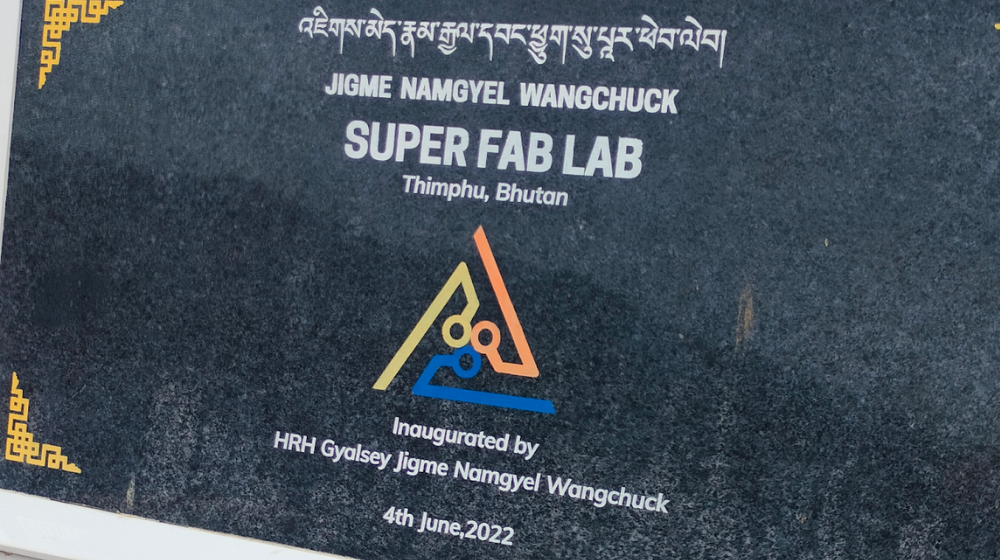
Jigme Namgyel Wangchuck Super Fab Lab, Thimphu, BhutanJigme Namgyel Wangchuck Super Fab Lab, Thimphu, Bhutan

My Contribution: Advocating for Research Software Sustainability

During the Innovation, Sustainability, and Community track at the FAB23 conference, I presented a talk on “Making research software reproducible and sustainable”. This presentation explored the concept of research software and emphasised the importance of making it reproducible. It delved into various approaches and strategies that can be employed to achieve reproducibility in research software, enabling the scientific community to validate and build upon previous work effectively.
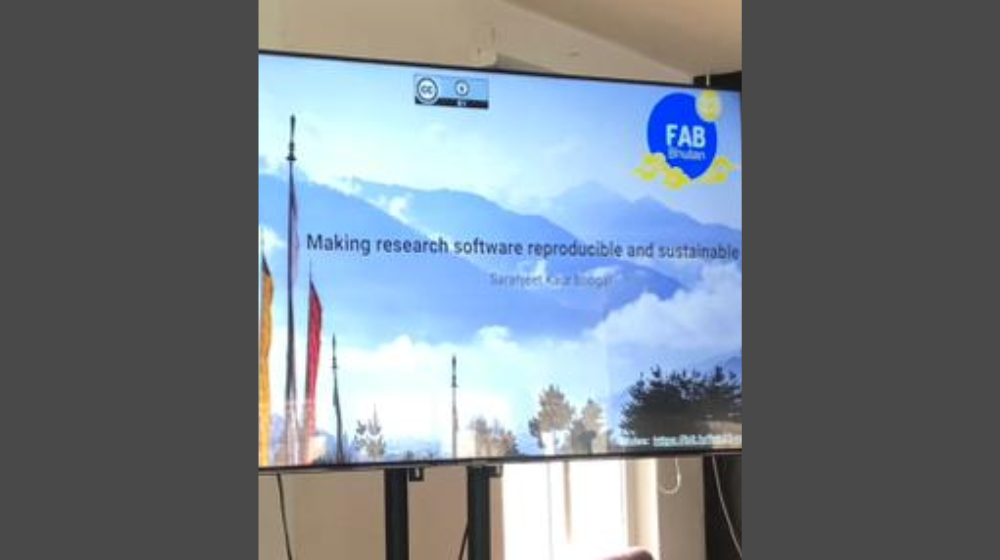
My presentation on “Making research software reproducible and sustainable”My presentation on “Making research software reproducible and sustainable”

Fab City Summit

On July 28, 2023, the Fab City Summit took place, offering a dynamic and interactive experience. With a variety of activities and sessions, the summit aimed to stimulate creative and critical thinking among participants regarding the challenges facing cities today. Engaging in the Fab City Summit provided attendees with a chance to actively contribute to a global conversation on creating sustainable and accessible futures for cities, aligning with a movement that actively shapes the trajectory of urban development.
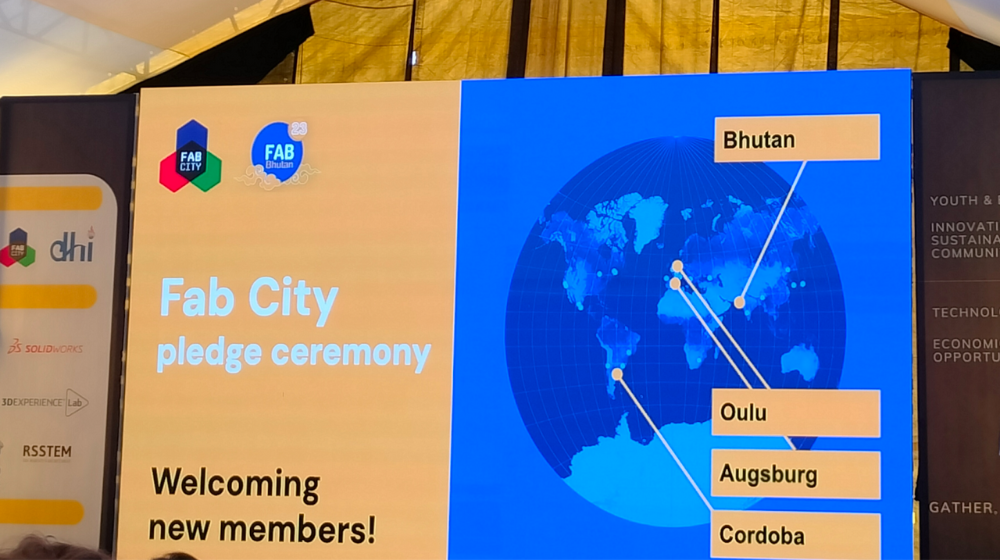
FAB City Pledge Ceremony (Welcoming new members)FAB City Pledge Ceremony (Welcoming new members)

Conclusion

Having the chance to attend FAB23 was invaluable. The event provided a platform for learning and exploring new ideas and also presented an exceptional networking opportunity. Connecting with professionals, enthusiasts, and experts in the field allowed me to expand my network, exchange insights, and build relationships that can potentially lead to collaborations and future opportunities.


Know more:

  1. Getting started with Fab Labs
  2. Global directory of Fab Labs
HomeNews and blogs hub

Exploring the APAN56 Conference in Colombo, Sri Lanka

Bookmark this page Bookmarked

Exploring the APAN56 Conference in Colombo, Sri Lanka

Author(s)
Saranjeet Kaur Bhogal

Saranjeet Kaur Bhogal

SSI fellow

Posted on 29 February 2024

Estimated read time: 4 min
Sections in this article
Share on blog/article:
LinkedIn

Exploring the APAN56 Conference in Colombo, Sri Lanka

APAN 56 logo

Introduction

From 21-25 August 2023, I had the privilege of attending the 56th Asia Pacific Advance Network (APAN56) meeting held in Colombo, Sri Lanka. This event allowed me to pick up where I left off after the APAN55 meeting in Nepal. In this report, I'll take you through my journey at APAN56, sharing valuable insights, experiences, and the exciting new developments that unfolded during this conference.

Day 1: Setting the Stage

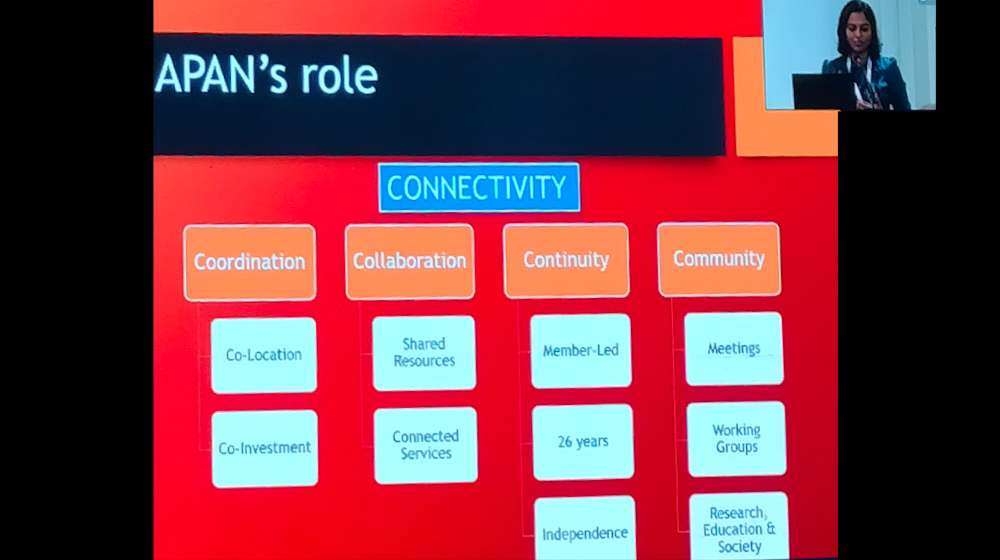
The opening day of APAN56 began with a session on 'Introduction to the Asia Pacific Advanced Network (APAN)' led by Liana Jacinta. This session laid the foundation for the entire conference, delving into critical topics such as reach, performance, collaboration, trust, innovation, and community within the National Research and Education Networks (NRENs). We explored the diverse models of NRENs, ranging from private companies to government agencies, and the unique challenges they face across various economies. APAN's pivotal role in uniting these networks through coordination, collaboration, continuity, and community involvement was a central theme. Additionally, the APAN Fellowship program, which fosters global collaboration by supporting fellows to attend APAN meetings, was highlighted. It was heartening to see all the APAN56 fellows share their objectives for participating in this event.

Liana Jacinta presenting “Introduction to APAN”

Liana Jacinta presenting “Introduction to APAN”

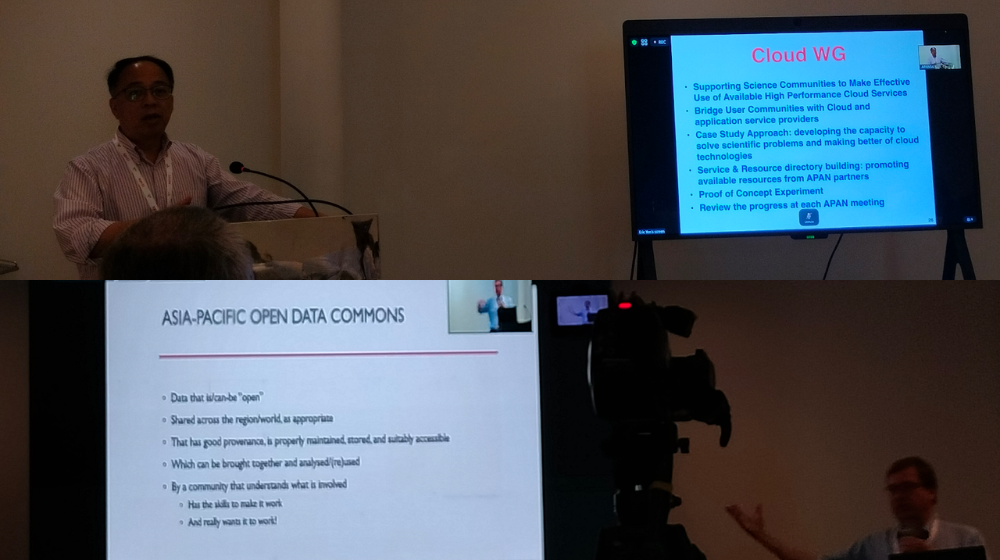
In the following sessions, I had the opportunity to learn about the Cloud working group's efforts to facilitate science communities' effective use of high-performance cloud services. At the open and sharing data group session, Markus Buchhorn painted a vision of the Asia-Pacific Open (research) Data Commons and discussed the apprehensions researchers have about working openly. Markus emphasised the importance of demonstrating change rather than merely talking about it, a crucial takeaway for all attendees.

Presentations at the Cloud Working Group and the Open and Sharing Data Group sessions

Presentations at the Cloud Working Group and the Open and Sharing Data Group sessions

Keynotes, Magazine Launch, and More

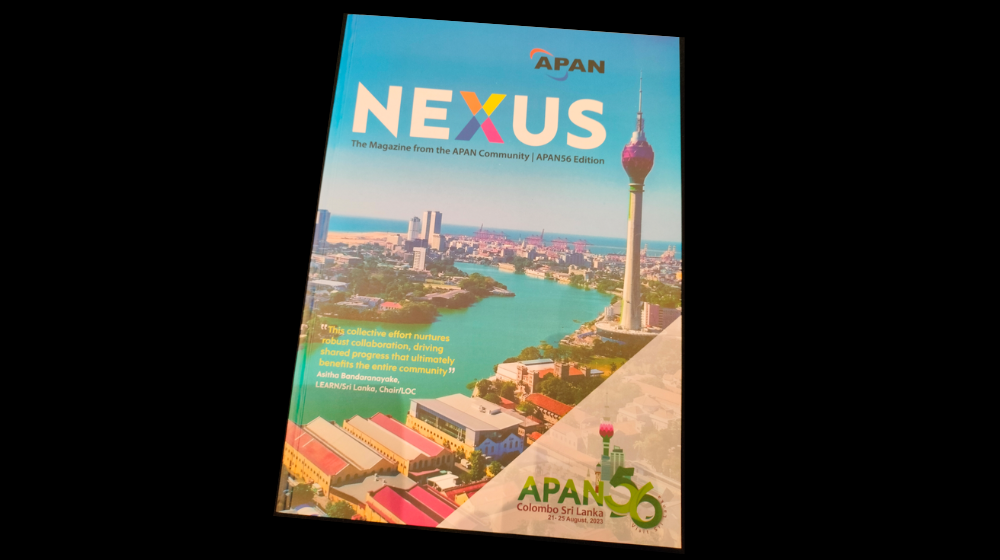
As the day progressed, I attended the keynote speeches and witnessed the launch of "Nexus," the official magazine of the APAN community. The magazine promises to be a valuable resource, providing insights and updates on the latest advancements in the field.

Nexus, the Magazine of the APAN community (APAN56 Edition)

Nexus, the Magazine of the APAN community (APAN56 Edition)

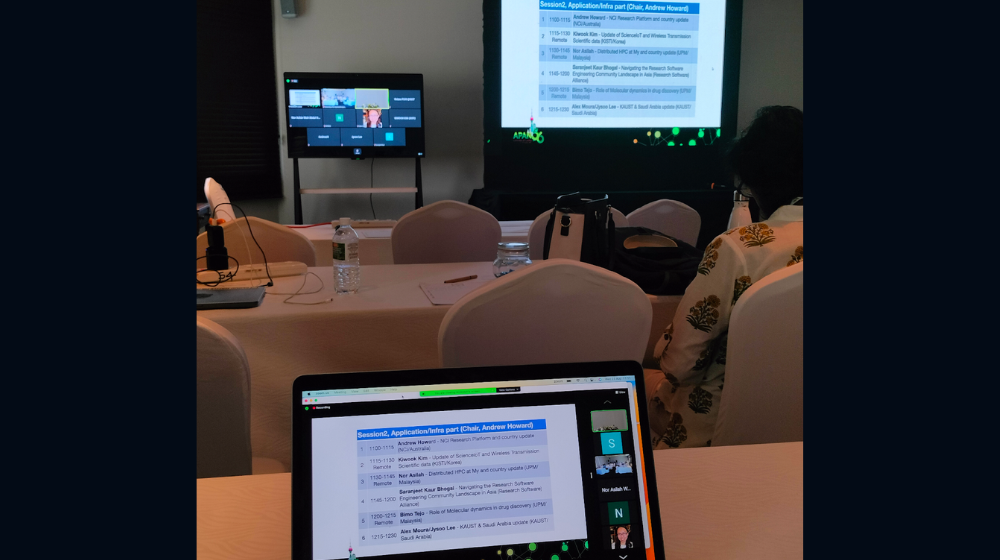
I also joined the Asia Pacific Research Platform (APRP) session, where I delved into the history of APRP. During this session, I had the opportunity to present my talk on "Navigating the Research Software Engineering Community Landscape in Asia," which was chaired by Andrew Howard.
 

My presentation at APAN56

My presentation at APAN56

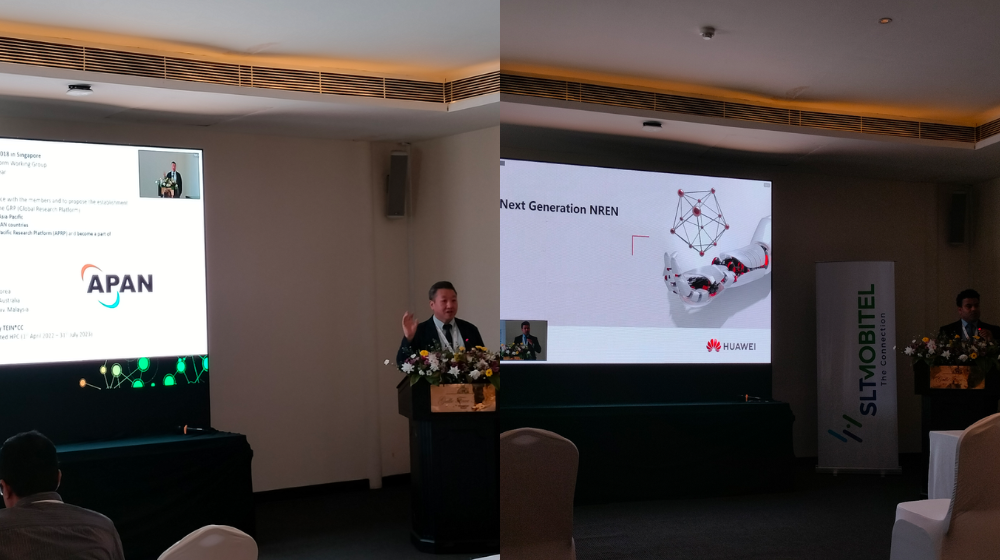
The industry session was particularly interesting, featuring engaging presentations by industry representatives who shared their visions for the next generation of NRENs. It was fascinating to envision the future of network research and education.

Presentations at the Asia Pacific Research Platform session and those by the Industry representatives

Presentations at the Asia Pacific Research Platform session and those by the Industry representatives

Conference Tracks

Throughout the conference, I explored a variety of tracks, with a particular focus on those related to artificial intelligence (AI). The diverse range of topics and presentations provided new perspectives. 

Conclusion

APAN56 was a truly unique experience. I was privileged to witness the introduction of new conference tracks, the launch of "Nexus'' magazine, and the emergence of countless opportunities and friendships. This meeting deepened my understanding of network research and education and reinforced the significance of collaboration and community in advancing our collective goals. I'm excited to take these newfound insights and connections forward and look forward to what the future holds for APAN and its vibrant community.

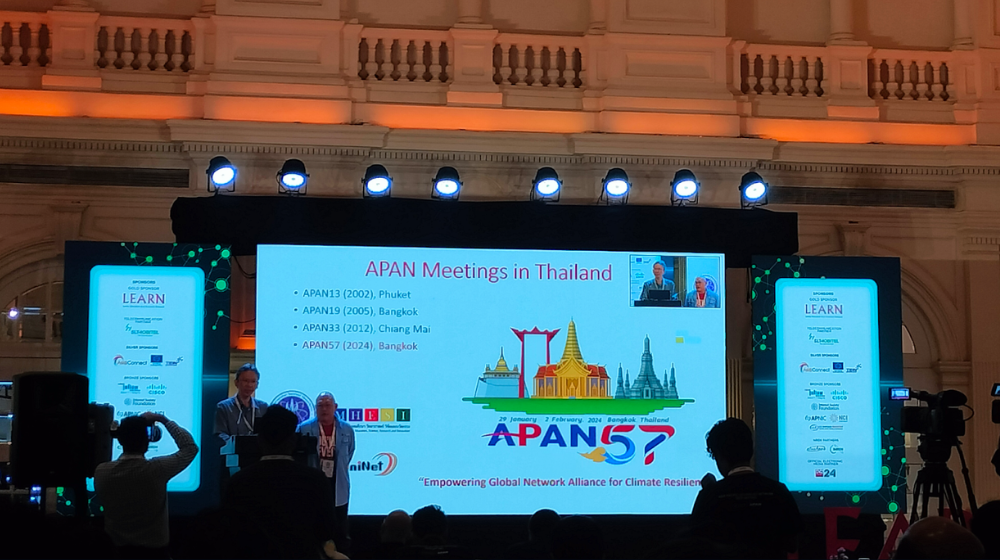
APAN57 in Thailand!

APAN57 in Thailand!

Images by Saranjeet Kaur Bhogal

HomeNews and blogs hub

UNIVERSE-HPC Seminar: Widening participation in education - what can we learn post-pandemic?

Bookmark this page Bookmarked

UNIVERSE-HPC Seminar: Widening participation in education - what can we learn post-pandemic?

Author(s)
Denis Barclay

Denis Barclay

Communications Manager

Posted on 21 February 2024

Estimated read time: 1 min
Sections in this article
Share on blog/article:
LinkedIn

UNIVERSE-HPC Seminar: Widening participation in education - what can we learn post-pandemic?

Universe HPC logo

UNIVERSE-HPC will run a hybrid seminar titled "Widening participation in education - what can we learn post-pandemic?" Thursday 29 February, 15:00 - 16:00, followed by a networking session from 16:00 - 17:00. The event will take place online and in person at Imperial College London, Room 658, Huxley Building, South Kensington Campus.

The seminar aims to explore through educational examples how programmes such as summer schools, live workshops, term-long courses, longitudinal programmes and others, have changed post-pandemic, enabling more people to access learning opportunities on data science and AI.

The event will feature Mishka Nemes, Skills and Training Manager at The Alan Turing Institute, as speaker. Mishka works at the intersection between AI, Skills and Education. She is interested in Responsible AI practices, deep-tech innovation within AI, as well as in building human-centred open access products with the user communities at the very core. Mishka has a background in computational neuroscience and genetics and is keen to bridge the gap and build connections between her interests and areas of expertise mentioned here.

HomeNews and blogs hub

FAIR-IMPACT: second open call for financial support

Bookmark this page Bookmarked

FAIR-IMPACT: second open call for financial support

Author(s)
Denis Barclay

Denis Barclay

Communications Manager

Posted on 30 January 2024

Estimated read time: 1 min
Sections in this article
Share on blog/article:
LinkedIn

FAIR-IMPACT: second open call for financial support

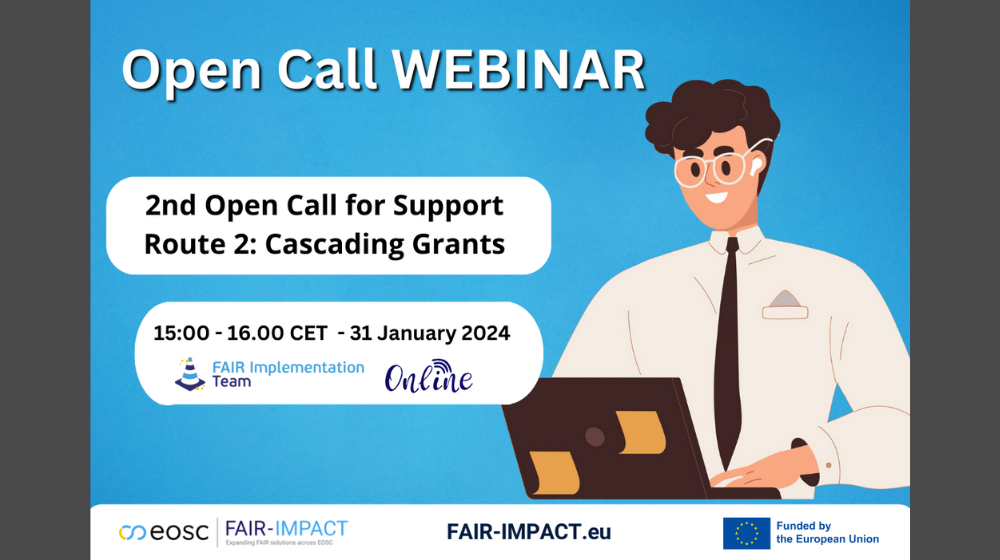
Open Call Webinar

FAIR-IMPACT's second open call for financial support launches later this month. This open call will include support actions relating to:

  • the creation of European Open Science Cloud (EOSC) compliant persistent identifier policies using the FAIRCORE4EOSC Compliance Assessment Tool (CAT)
  • implementing recommendations for the creation of FAIR research software
  • assessing the FAIRness of research software using a tailored version of F-UJI
  • implementing recommendations for improving the transparency and trustworthiness of data repositories
  • using FAIRsharing to share data policies and to monitor the research data policy landscape

Please join in on January 31 at 15:00 CET to learn more about each of the support offers you can apply to join and what financial support will be made available for each. The hour long session will provide information on what is expected of participants, the skills and expertise necessary to participate in each offer, and how to apply. There will also be time for questions from the participants.  

Registration for this webinar is free and open to all.

HomeNews and blogs hub

Workshop: environmental code of long-term value

Bookmark this page Bookmarked

Workshop: environmental code of long-term value

Author(s)
Denis Barclay

Denis Barclay

Communications Manager

Posted on 12 October 2023

Estimated read time: 3 min
Sections in this article
Share on blog/article:
LinkedIn

Workshop: environmental code of long-term value

SSI Fellow Michael Tso is among the organisers of a community workshop focused on the environmental code of long-term value. This free hybrid event, which is tailored for both NERC data centres and environmental modellers, is scheduled for Tuesday 21 November and will be conducted online as well as in person at UKCEH, Lancaster.

The main goal of NERC data centres is to ensure that environmental data are made available, accessible, and reusable for the long term to fully realise their value. Environmental data includes data collected in the field, samples analyzed in the laboratory, as well as model outputs that are underpinned by model code. Model code also plays a vital role in data analysis, understanding and visualisation, and decision-making. Thus, it is essential to consider model code in the same light as datasets regarding their long-term value. However, safeguarding the long-term value of model codes presents unique challenges that are not found in datasets. Model codes are prone to frequent changes, they may become unusable when software dependencies become obsolete, and ensuring their quality can be difficult.

UKCEH and the EIDC, which is part of NERC Environmental Data Services (NERC-EDS), are actively engaging with the environmental research community to understand the user community's needs concerning model codes. They are seeking input to foster ideas that can help both users and developers of environmental codes maximize their long-term value. Your input can also contribute to shaping future NERC strategies, policies, NERC EDS commissioning, and the development of the NERC model metadata catalogue.

 The workshop will cover a range of important themes, including defining what constitutes an 'Environmental Model Code of Long-Term Value,' exploring best practices and standards, addressing training and upskilling needs, delving into emerging principles and ideas, such as research objects, and discussing how to capture the long-term value of model codes. This will include considering the levels of FAIRness and metadata requirements.

Furthermore, the event will examine the role of data centres and long-term repositories in preserving these vital resources and provide a roadmap for the way forward.

If you are interested in participating, please fill in the registration form by Tuesday 14 November. T&S support is available.

HomeEvents and workshops

The Programming Historian Live, British Library (19 October 2015)

Bookmark this page Bookmarked

The Programming Historian Live, British Library (19 October 2015)

Organiser (s)
Events details
Location: 

British Library

Dates:

 19 October 2015

The Programming Historian Live, British Library (19 October 2015)

Programming Historian Live will take place on Monday 19 October in the British Library Conference Centre (Bronte room).
Based on a selection of the open access, peer reviewed tutorials at The Programming Historian this hands-on workshop will provide introductory software training with a focus on the needs and requirements of the historians.

The event will be lead by historians and cover tools, software, and computational approaches historians use in their research. The workshop is free to attend and is aimed at postgraduate and early-career historians, though historians of all career stages are welcome to attend.

The provisional schedule will include introductions to:

  • Data Structures (Extensible Markup Language, Extensible Stylesheet Language Transformation)
  • Pattern Matching (Regular Expressions)
  • Corpus Analysis (AntConc, Shell)
  • Web Scrapping (Wget)

Places are limited and can be booked on Eventbrite. Please note that attendees will be required to bring their own laptop. Questions and queries should be directed to Institute Fellow James Baker at drjameswbaker@gmail.com.

Programming Historian Live is funded by the Software Sustainability Institute, and is supported by the British Library, the Institute of Historical Research, and The Programming Historian.

HomeEvents and workshops

The Research Software Engineer AGM and Hackday

Bookmark this page Bookmarked

The Research Software Engineer AGM and Hackday

Organiser (s)
Events details
Location: 

Kings College London

Dates:

 15 | 16 September 2014

The Research Software Engineer AGM and Hackday

The Research Software Engineers community was founded to support the people who develop software used in research. If you want be a part of the community, come to our AGM and hackday which takes place on 15-16 September at King’s College London. It’s a free event thanks to our sponsor Maudsley Digital (no11WW).

Back in March 2012, we began raising awareness of the research community’s reliance on RSEs. In the last last year, we have made excellent progress in gaining recognition for RSEs. In the coming year, we want to continue this work, and attract more people to the community so that we have the weight of numbers to change how academia deals with its software developers.

Register now!

There are only 80 places available at the AGM and 60 at the hackday. If you want to attend, please register now.

The AGM and Hackday will take place at Ortus, which is based at King’s College London on 15 and 16 September 2014. More details are available on the registration page.

You can elect to attend either the AGM, the hackday or both events!

Agenda

15 September 2014 - AGM

  • 10.00-10.10: Welcome - Simon Hettrick
  • 10.10-10.40: Introduction to the RSE campaign - James Hetherington
  • 10.40-11.10: Keynote: Maudsley Digital - Kumar Jacob
  • 11.10-12.00: What's New?
    • A chance to talk to people about something that interests you. It could be a technology, an idea, a project or anything else that's interesting. It's your chance to interest people in your work, talk about new technology or get a problem solved.
  • 12.00-13.00: Lunch
  • 13.00-13.20: Introduction to the breakout sessions
    • Discussion groups where we can get a better understanding of issues that affect the research software engineer: careers, recognition, working in research, reward and other issues.
  • 13.20-14.20: Breakout session 1
  • 14.20-14.40: Reporting back session 1
    • In this session, we will hear back from the discussions that took place during breakout session 1.
  • 14.40-15.00: Coffee break
  • 15.00-15.40: Cloud session with Microsoft Research and Google
  • 15.40-16.40: Breakout sessions 2
  • 16.40-17.00: Reporting back session 2
    • In this session, we will hear back from the discussions that took place during breakout session 2.
  • 17.00-17.15: Final thoughts and election update
  • 18.00-19.00: Start of hackday, pizzas and pitches.

16 September 2014 - Hackday

  • 9.00-9.15 Welcome to newcomers and any questions
  • 9.15-12.00 Hack!
  • 12.00-12.45 Lunch
  • 12.45-13.00: Opportunity to send out call for skills
  • 13.00-15.45 Hack
  • 15.45-16.15 Presentations from hacks
  • 16.15-6.45 Coffee break whilst judges deliberate
  • 16.45-17.00 Prize giving and wrap up

The AGM

The AGM will feature various sessions designed to bring RSEs together, to swap expertise and to discuss how we can improve the situation of RSEs in academia The technology showcase provides you with time to discuss technology that you’ve developed, or just a technology that you like to use. Training sessions let you pass on expertise that you’ve developed to other RSEs. Finally, discussion groups let us pick your brains about issues that affect the RSE community so that we can better represent those views to research stakeholders

The Hackday

In collaboration with our sponsor, Maudsley Digital, we will run a hackday on 16 September which will focus on how activity data can be used to help understand and diagnose mental health issues.

We will provide activity data and monitors, cloud resources, food, coffee and - of course - plenty of RSEs to hack with. We’ll be asking clinicians to provide some pointers about the help that they need, but what you work on will be completely up to you. The best hacks will not only receive prizes, but will also get the chance to engage with Maudsley Digital to ensure that their work can be used to help the community.

The Elections

If the RSE Community is to last, it should be self-governing. For this reason, we will soon be holding elections for places on the committee that organises the community. The people who are interested in running the community will get the opportunity to present a lightning talk about why you should vote for them.

Thanks to our Sponsors!

We are indebted to Maudsley Digital who have provided us with an excellent venue and catering for the event. We would also like to thank Microsoft Research for providing tablets and passes for Azure Cloud. Other sponsors will be announced soon!

Last year's meeting

In 2013 we ran the first ever workshop for Research Software Engineers. If you would like to know where it all began, take a look at last year's workshop.

Subscribe to Events
Back to Top Button Back to top