Skip to main content Site map
Old Tag
Hackdays
HomeNews and blogs hub

Environmental model code of long-term value workshop: review and outlook

Bookmark this page Bookmarked

Environmental model code of long-term value workshop: review and outlook

Author(s)
Michael Tso

Michael Tso

SSI fellow

Posted on 10 July 2024

Estimated read time: 3 min
Sections in this article
Share on blog/article:
LinkedIn

Environmental model code of long-term value workshop: review and outlook

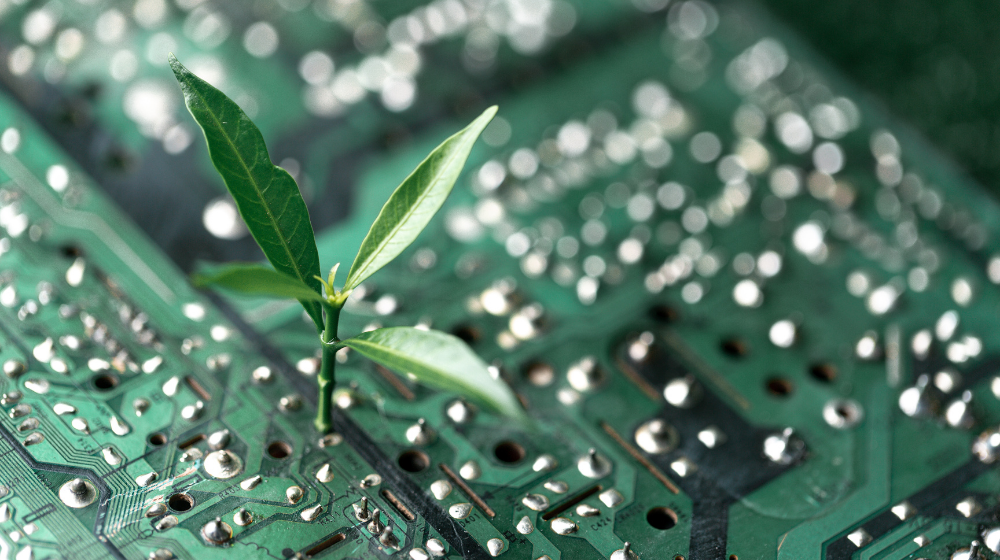
a plant sprouting out of a computer board

Since becoming an SSI Fellow in 2023, I have chatted with other Fellows and attended the Collaborations Workshops, which gave me many ideas I had not thought about in my Fellowship plans. Meanwhile, within my role at UKCEH, colleagues in the Environmental Information Data Centre (EIDC), a NERC EDS data centre, have started receiving requests to deposit model codes and are beginning to think more about how to curate and promote environmental model codes of long-term value. This open question led to discussions about the potential of bringing together data centres, software engineers, environmental modellers, and other practitioners for an ideation workshop to come up with principles to promote environmental model code of long-term value.

The event

The UK Centre for Ecology and Hydrology (UKCEH) has hosted on behalf of NERC Environmental Data Services (NERC-EDS) a workshop on the long-term value of environmental code on 21st November 2023. This workshop was funded and supported by the Software Sustainability Institute Fellowship award. 38 people registered for the hybrid workshop, with a good mixture of modellers, data managers or data stewards, data scientists, and research software engineers from different environmental science sub-disciplines. Among those who attended are SSI fellows Tom Russell, James Bryne, and Sam Harrison.

The workshop began with a keynote talk by Prof Chris Jewell (Lancaster University) on “The Generalised Epidemic Modelling (GEM) project: automating real-time infectious disease analysis“ and its role in COVID-19 modelling and reporting. The role of reproducible workflow and cyberinfrastructure was highlighted, and a new high-level modelling language (based on Python) for epidemic modelling was introduced.

This was followed by 8 lightning talks, covering a range of topics and experiences. It is encouraging to see that many in our community have already thought deeply about this topic and are enthusiastic to further this goal.

The rest of the day comprised breakout discussions on the FAIR requirements of environmental model code of long-term value. One striking observation is that many of the suggestions are in alignment with the recently published FAIR for research software principles (FAIR4RS). 

A continuing conversation

This event marks the start of a conversation on fostering the long-term value of environmental model code. If you would like to get involved, please get in touch with me or any of the SSI Fellows mentioned above. A follow-on blog post will highlight some of the findings of this workshop.

Workshop report

The workshop report is now published in Zenodo and NORA (NERC Open Research Archive).

HomeNews and blogs hub

Research Software Engineers in HPC (RSE-HPC-2024): Call for Abstracts

Bookmark this page Bookmarked

Research Software Engineers in HPC (RSE-HPC-2024): Call for Abstracts

Author(s)
Simon Hettrick

Simon Hettrick

Director of Strategy

Posted on 26 June 2024

Estimated read time: 2 min
Sections in this article
Share on blog/article:
LinkedIn

Research Software Engineers in HPC (RSE-HPC-2024): Call for Abstracts

US RSE and SC24 logos

RSE-HPC-2024 will be held as part of SC24 in Atlanta, GA, USA and online Sunday 17 November 2024, 9:00 am - 5:30 pm EST (UTC-5).

This workshop will bring together RSEs and allies involved in HPC, from all over the world, to grow the RSE community by establishing and strengthening professional networks of current RSEs and RSE leaders.

We encourage prospective participants to submit abstracts of proposed lightning talks (limit of 1 page, no format prescribed) on topics related to RSE issues. We particularly encourage talks on this year’s workshop theme of “RSEs and the Future of Computing” such as:

  • How will RSEs contribute to new technologies such as AI/ML, quantum computing, neuromorphic computing?

Other possible topics include, but are not limited to:

  • Career paths: how should RSEs be hired, promoted and evaluated?
  • Building RSE organizations: how to find RSEs in your country/region and how to motivate them to join the network and engage?
  • Supporting RSE organizations: what can be done to help RSEs (and those supporting RSEs) at international, national, regional, and local levels?
  • Making the business case for RSEs and RSE groups: evidence, case studies, tactics
  • How do we want funders to support RSE roles and activities?
  • Building in RSE requirements as part of wider research infrastructure
  • Providing mentoring and training for RSEs

The authors of accepted abstracts will be invited to present lightning talks or participate in panel discussions at the workshop. Note that SC24 is planning an in-person event and presenting in-person is encouraged. A supporting digital experience will accommodate those who cannot attend in-person due to travel restrictions or health concerns.

We particularly encourage submissions from first-time conference presenters and from members of groups that have historically been underrepresented in the HPC community.

Abstracts should be submitted to the submission website. The deadline for submissions is Friday 2 August at 11:59 PM AoE (UTC-12).

Timeline

  • Submissions open:  Monday 17 June 2024
  • Submissions due:  Friday 2 August 2024
  • Notifications sent:  Friday 23 August 2024
  • Program finalized:  Friday 27 September 2024
  • Workshop date:  Sunday 17 November 2024

Questions?

Contact the organizers at sc-ws-rse-hpc@info.supercomputing.org

HomeNews and blogs hub

Software in Polar Science 2024: a review

Bookmark this page Bookmarked

Software in Polar Science 2024: a review

Author(s)
James Byrne Profile Photo

James Byrne

SSI fellow

Posted on 25 June 2024

Estimated read time: 9 min
Sections in this article
Share on blog/article:
LinkedIn

Software in Polar Science 2024: a review

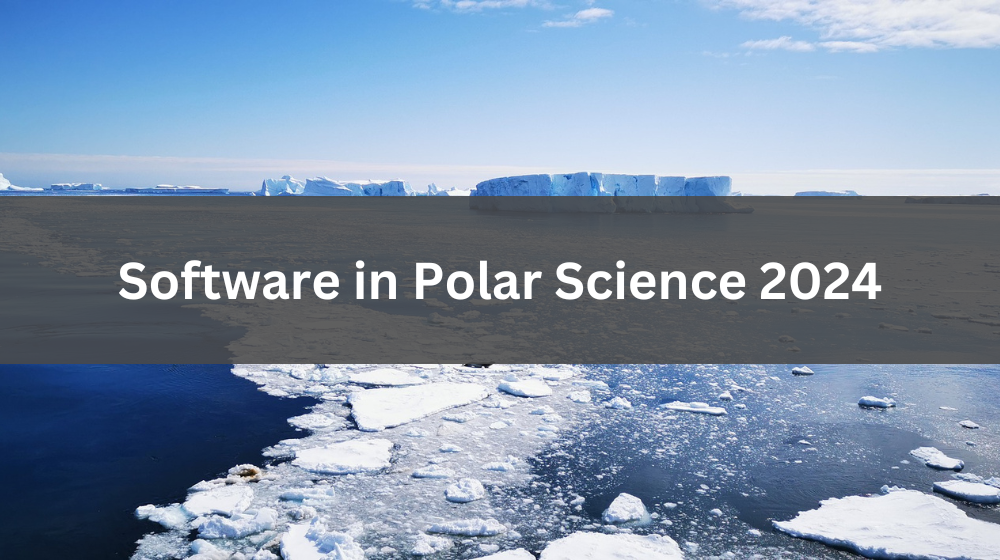
Software in Polar Science 2024

I was lucky to become an SSI fellow in 2022, (you can read a much longer article all about the journey that led through to this event here). I was definitely ambitious when I applied in speculating that during my fellowship (directly quoted from my fellowship screencast) I could:

  • “[act] as the public BAS champion of software in Polar Science”
  • “[publicise] BAS open source efforts and ongoing/future research”
  • “[contribute and adopt,] within BAS[,] tools from other areas”

Apparently, I was not a fan of commas at the time. I can take some heart in having achieved these objectives, to a greater or lesser extent, which will perhaps be the topic of another blog post. I won’t go into the activities I proposed, but there was one very clear goal, which I regretted ever suggesting, because it totally wasn’t my thing, to...

...”[use] the fellowship funding I propose to run a public, hybrid webinar for RSE/AI communities with talks covering (i) the use of data driven software…; (ii) the increasing adoption and importance of software in computational modelling and data analysis within polar science; (iii) talks/discussions/Q&A sessions on software oriented projects [within BAS]; and (iv) Discuss sustainable software in a polar operational context, especially when considering contribution to broader sustainability goals.”

What the hell was I thinking!?

Anyway, this all gets even funnier when you appreciate that in 2022, purely through chance and the side-stepping of various others, I ended up collaborating with some amazing folks at the Cambridge Centre for Data-Driven Discovery (C2D3) to deliver Open Science and Sustainable Software for Data-driven Discovery. Perfect, I could use this as a satisfactory achievement of my fellowship objective. Phew, the deal is done. 

Except… I didn’t plan to acknowledge this immediately and I am often forgetful. When I don’t like the experience of having done something, I’ll shut it out of my mind. The event went well, especially considering it was in the worst heatwave the UK had ever seen at the time, (cue the novelty of storing ice lollies in a minus-eighty degree freezer used for ice cores). But… I didn’t use the fellowship funds or write a blog about it afterwards and come 2023 I started planning a new training and conference-style hybrid event that accurately met the goal I’d set myself for the SSI Fellowship. I was unwound by my own lack of ingenuity and duplicity.

For some reason when I write these blog posts, I feel they probably have more value if you can take something away from them to use in your own experiences. Organising this event, I learned two key things: always be prepared to reschedule if you don’t feel it’s going to work, and it can take ten minutes to create a viable plan and then others can happily help you through delegation.

The first instance of this event, Software in Polar Science 2023, was meant to be in October. But things got very busy with the hiring of new staff for a newly established RSE team. My personal life was also unyielding to overwork (which is never a bad thing) and I was too cognitively overloaded to have any chance of “having a vision” (which, as a further piece of advice, you should always have for anything you need to plan). It is never a problem, especially relatively early on, to throw your hands up and say, “we need to move this”. I found my wonderful collaborators not only actively supportive, but happier with this change, which goes to show it’s never as dramatic as it seems. 
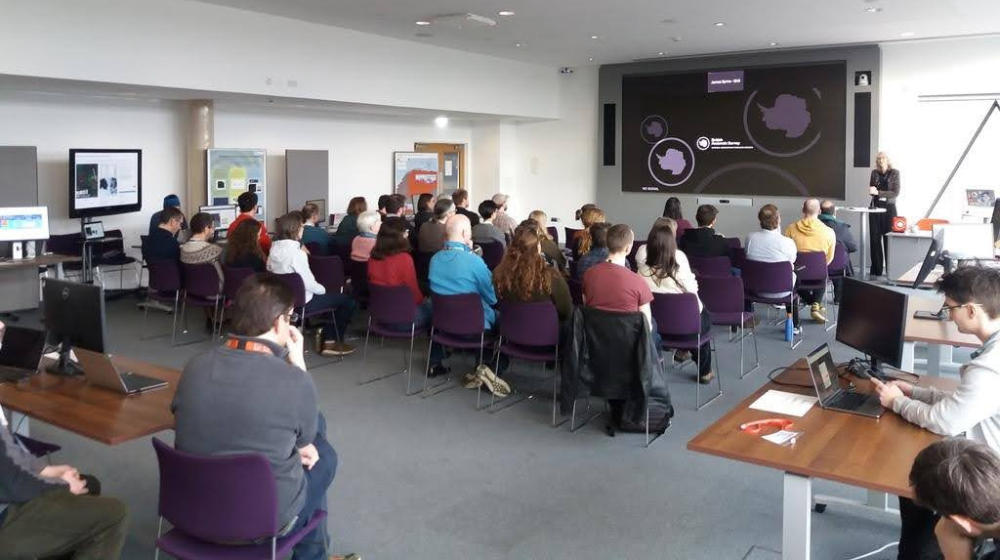
Attendees at Software in Polar Science 2024

In the end, we delivered the event in February 2024. The website was an important first point of call: having a singular point of reference means you can share your vision with others, it’s not just for the attendees but those involved in the organisation. We split the event into a training day and a “networking and showcasing” day. This allowed us to ensure that people could come and get something out of it that was concrete and allowed us to use the fellowship funds concretely to offer something for nothing to those who might not otherwise attend. This turned out to be a problem, as some people treat that trivially and don’t turn up, so there does need to be a safeguard to ensure places go to those who are willing to actually attend the event, but that’s another lesson learned.

I didn’t deliver the event, we did. The benefit of painting the vision for it via a simple website was that lots of enthusiastic people (probably more so than me in all honesty) got on board and made it all happen. What’s most interesting about this is that I just had to let the delegation of tasks happen, offering some guidance now and then (again, vision). Others benefited from undertaking certain tasks more than I would have because it connected people and exposed them to new things that brought them benefit. Delegation isn’t (just) about “slopey-shouldering” effort to others, but about empowering others to acquire the experiences you yourself take for granted. 

As the overall navigator on this "vision quest" I could still get the experiences I wanted. One of these was to organise two Carpentries sessions: the first an incubated session on data science oriented python as a test (of both our ability to deliver them, the notion of doing them hybrid and my experience as a certified instructor) and the second on basic introduction to python skills on the first day of the event. Both were delivered and are now helping us structure a collaborative and community-led training and development programme within BAS.

The second day was much more about giving software exposure from within BAS, as well as giving those producing exposure to the sustainability causes and resources I’ve been exposed from the community: the all-important bidirectional knowledge share. Shoaib Sufi, the SSI community lead, totally bolstered and amplified the ethos of the event with the keynote on the role of sustainable software in research. The panel discussion brought Shoaib together with others who help to guide me on my journey around the research domain as a software engineer. Despite my ending up compering (a better candidate was scheduled, trust me) and the panel being a person down (a wonderful SSI fellow, Sadie Bartholemew, whose opinion I really wanted included was unable to attend), we hopefully promoted some interesting discussion around “polar science communities seek[ing] to engage with the fast changing, multidisciplinary sustainable software landscape”. Thanks to Shoaib, the panel members Scott Hosking and Alden Conner, and the BAS innovation director Beatrix Schlarb-Ridley for setting the scene with the opening remarks.

The most positive outcome undoubtedly goes to the showcasing of software in polar science. We had showcases from our polar oceansspace weather and artificial intelligence research teams, but also operational science showcases from the polar data centremapping and geographic information centreantarctic marine engineering and our local collaborators Cambridge University’ Institute of Computing for Climate Science. The showcases really seemed to bolster conversation, create a sense of shared community and highlight why someone should run events like this. 

I hope it’s not the last of these events, but events management is definitely not my bag. However, being bold (and stupid (and stubborn)) does sometimes pay off, hopefully this is the start of a broader set of showcases that can be linked up with broader communities, we only scratched the surface. 

And I do mean we, the showcases were organised by Bryn Ubald, one of the new RSEs I’ve been lucky enough to add to our new Digital Innovation Team at BAS and Polina Sevastyanova from our innovation and impact team (yes, the two teams are massively intertwined, that’s a work in progress since we found a place for RSEs to sit). Both they and especially Lisa and Ellen at C2D3 for the administrative burdens and advice they provided and Pilvi and the BAS IT department for the conference centre setup and system, were instrumental in this coming off. 

Why am I telling you all this? Because it shows how many people should be involved in something like this to make it work well. Don’t be afraid to let go and let things organise, who knows what you and others might learn from the experience!

(I definitely learned I’m not doing this again in a hurry… probably.)

 

HomeNews and blogs hub

R-Ladies Edinburgh relaunch event at the University of Edinburgh

Bookmark this page Bookmarked

R-Ladies Edinburgh relaunch event at the University of Edinburgh

Author(s)
Kasia Banas

Kasia Banas

SSI fellow

Posted on 21 June 2024

Estimated read time: 3 min
Sections in this article
Share on blog/article:
LinkedIn

R-Ladies Edinburgh relaunch event at the University of Edinburgh

R Ladies logo

R-Ladies Edinburgh were launched in October 2018 by a team of enthusiastic local organisers. Between 2018 and 2021, the group hosted 18 events - most initial events were in-person, but during lockdowns in 2020-21 they were moved online. In 2021, R-Ladies Edinburgh went a bit quiet, as some organisers left and others became very busy with other projects. 

I was involved in R-Ladies Edinburgh from the start - first as a participant, and then as a co-organiser of online meetups where we analysed tidytuesday data together. I considered stepping up as a co-organiser back in 2021, but did not feel that I could take it on at that time (I was just changing jobs and life was just too busy). Receiving the Software Sustainability Institute Fellowship for 2023 provided the impetus I needed, and reviving R-Ladies Edinburgh became one of my main Fellowship goals. 

Serendipitously, I found out on Twitter about a colleague, Alessia Calafiore, who recently joined the Edinburgh College of Art (part of the University of Edinburgh) and used R for spatial analysis. We met for coffee and she agreed to be the speaker at the R-Ladies relaunch event. We discussed dates and agreed that it would be nice to hold the event near International Women’s Day - we settled on 9th March as the date. The format would be an interactive talk, followed by unstructured time for networking over drinks and snacks. 

During the event, Alessia discussed the basics of processing and visualising spatial data with R - she presented these topics in a way that was accessible for people who never analysed spatial data before (such as myself). She then presented a case study focused on the gender pay gap in Scotland - she used the 2011 Census data to calculate the proportion of women compared to men in the most senior professional category (C1), and showed us how to build a map illustrating this proportion in each electoral ward in Scotland. Alessia’s presentation (including all the data, code and explanation) can be found HERE. I immediately had ideas about how I could incorporate building maps into my teaching - I already asked my students to analyse Census data, and I think we could easily incorporate a bit of teaching about maps, to provide the students with another visualisation tool.

There were 14 enthusiastic R-Ladies in attendance, many from the University of Edinburgh, but also some from other organisations (e.g. Forest Research). After Alessia’s talk, most of us stayed and chatted about our experiences in academia, the process of learning and using R, and the different tools that we use to help in our research and coding practice (e.g. GitHub and Obsidian). 

If you would like to join us (as a participant or as a speaker), please check out our Meetup page and join the group. 


HomeNews and blogs hub

BioModelsML Hackathon: Making Machine Learning Models FAIR and Reproducible

Bookmark this page Bookmarked

BioModelsML Hackathon: Making Machine Learning Models FAIR and Reproducible

Author(s)
Denis Barclay

Denis Barclay

Communications Manager

Posted on 31 May 2024

Estimated read time: 1 min
Sections in this article
Share on blog/article:
LinkedIn

BioModelsML Hackathon: Making Machine Learning Models FAIR and Reproducible

BioModelsML Hackathon

The BioModels ML Hackathon will take place remotely on the 20 and 21 June and focus on applying FAIR principles to machine learning models in the life sciences, enhancing their reproducibility and utility.

Participants will be able to:

  • Engage in hands-on activities to make ML models more Findable, Accessible, Interoperable, and Reusable.
  • Collaborate with experts and peers to boost the impact of your work.
  • Contribute to a leading community resource while gaining recognition for your expertise.

The hackathon is ideal for researchers, data scientists, and developers at the intersection of AI/ML and life sciences.

HomeNews and blogs hub

Latest updates about CarpentryConnect Heidelberg 2024

Bookmark this page Bookmarked

Latest updates about CarpentryConnect Heidelberg 2024

Author(s)
Denis Barclay

Denis Barclay

Communications Manager

Posted on 30 May 2024

Estimated read time: 2 min
Sections in this article
Share on blog/article:
LinkedIn

Latest updates about CarpentryConnect Heidelberg 2024

The Carpentries logo

The Bio Network for Training, BioNT consortium with all its international partners will host the second European CarpentryConnect event from November 12 to 14, 2024 at EMBL - Heidelberg in Germany. This event will be happening alongside the BioNT community event, creating a great opportunity for collaboration and networking.

The keynote speakers will be:

  • Radhika S Khetani (Sweden): Director of Data Science Learning at AstraZeneca
  • Yanina Bellini Saibene (Argentina): Community Manager at rOpenSci, Co-Founder of MetaDocencia, Co-Founder and Chair of LatinR, R-Ladies Leadership Team
  • Malvika Sharan (United Kingdom): Senior Researcher at The Alan Turing Institute, Co-Founder & Co-Director of OLS (formerly Open Life Science)

A provisional programme that includes lightning talks, posters, workshop sessions, breakout discussions and mini-hackathon sessions can be viewed here.

The BioNT Community Event & CarpentryConnect Heidelberg 2024 aims to be accessible to everyone and will provide Inclusivity Tickets designed to support those facing financial or other barriers to attending the event. Application for these tickets is now open and can be accessed here.

Further Information

  • The deadline for submitting your abstract for the Inclusivity Ticket is July 12
  • Notification of acceptance will be sent to winners no later than July 26
  • Event registration will open on June 17
  • A definitive programme will be released on June 17
  • CarpentryConnect and BioNT community event takes place 12 - 14 November
  • For updates, announcements, and information about the event, please visit the event website.
  • If you need any support completing the form or have any questions, please get in touch at programme-biont@embl.de


HomeNews and blogs hub

Registration open for AI Replication Game at the University of Sheffield

Bookmark this page Bookmarked

Registration open for AI Replication Game at the University of Sheffield

Author(s)
Denis Barclay

Denis Barclay

Communications Manager

Posted on 29 May 2024

Estimated read time: 2 min
Sections in this article
Share on blog/article:
LinkedIn

Registration open for AI Replication Game at the University of Sheffield

AI REPLICATION GAMES

The Institute for Replication (I4R) and the University of Sheffield will be organising the AI Replication Game at the University of Sheffield on Monday 17 June 2024 from 9.14 AM to 4 PM. This one-day event aims to bring researchers together to collaborate on reproducing quantitative results published in high-ranking social science journals. By taking part in the Replication Game, participants will not only contribute to the integrity of research in their field but also have the opportunity to network with fellow researchers and develop their coding and AI skills.

Researchers participating in the AI Replication Game will be randomly assigned to one of three teams: Machine, Cyborg or Human. Machine and Cyborg teams will have access to (commercially available) LLM models to conduct their work; Human teams will rely only on unaugmented human skills. Teams will be asked to check for coding errors and conduct a robustness reproduction, which is the ability to duplicate the results of a prior study using the same data but different procedures. During the event, participants are expected to read the paper and familiarise themselves with the code and data shared alongside the paper. Teams will then work together to check for coding errors and conduct sensitivity analysis. No work is conducted before/after the event other than answering a short survey.

All participants will get coauthorship on a metaresearch journal paper which combines the work of all teams.

The Replication Game is open to all researchers: academics, post-docs, and graduate students. Knowledge of Python or R is essential.

For more information and to register for the AI Replication Game, please follow the link below. The deadline for registration is Saturday 1 June.

HomeNews and blogs hub

Teaching Programming to Non-Programmers: reflections from the Edinburgh Winter School 2024

Bookmark this page Bookmarked

Teaching Programming to Non-Programmers: reflections from the Edinburgh Winter School 2024

Author(s)
Kasia Banas

Kasia Banas

SSI fellow

Posted on 28 May 2024

Estimated read time: 5 min
Sections in this article
Share on blog/article:
LinkedIn

Teaching Programming to Non-Programmers: reflections from the Edinburgh Winter School 2024

In my day job, I am a data science educator, spending most of my time designing and delivering teaching in a university context. I have an amazing team of colleagues who work in similar roles, and we spend lots of time talking about how best to teach coding. We also love to talk to people from outside of our team - to learn about how they teach, and to share some of our tried and tested practices. This is how the University of Edinburgh Pair Programming Group was born, and it has been a vibrant community for over 3 years now. But, why stop there? Why not engage the wider community and bring together people from further out in the UK and beyond? Well, indeed, why not?

When I was applying for the SSI Fellowship back in 2022, this event was not in my proposal. Even in my wildest dreams, I didn’t think it could be pulled off - a full-day hybrid event about teaching programming, attended by over 60 in-person and about 50 online participants, featuring 5 keynote speakers and 20 presentations, delivered as a collaboration between 3 organisations. The unbelievable thing is that the idea was born on one cold October evening in 2023, and came to fruition on 11th January 2024 - with about 3 months lead time. Yes, we did it, thanks to an extremely effective collaboration between about 10 infinitely capable and enthusiastic colleagues, high-quality infrastructure provided by the University of Edinburgh, and just under £2000 of funding (some provided as part of my SSI Fellowship). 

I won’t focus this blog post on the programme of the event - I will just say that it was focused on teaching programming to non-programmers (i.e. outside of Computer Science or Informatics departments). You can see the full programme (including slides and eventually videos) HERE. What I will focus on instead are my high-level learnings from the event - both as a co-organiser and as an attendee.

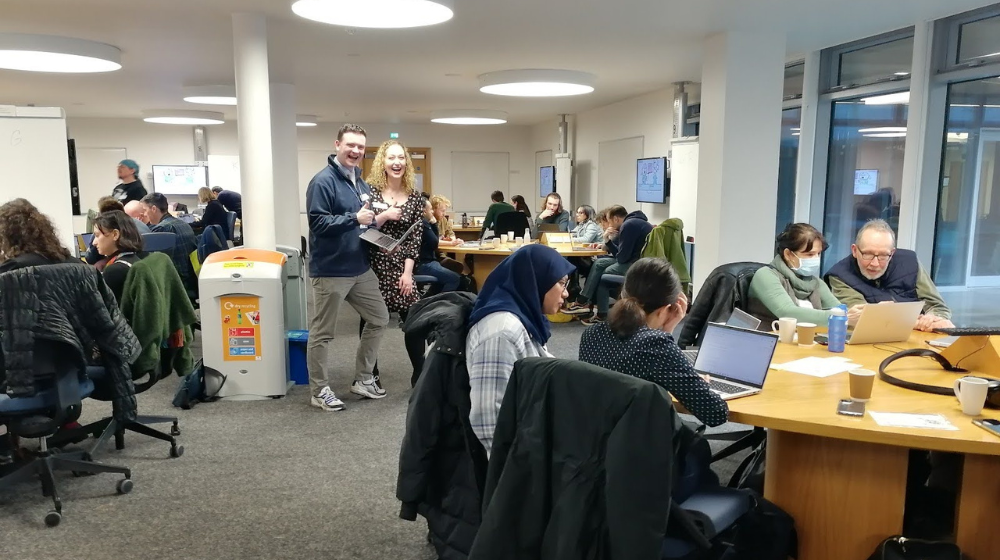
Organisers in a joyful mood as we welcomed 110+ participants

Organisers in a joyful mood as we welcomed 110+ participants

The size of the community

When we sent the initial call for event participants, we weren’t sure whether we should expect 10 or a 1000 responses. We had no idea about the number of people who are interested in teaching programming to non-programmers, and how many of them we could reach through our networks. We ended up receiving just under 150 responses. I am confident, however, that the next call would attract many more - we only advertised for about 3 weeks, and I’m sure there are networks that we didn’t manage to reach.

The spirit of the community

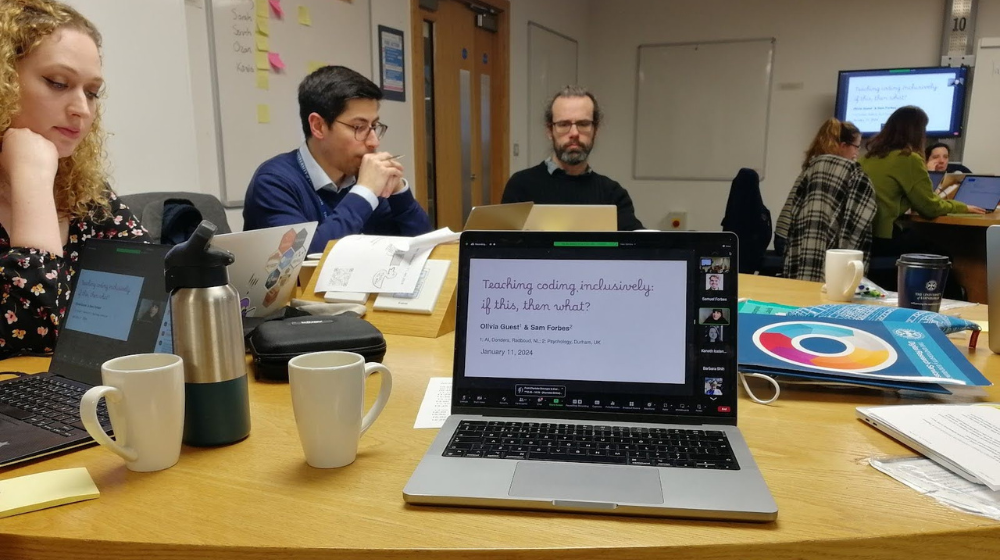
Out of the 147 initial notes of interest, about 110 people participated on the day. In marketing speak, this is called conversion rate, and I think ours was remarkable, especially considering that this was a free event (i.e. didn’t require a financial commitment), taking up a full day during a period that is for many academics very busy with teaching. The people who did participate gave it their all - there was a tangible buzz in the room during the sessions, lots of great conversations happening over lunch, and a great atmosphere in the Zoom chat room. Of the 60 in-person participants, 40 stayed for a networking reception after the event, and a further 20 stayed for pizza and more chats. Two of the keynote speakers, Olivia Guest and Sam Forbes, are SSI Fellows as well, and I have to confess that this fact helped me get the courage to approach them and ask for a talk. They were lovely and enthusiastic and gave a talk about inclusivity in coding, which I think is key to teaching programming anywhere. 

Keynote lecture about to start

Keynote lecture about to start

The future of the community

During the event, I pitched the idea of writing an edited volume about teaching programming to non-programmers, and in true Collaborations Workshop spirit, I invited people to add their potential contributions to a shared Google spreadsheet. We have about 40 ideas there, and over the next months, we’ll be working to put together a book proposal and start the project. One of the keynote speakers suggested a hackathon to get us started, and I think this is a wonderful idea that we’ll try to implement. In the event feedback, we received lots of requests to run similar events in the future, and to make them longer, perhaps extending over 2 days. We would love to do this - it will largely depend on funding and capacity in the team. Overall, this was an amazing event that brought the community together and will definitely result in a set of extended collaborations. 

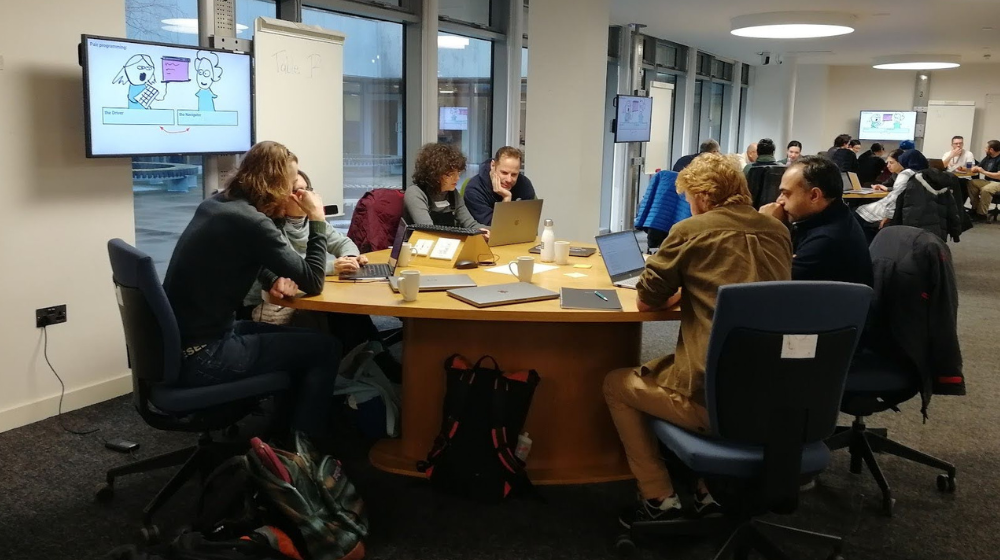
Pair programming in action

Pair programming in action

HomeNews and blogs hub

Exploring the Software Dimension at FAB23

Bookmark this page Bookmarked

Exploring the Software Dimension at FAB23

Author(s)
Saranjeet Kaur Bhogal

Saranjeet Kaur Bhogal

SSI fellow

Posted on 27 May 2024

Estimated read time: 5 min
Sections in this article
Share on blog/article:
LinkedIn

Exploring the Software Dimension at FAB23

Founded in 2009, the Fab Foundation emerged to promote and support the growth of the worldwide fab lab network and the creation of regional capacity-building organisations. Originating from MIT’s Center for Bits and Atoms Fab Lab programme, the foundation's mission is centred on providing access to tools, knowledge, and financial resources to facilitate education, innovation, and invention through technology and digital fabrication. This empowers individuals to create (almost) anything, opening up opportunities to improve lives and livelihoods on a global scale. The primary recipients of the Fab Foundation's support are community organisations, educational institutions, and non-profit entities. 

To raise awareness about the Fab community, the Fab Foundation organises various events worldwide, and in July 2023, I had the chance to participate in one such event: FAB23 in Thimphu, Bhutan. Besides exploring the Fab community, my purpose in attending this event was to gain insights into the intersections between the Fab community and the Research Software community. Throughout the conference, I attended three workshops in the Technology (R&D) track which helped me understand how (research) software plays an important role in the Fab community.

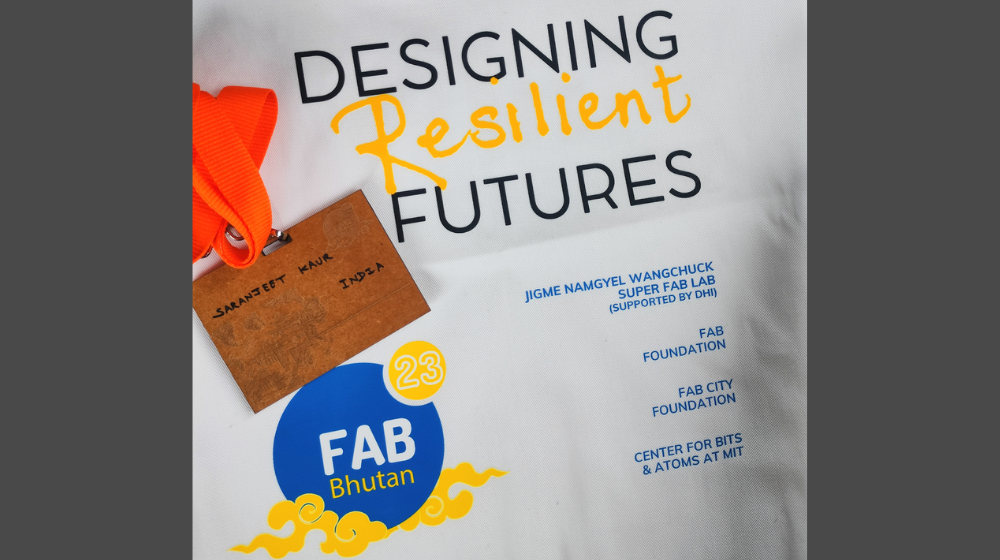
My FAB23 badge

My FAB23 badge

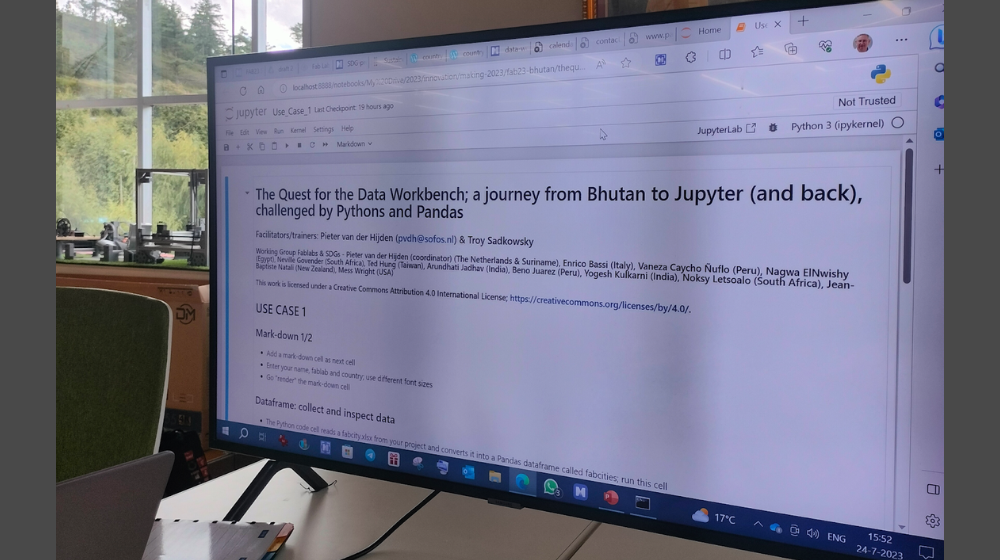
The first hands-on workshop was titled “The quest for the data workbench; a journey from Bhutan to Jupyter (and back), challenged by Pythons and Pandas” led by Pieter van der Hijden. The motivation for this workshop originated from the insights gained at the "Fablabs and the UN Sustainable Development Goals (SDGs)" Working Group, focusing on the role of data in driving machines, managing fablabs, overseeing the Fab Lab network, and examining the environment to identify areas where a positive impact can be achieved. During the session, participants from a variety of fablabs and backgrounds engaged in collaborative learning, each working on their Jupyter Notebook to explore interactive Python, Pandas, Markdown documentation, and develop a simple application. The session concluded with the sharing of thoughts, findings, and discussions on how to offer mutual support in the future.

Workshop on “The quest for the data workbench; a journey from Bhutan to Jupyter (and back), challenged by Pythons and Pandas”

Workshop on “The quest for the data workbench; a journey from Bhutan to Jupyter (and back), challenged by Pythons and Pandas

Following this session, we invited Pieter as a guest for RSE Asia’s community call where he led a discussion on “The Quest for the Data Workbench: How to bridge the gap between the Sustainable Development Goals (SDGs) and the Fablab/Maker Movement?

Data Workbench Processes

Data Workbench Processes

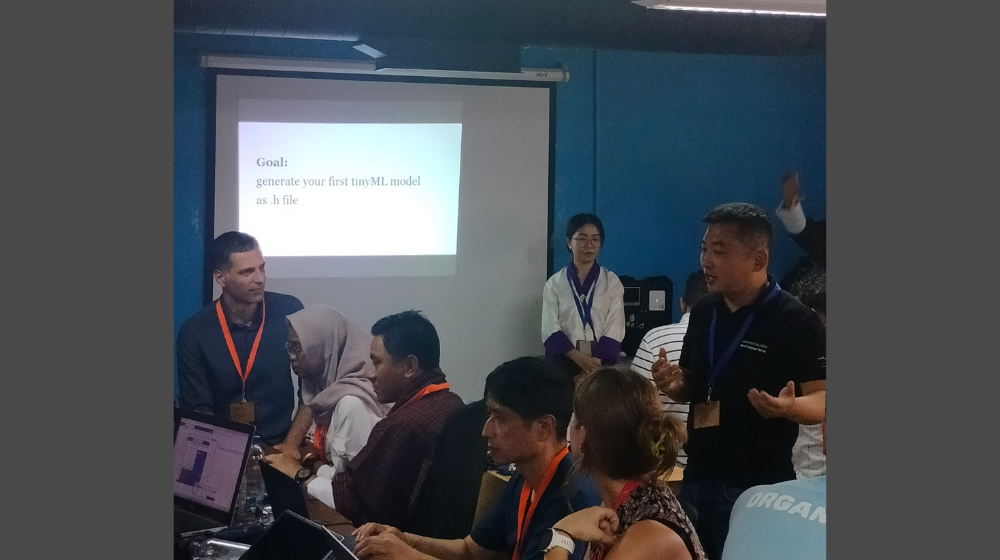
The second workshop at FAB23 that centred on software implementation was titled “Building smart projects with TinyML using EdgeImpulse and Blues Wireless,” organised by Salman Faris for those interested in the intersection of machine learning and electronics. This workshop delved into the concepts of TinyML, focusing on deploying machine learning models on microcontrollers with limited resources. The session included a discussion on how TinyML can enhance intelligence and autonomy in various electronic devices, spanning wearables, smart sensors, IoT devices, and more. Exploring the EdgeImpulse platform, participants were introduced to its user-friendly interface for designing and training TinyML models. The workshop covered aspects such as collecting and preprocessing sensor data, creating machine learning models using popular algorithms, and evaluating their performance. Techniques for optimising TinyML models for deployment on resource-constrained microcontrollers were also discussed. Practical examples illustrated how TinyML and electronics can be combined for projects like gesture recognition, voice-controlled devices, environmental sensing, and others. Step-by-step demonstrations were provided to showcase the integration of TinyML models trained with EdgeImpulse into electronic prototypes, showcasing the potential of this combination.

The third hands-on workshop titled “How to add machine learning to almost anything?” was organised by Eric Pan and Violet Su. During this workshop, participants delved into machine learning applications on the widely used embedded AI device, Seeed Studio XIAO ESP32S3 Sense. This compact yet powerful tool serves as an ideal entry point for those venturing into intelligent voice and vision AI. Attendees received a unit of XIAO ESP32S3 Sense, enabling them to explore the world of embedded AI. The workshop offered an introduction to various projects leveraging embedded AI, hands-on experiences to test different functionalities, and provided inspiration, insights, and resources to empower participants to construct their own models for future embedded AI projects.

Workshop on “How to add machine learning to almost anything?”

Workshop on “How to add machine learning to almost anything?”

Conclusion

Overall, my experience at FAB23 provided insights into the important role of software in the Fab community. The workshops showcased how (research) software contributes to innovation and sustainability within the Fab ecosystem, creating an intersection of technology, digital fabrication, and software development. The collaborative spirit and exchange of ideas during the sessions emphasised the potential for further synergies between the Fab and Research Software communities, opening doors to new possibilities and avenues for collaboration.

A sunflower in Bhutan

A sunflower in Bhutan


HomeNews and blogs hub

Join the SSI team as our new Events Manager

Bookmark this page Bookmarked

Join the SSI team as our new Events Manager

Author(s)
Denis Barclay

Denis Barclay

Communications Manager

Posted on 30 April 2024

Estimated read time: 2 min
Sections in this article
Share on blog/article:
LinkedIn

Join the SSI team as our new Events Manager

Red stick figure with SSI logo on their chest

The Software Sustainability Institute is expanding and we are looking for a talented and experienced Events Manager to join our team. The successful candidate will be responsible for managing and chairing our two main events, as well as providing event organisation support and advice for other smaller events. This is a wonderful opportunity to join the SSI team when we are expanding our reach and implementing innovative event management practices. The post holder will be expected to bring dedicated events experience to the role and will join the SSI team at an exciting time.

The Events Manager role is based at the SSI and requires a degree in a relevant subject or equivalent formal training, hands-on experience in similar or related roles, knowledge and understanding of event management practices, and good use of IT tools, including event management tools. The successful candidate should have a proven record of managing multiple projects of significant complexity, as well as strong interpersonal and communication skills.

In addition to a competitive salary of £39,347 to £46,974 per annum, the successful candidate can expect to work in an exciting, positive, creative, challenging, and rewarding environment, with opportunities to travel within the UK and sometimes internationally. The SSI also offers comprehensive staff benefits, such as a generous holiday entitlement, a defined benefits pension scheme, staff discounts, family-friendly initiatives, and flexible work options.

About the SSI

The Software Sustainability Institute (SSI) facilitates the advancement of software in research by cultivating better, more sustainable, research software to enable world-class research (“Better software, better research”). 

Based at the Universities of Edinburgh (EPCC), Manchester, Oxford and Southampton, the SSI draws on a team of experts with a breadth of experience in software development, project and programme management, research facilitation, publicity and community engagement.

About EPCC

EPCC is the UK’s leading centre for Supercomputing and Data Science expertise. Since its inception in 1990, EPCC has gained an international reputation for leading-edge capability in all aspects of high-performance computing (HPC), data analytics, and novel computing. EPCC hosts and manages an extensive collection of HPC systems that includes ARCHER, the UKʼs £43 million National Supercomputing Service.

Subscribe to Events
Back to Top Button Back to top