
Skip to main content Site map
Old Tag
Fellows 2013
Fellows 2014
Fellows 2015
Fellows 2016
Fellows 2017
Fellows 2018
Fellows 2019
Fellows 2020
Fellows 2021
Fellows 2022
Fellows 2023
Fellows inaugural meeting
Fellows newsletter
Fellows selection
Category
HomeResource hub

Speed blogging and tips for writing a speed blog post

Bookmark this page Bookmarked

Speed blogging and tips for writing a speed blog post

Author(s)
Shoaib Sufi

Shoaib Sufi

Community Team Lead

Estimated read time: 6 min
Sections in this article
Share on blog/article:
LinkedIn

Speed blogging and tips for writing a speed blog post

After an hour of discussion on a research software related topic at a workshop, a discussion group would stand up for 2-3 minutes and present back their findings (e.g. problems, solutions, future work or however they chose to speak about a topic). However without context the notes produced from such a session are not of much use to the wider community after the workshop. So, what's the solution?

Share on blog/article:
LinkedIn
HomeNews and blogs hub

Hackathon Co-Afina 2023: Latin American Students Drive Innovation with Open Data

Bookmark this page Bookmarked

Hackathon Co-Afina 2023: Latin American Students Drive Innovation with Open Data

Author(s)
Reina Camacho Toro

Reina Camacho Toro

SSI fellow

Ysabel Briceño

Alexander Martínez

Posted on 7 December 2023

Estimated read time: 4 min
Sections in this article
Share on blog/article:
LinkedIn

Hackathon Co-Afina 2023: Latin American Students Drive Innovation with Open Data

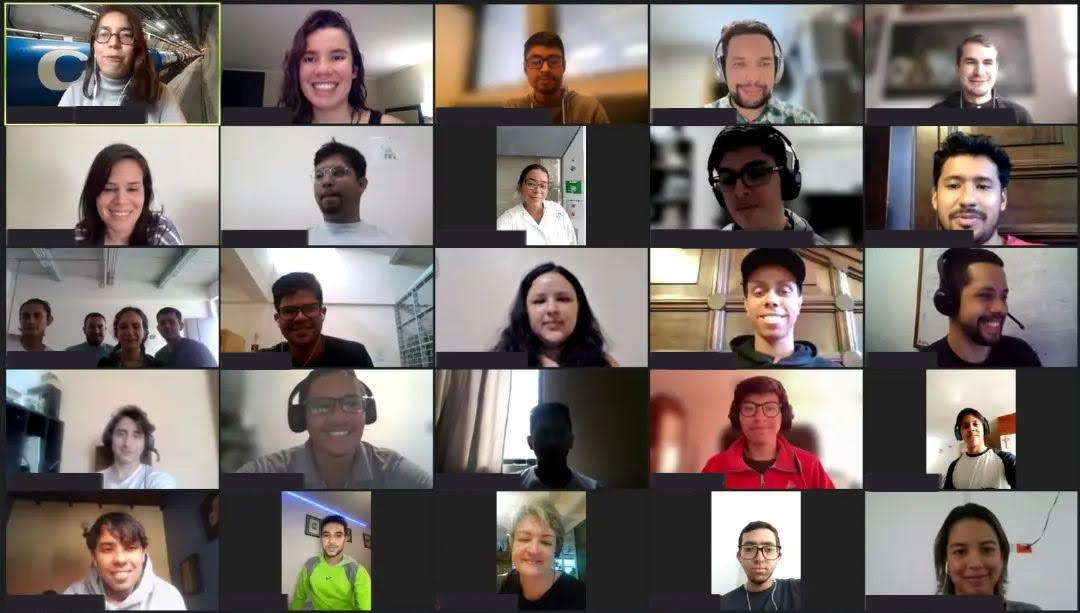
Attendees at Hackathon Co-Afina 2023

Fueled by adrenaline and a shared passion for innovation, seventy-eight university students from across Latin America converged virtually for the second edition of the Co-Afina hackathon. Armed with open data and computational tools, these bright minds tackled real-world challenges related to the environment, citizenship, and education, showcasing their skills, motivation and collaborative spirit.

This year's Co-Afina hackathon was made possible by the support of the International Center for Theoretical Physics (ICTP) and its Physics Without Frontiers (PWF) programme, the Software Sustainability Institute (SSI) and Open Life Science (OLS), as well as the artificial intelligence company INAIT SA. Joining forces with the organising alliance of the LA-CoNGA physics project, Creative Commons Venezuela, the Latin American Advanced Networks Cooperation (RedClara), and the Academic Network of Ecuador (CEDIA), these sponsors provided the platform for Latin America's next generation of innovators to shine.

Over three intense days (October 20-22, 2023), sixteen teams, including students from thirty universities across eight Latin American countries, immersed themselves in the hackathon's challenges. With creativity and determination, they devised solutions that addressed pressing issues such as informed voting, market forecasting, and sustainable tourism.

The winning solution, "Electoral Radiography of Colombia," emerged from the minds of the "DarkArmy" team, representing the Universidad Industrial de Santander (Colombia). This innovative web application aims to empower citizens with informed voting decisions by providing a comprehensive overview of electoral candidates' profiles. The team members, Jorge Jaimes, Camilo Carvajal, Brayan Barajas, and Paula Uzcátegui, showcased their exceptional problem-solving skills and commitment to civic engagement.

Second place went to the "Chaotic Coders" team from Yachay Tech University (Ecuador). Their proposal, "Predicting the Value of Coffee," employed machine learning techniques to forecast the future value of coffee in the financial market, leveraging historical data to make informed investment decisions. The team members, Arianna Paredes, Mateo Carpio, Jordan Zambrano, and Kevin Robalino, demonstrated their proficiency in data analysis and financial modelling.

Rounding out the top three was the "CongApps" team, a multinational alliance of students from the Universidad Industrial de Santander (Colombia), the Universidad Simón Bolívar (Venezuela), and the Universidad Nacional Mayor de San Marcos (Peru). Their solution, also focused on promoting informed voting, presented an accessible app for citizens to gain insights into electoral candidates' profiles. The team members, Steven Rico, Adrian Vasquez, and Omar Medina, highlighted the importance of transparency and accountability in the democratic process.

Beyond the top three, the "Neotropical" team received a special mention for their proposal, "Quantum Peru." This environmentally conscious project sought to mitigate the impact of tourism on archaeological and culturally significant sites, demonstrating a deep understanding of sustainable practices. The team members, Andrés Caña, Cristian Usca, Emilio Toledo, Rubén Niño, and Isabella Sánchez, represented universities from Venezuela and Ecuador.

Participants and organisers expressed excitement over the innovative solutions developed during the hackathon. Yany León Castañeda, a Co-Afina challenger, highlighted the results achieved in a short time, emphasising the enthusiasm, knowledge, and creativity of the participants. The organisers commended the teams for their critical, creative, and environmentally sensitive perspectives.

Co-Afina 2023 showcased the incredible work of Latin American student teams, emphasising their ability to respond swiftly and effectively to regional challenges. The organisers expressed gratitude for the collaborative effort that made this edition possible and concluded the event with an invitation to next year's hackathon. With this call to action, Co-Afina sets the stage for continued innovation and collaboration among Latin America's brightest minds, paving the way for a brighter future.

HomeNews and blogs hub

The Hard Work of Building Inclusive Communities

Bookmark this page Bookmarked

The Hard Work of Building Inclusive Communities

Author(s)
Jesper Dramsch

Jesper Dramsch

SSI fellow

Posted on 6 December 2023

Estimated read time: 5 min
Sections in this article
Share on blog/article:
LinkedIn

The Hard Work of Building Inclusive Communities

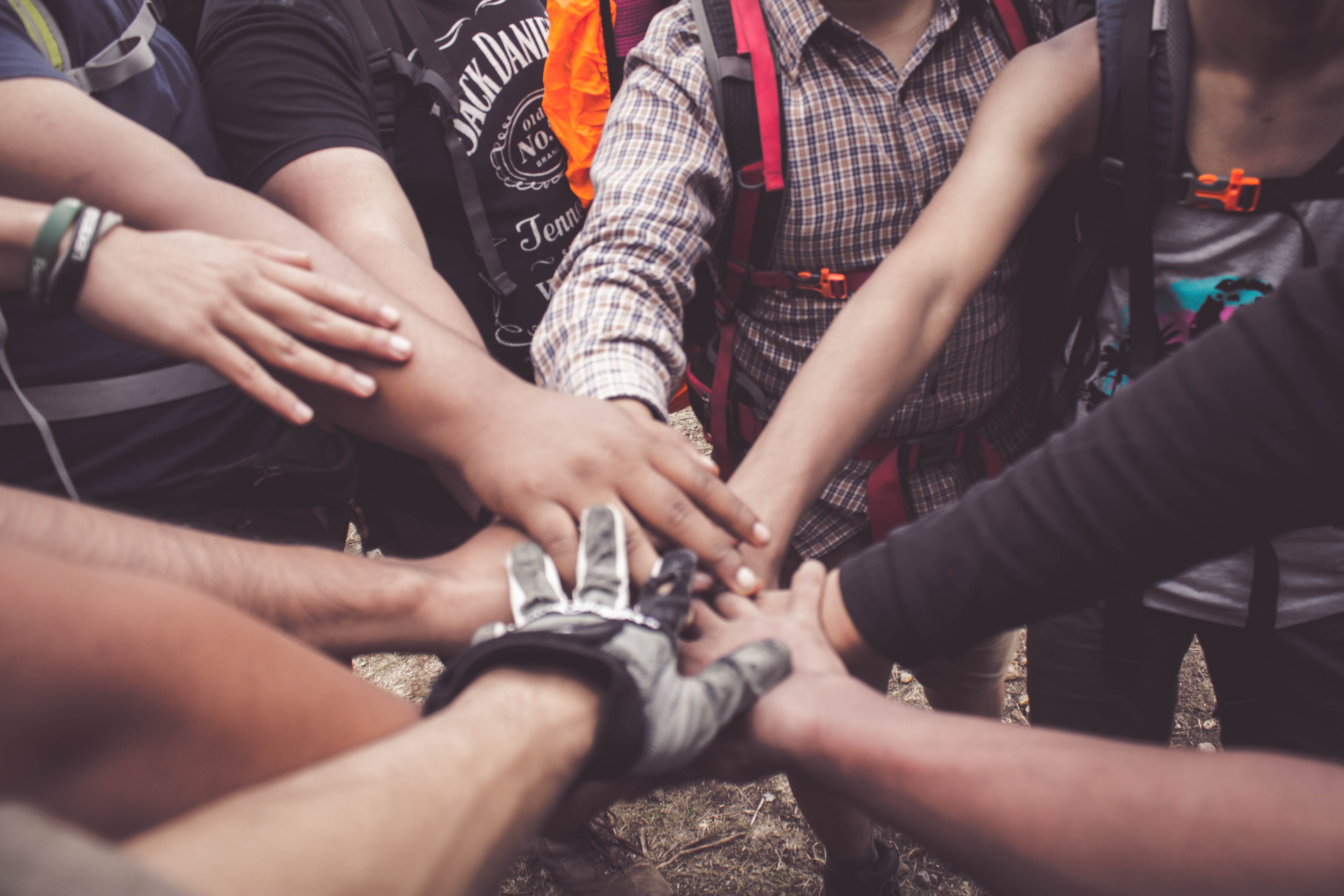
Several people joining hands

Let me start out a bit vulnerable. 

I have never been particularly popular, and as a millennial, that led to me seeking out online communities.

It turns out that was partly rooted in my neurodivergence, and so it carried through my life. So, when the SSI pushed for more communities of practice around our fellowships, I felt like I should give it another try.

Ironically, in the current AI hype, I'm still inclined to think that I don’t talk about things people would find interesting or would like to talk about with me. Maybe something for the therapist’s office.

But how do communities form?

Even for me, making friends in school was easy. The person you got sat next to ended up being your friend in a lot of cases.

So young adults often reach a cliff-like drop in connection when they move to their first job that leaves them isolated and curious: what happened? Why is this so hard?

So instead of proximity, modern communities form around shared interests.

Online, we see this a lot around three incredibly popular topics: money, relationships, and fame.

The only problem? You have to deal with people that only care about money, relationships, and fame.

So instead, we have to put on the hard work and go from “Zero to Not Zero” when we start a football club, just as much as when we build a new RSE community.

What is the hard work?

Creating a community is vulnerable.

As someone that opens the community, you bare a part of your soul to the world and hope it is received well.

But certain aspects can break your community. When we start with a lack of diversity and grow the community, we will forever play catch up, for example.

Other problems can be personality cults, where someone makes the entire community about themselves. And as humans, we are very clearly flawed, and that flaw is very often the downfall of a place you spent years in.

Then there are poisoned wells, where we are scared to exclude people through moderation, and suddenly a person or group can spread their toxicity in this place you used to call your home.

And then there’s the whole part about getting people into the door, which is its own crux.

What works?

Is there any saving?

Well, many places have successfully built diverse and inclusive communities. They have a few things in common:

Codes of Conduct work as a promise to at least try and care about the safety of a community. They lay the foundation to have something enforceable by community leaders. But that obviously lives and dies with how the leadership in a community adheres to and enforces this code.

Strong moderation to avoid the poisoning of your well, but easy access so folks can join without too much of a hassle. Different studies on usability show that each question on a form drastically reduces the probability that a user will sign up.

At the Collaborations Workshop, we had the wonderful “Pacman Rule”. Be welcoming and always leave a spot open if someone would like to join a circle of conversation. Being welcoming usually sets the tone for a community.

There’s also value in having some neat merch like stickers, but that can also be a bit much to organise, especially in the beginning.

Don't go alone!

You'll start alone.

But get keen people on board as quickly as possible. The old saying goes, “Alone, you go fast. Together, you go far.” That way, your community isn’t hinged on you doing well alone but actually spreads the work to multiple people.

Someone said to me that building a community is training others in leadership to take your community further.

What I learned from discussing and building

Choose what you care about and pursue it with integrity.

Include your kind of people.

Go with software that people actually use. I tried to use a fancy “community software” to build The Latent Space. This ended up being a bit of a waste because people struggled to sign up. Emails weren’t sent. And the interface was clunky. Now we use Discord, a software that is battle-tested and fairly easy to set up and definitely easy to moderate.

Another consideration for inclusivity as a community founder is proper certification. You can’t become a Certified Best Friend™ but you can definitely get safety certifications like the Mental Health First Aider certification to deal with certain situations adequately.

What is the Latent Space?

If you’re curious, The Latent Space is an inclusive machine learning and AI community.

I myself am queer and neurodivergent. I try to embody feminist and black-inclusive values, but those aren't my identity, so I educate myself and implement them as best as I can.

It is for practitioners and the curious. Whether you want to talk about machine learning, recommender systems, data science, AI, chatGPT, or the ethics of all of it, this is the space.

Whether you like to enthusiastically share things you found or engage in deep discussions about the impact of new developments, this should be a place for both. Just a place for "the normal stuff". The things below the hype. But the rest will have to grow organically.

Remember, building communities is hard, so getting started is brave!

HomeNews and blogs hub

Professor Tom Crick joins DCMS as Chief Scientific Adviser

Bookmark this page Bookmarked

Professor Tom Crick joins DCMS as Chief Scientific Adviser

Author(s)
Denis Barclay

Denis Barclay

Communications Officer

Posted on 4 December 2023

Estimated read time: 2 min
Sections in this article
Share on blog/article:
LinkedIn

Professor Tom Crick joins DCMS as Chief Scientific Adviser

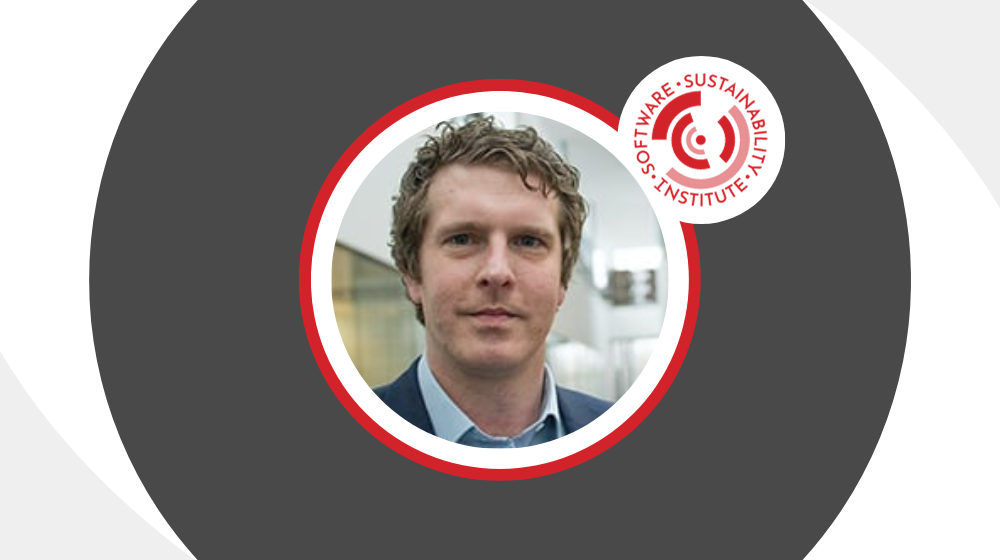
Tom Crick

SSI Fellow Professor Tom Crick MBE has assumed the position of Chief Scientific Adviser (CSA) for the Department for Culture, Media, and Sport (DCMS). In his new capacity, Professor Crick will offer scientific and technical guidance within the department, deliver direct counsel to ministers and officials, and supervise the application of research, evidence, and external expertise. Collaborating closely with other CSAs in various government departments across Whitehall, under the leadership of the Government Chief Scientific Adviser, Professor Crick will ensure the implementation of a unified and strategic approach to tackle key cross-cutting government policies.

Professor Tom Crick expressed his delight in joining the DCMS and eagerness to collaborate with colleagues to advance the department's commitment to being data-driven and analytically rigorous. He is committed to integrating robust science and engineering methods into both policymaking and the overall departmental culture, as well as contributing to innovative, place-based approaches that maximize the potential of their sectors, nurture creative communities, and create diverse opportunities for young people. Additionally, he mentioned his desire to comprehend the long-term impact of artificial intelligence on culture, heritage, and the creative industries. He is also eager to work with Chief Scientific Advisers across government on broader strategic science and innovation priorities, fostering connections with the wider research community in academia and industry, both within the UK and internationally.

HomeNews and blogs hub

SSI Fellow Tom Crick awarded prestigious Lovelace Education Medal

Bookmark this page Bookmarked

SSI Fellow Tom Crick awarded prestigious Lovelace Education Medal

Author(s)
Denis Barclay

Denis Barclay

Communications Officer

Posted on 7 November 2023

Estimated read time: 2 min
Sections in this article
Share on blog/article:
LinkedIn

SSI Fellow Tom Crick awarded prestigious Lovelace Education Medal

Tom Crick

We are delighted to announce that SSI Fellow Professor Tom Crick MBE has been awarded the Lovelace Education Medal by BCS, The Chartered Institute for IT for his contributions to computer science education across research, policy and practice.

Tom Crick is Professor of Digital Education & Policy and Deputy Pro-Vice-Chancellor at Swansea University. He is recognised internationally for leading the major STEM education and skills reforms in Wales over a sustained period, alongside wider leadership in UK digital, engineering and technology policy to support a thriving digital and data-driven economy.

Alongside Tom Crick, Demis Hassabis CBE, co-founder of AI research company Google DeepMind, and computer scientist Professor Jane Hillston MBE have been announced as the receipents of the Lovelace Research Medal.

The BCS Lovelace Medal was established in 1998 in honour of mathematician and writer Lady Augusta Ada Byron, Countess of Lovelace. The award recognises people whose work in the areas of research and education have contributed to significant advances in computing. Previous winners include worldwide web inventor Sir Tim Berners-Lee and information retrieval pioneer Karen Spärck Jones.

HomeNews and blogs hub

Workshop: environmental code of long-term value

Bookmark this page Bookmarked

Workshop: environmental code of long-term value

Author(s)
Denis Barclay

Denis Barclay

Communications Officer

Posted on 12 October 2023

Estimated read time: 3 min
Sections in this article
Share on blog/article:
LinkedIn

Workshop: environmental code of long-term value

SSI Fellow Michael Tso is among the organisers of a community workshop focused on the environmental code of long-term value. This free hybrid event, which is tailored for both NERC data centres and environmental modellers, is scheduled for Tuesday 21 November and will be conducted online as well as in person at UKCEH, Lancaster.

The main goal of NERC data centres is to ensure that environmental data are made available, accessible, and reusable for the long term to fully realise their value. Environmental data includes data collected in the field, samples analyzed in the laboratory, as well as model outputs that are underpinned by model code. Model code also plays a vital role in data analysis, understanding and visualisation, and decision-making. Thus, it is essential to consider model code in the same light as datasets regarding their long-term value. However, safeguarding the long-term value of model codes presents unique challenges that are not found in datasets. Model codes are prone to frequent changes, they may become unusable when software dependencies become obsolete, and ensuring their quality can be difficult.

UKCEH and the EIDC, which is part of NERC Environmental Data Services (NERC-EDS), are actively engaging with the environmental research community to understand the user community's needs concerning model codes. They are seeking input to foster ideas that can help both users and developers of environmental codes maximize their long-term value. Your input can also contribute to shaping future NERC strategies, policies, NERC EDS commissioning, and the development of the NERC model metadata catalogue.

 The workshop will cover a range of important themes, including defining what constitutes an 'Environmental Model Code of Long-Term Value,' exploring best practices and standards, addressing training and upskilling needs, delving into emerging principles and ideas, such as research objects, and discussing how to capture the long-term value of model codes. This will include considering the levels of FAIRness and metadata requirements.

Furthermore, the event will examine the role of data centres and long-term repositories in preserving these vital resources and provide a roadmap for the way forward.

If you are interested in participating, please fill in the registration form by Tuesday 14 November. T&S support is available.

HomeEvents and workshops

The Programming Historian Live, British Library (19 October 2015)

Bookmark this page Bookmarked

The Programming Historian Live, British Library (19 October 2015)

Organiser (s)
Events details
Location: 

British Library

Dates:

 19 October 2015

The Programming Historian Live, British Library (19 October 2015)

Programming Historian Live will take place on Monday 19 October in the British Library Conference Centre (Bronte room).

Based on a selection of the open access, peer reviewed tutorials at The Programming Historian this hands-on workshop will provide introductory software training with a focus on the needs and requirements of the historians.

The event will be lead by historians and cover tools, software, and computational approaches historians use in their research. The workshop is free to attend and is aimed at postgraduate and early-career historians, though historians of all career stages are welcome to attend.

The provisional schedule will include introductions to:

  • Data Structures (Extensible Markup Language, Extensible Stylesheet Language Transformation)
  • Pattern Matching (Regular Expressions)
  • Corpus Analysis (AntConc, Shell)
  • Web Scrapping (Wget)

Places are limited and can be booked on Eventbrite. Please note that attendees will be required to bring their own laptop. Questions and queries should be directed to Institute Fellow James Baker at drjameswbaker@gmail.com.

Programming Historian Live is funded by the Software Sustainability Institute, and is supported by the British Library, the Institute of Historical Research, and The Programming Historian.

HomeNews and blogs hub

Lost and Frustrated but Persistent, part 2: personal narratives about usability challenges with Open Source Scientific Software

Bookmark this page Bookmarked

Lost and Frustrated but Persistent, part 2: personal narratives about usability challenges with Open Source Scientific Software

Author(s)
Meag Doherty

Meag Doherty

SSI fellow

Anja Eggert

Yomna Eid

Kjong-Van Lehmann

Christian Meesters

Lennart Schüler

Damar Wicaksono

Posted on 4 July 2023

Estimated read time: 7 min
Sections in this article
Share on blog/article:
LinkedIn

Lost and Frustrated but Persistent, part 2: personal narratives about usability challenges with Open Source Scientific Software

Share on blog/article:
LinkedIn
Subscribe to Fellows
Back to Top Button Back to top