Skip to main content Site map
Old Tag
Hackdays
HomeNews and blogs hub

Winter School 2025: Organisers’ Tips and Tricks

Bookmark this page Bookmarked

Winter School 2025: Organisers’ Tips and Tricks

Author(s)
Kasia Banas

Kasia Banas

SSI fellow

Posted on 5 June 2025

Estimated read time: 4 min
Sections in this article
Share on blog/article:
LinkedIn

Winter School 2025: Organisers’ Tips and Tricks

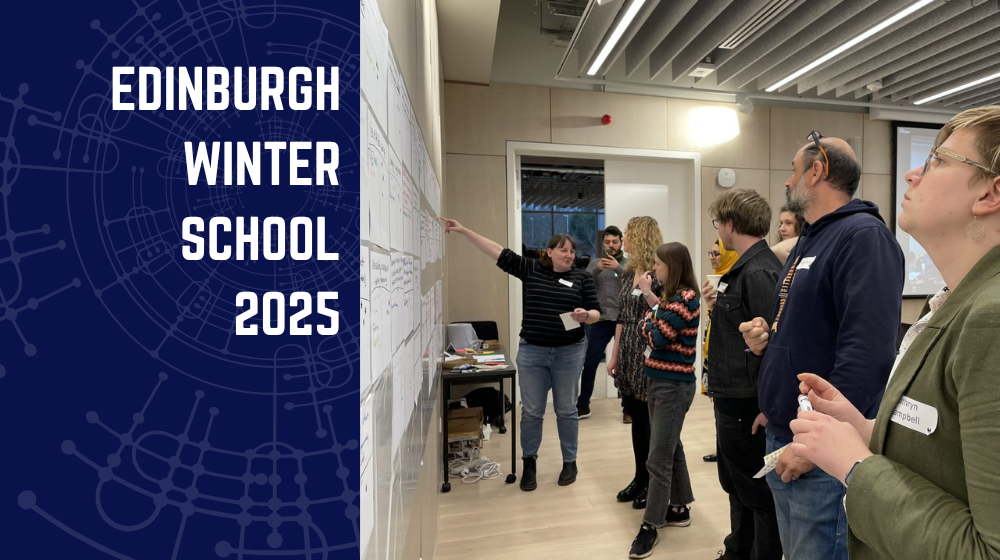
Edinburgh Winter School 2025, Participants proposing book chapters on the giant whiteboard

After the success of Edinburgh Winter School 2024, we decided to do it again in 2025. This time, a few things were a bit easier. For example, we started the planning and advertising process in September 2024, giving ourselves a realistic timeline until the event date on 8th January 2025. We also had a tested team, with colleagues from across university departments, all willing to help and experienced in their respective tasks. But, a few things were more challenging: we decided to hold the event in a different venue (Usher Building, which is home to quite a few members of the organising team, but is located further out of town), we opened many more slots for short and longer attendee talks (leading to more admin around talk submission, selection and delivery), and I personally had another large event scheduled for the day after the Winter School.
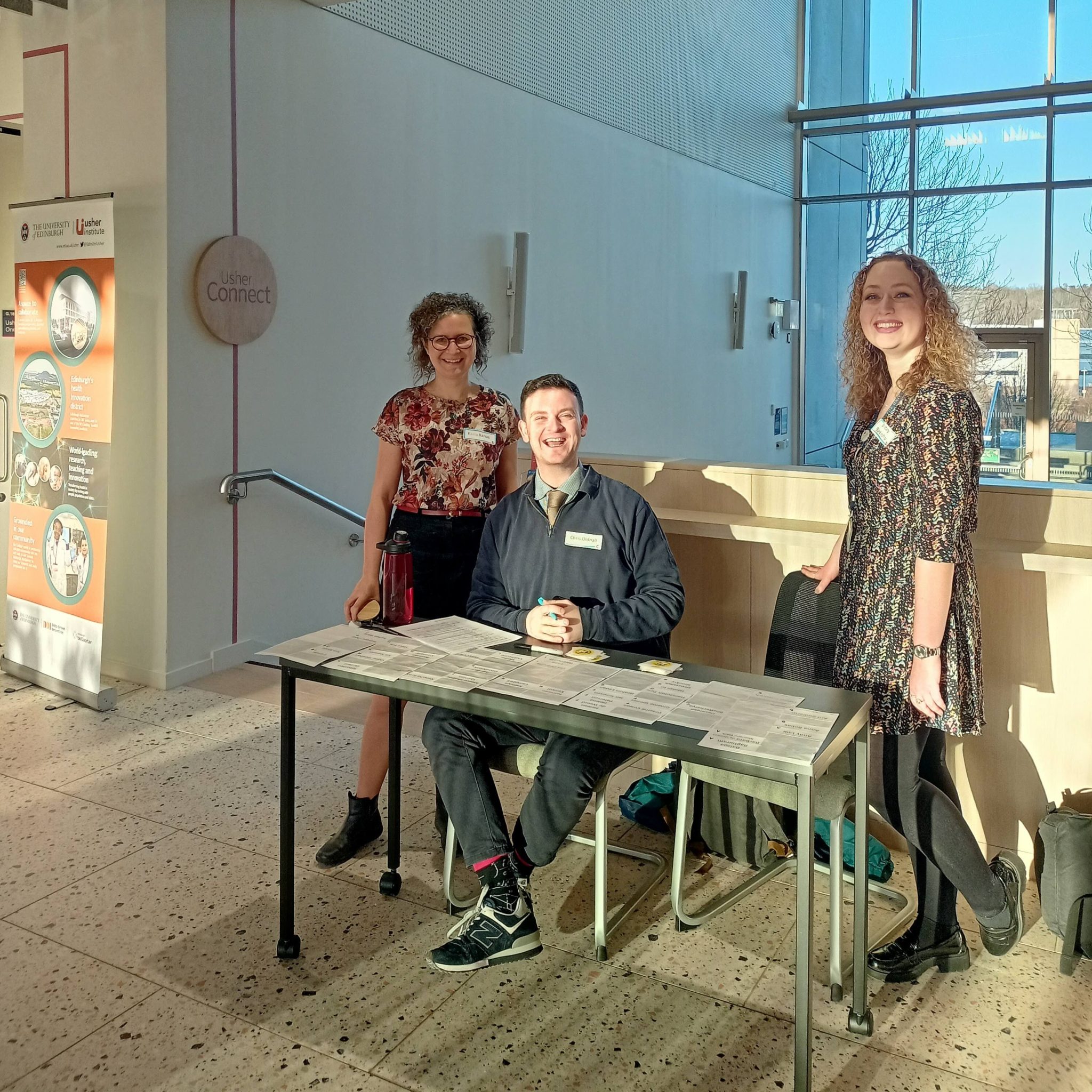
Image of the reception team at the start of the event. Two women are standing behind a desk where a man is sitting. On the desk are name badges. The man and women are all smiling.

Reception team at the start of the event

The team have gathered a lot of statistics and practical documents summarising how we organised the event, and what advice we would give to anyone wanting to organise something similar in the future. For example, we know that for in-person participation, 99 people said they were interested, 89 confirmed that they would attend, and 71 eventually attended the event. For online participation, 77 people said they were interested and 65 eventually attended (this includes a few people who were signed up to attend in person and switched to online). These numbers are useful to have because they help with planning things like the number of tables and seats to set, or the amount of catering that should be ordered. Being a bit of an obsessive planner, I do always worry that we will run out of chairs or sandwiches, or that we’ll be left with lots of food going to waste. But, I have been learning to let go and make estimates based on previous runs of the event (e.g. we ordered lunch for 80 people, but the drinks reception was estimated as 60, as we knew from last year that quite a few people needed to head home early). If you are interested in getting more of our estimates and advice, please feel free to reach out at pairprogramming@ed.ac.uk.

A humbling experience for me as one of the organisers has been sending the invitations to keynote speakers. As I become more senior and more busy, I definitely expect “No” to be everyone’s default answer. Imagine my surprise and absolute delight when the three keynote speakers I approached, Greg Wilson, Yanina Bellini Saybene, and Felienne Hermans, accepted our invite. Felienne even offered to attend the conference in person (granted, it would have been a much more difficult task for Greg and Yanina, who are based in Canada and Argentina). Both keynotes were excellent and the participant feedback suggests that they were a highlight for the participants – many feedback comments mentioned Felienne’s engaging delivery style and the important message in her talk (there is no merit in making things difficult; we should be making programming easier for our students!). 

Another fantastic part of the Winter School has been the groundwork that we have done for putting together an edited book about teaching programming across disciplines. We encouraged conference participants to propose topics for chapters that they would like to contribute to the book. Putting these on a big whiteboard (and in the chat for online participants) meant that anyone could also add their name to a chapter already proposed. We now have 48 book chapter suggestions and will be working with all authors to make them reality. Over the next 2 years, we will facilitate writing retreats, provide editing support and spread the word about the book, so that the programming education community can come together in creating this resource. For more information about the book (and to submit your chapter ideas), please check out the dedicated page.

 

HomeNews and blogs hub

FOSSASIA Summit 2025: Experiencing a new culture

Bookmark this page Bookmarked

FOSSASIA Summit 2025: Experiencing a new culture

Author(s)
Jyoti Bhogal Profile Picture

Jyoti Bhogal

SSI fellow

Posted on 19 May 2025

Estimated read time: 6 min
Sections in this article
Share on blog/article:
LinkedIn

FOSSASIA Summit 2025: Experiencing a new culture

Thailand

Wat Arun Ratchawararam Ratchawaramahawihan (Wat Arun temple), Bangkok, Thailand.

During my visit to the FOSSASIA Summit 2025 from 13-15 March 2025 in Bangkok, Thailand, I had a chance to have a number of interesting conversations and learnings. I am sharing these through this blog.

Swa-dee-kah Bangkok!

What is FOSS?

FOSS, an acronym for Free and Open Source Software, embodies a software development philosophy centred on freedom and openness. The term 'Free' denotes users' liberty to run, alter, and share the software, while 'Open Source' signifies that the software's source code is available for users to inspect, modify, and contribute to its progress. FOSS promotes collaboration, transparency, and user empowerment. This frequently leads to the creation of more secure and sustainable software projects. Notable examples of FOSS include Linux, Blender, Chromium, Kubernetes, and Mozilla Firefox, among many more.

What is FOSSASIA?

FOSSASIA  is an organisation developing Open Source software applications and Open Hardware together with a global community from its base in Asia. Their goal is to provide access to open technologies, science applications and knowledge that improve people's lives. They enable people to adapt and change technology according to their own ideas and needs, and validate science and knowledge through an Open Access approach. It was established in 2009 by Hong Phuc Dang and Mario Behling. They organise and participate in conferences, meetups and code camps. The annual FOSSASIA Summit is one of the top tech events in Asia. Other summits take place in Vietnam, Cambodia, Thailand and India. FOSSASIA also runs a number of coding programs, such as Codeheat.

The 15th edition of FOSSASIA Summit was organised at True Digital Park, Bangkok, Thailand from 13th to 15th March 2025.  It brought together individuals sharing talks on topics around Free and Open Source Software. The Summit had multiple parallel track sessions like talks, lightning talks, workshops, and more! There were booths by various organisations creating and/or using Free and Open Source Software.  This was my first experience of attending FOSSASIA in-person in Thailand.

Day 1

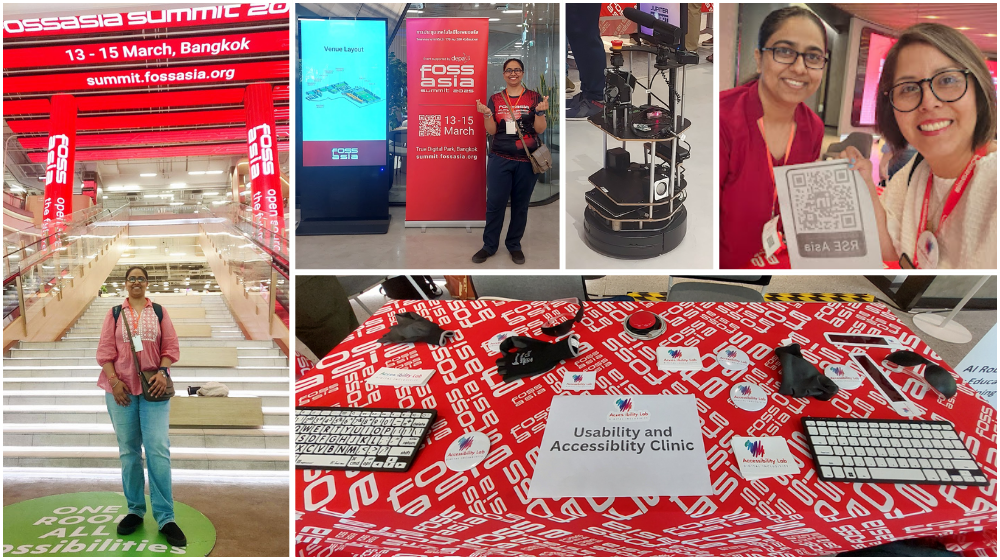
The day started with a lot of fervour. Following the welcome session by Hong Phuc Dang, there were multiple parallel tracks of talks. One of the booths demonstrated Robot Jupiter (image below) -  an interactive virtual education assistant! 

I had a chance to speak to Nancy Reyes, a representative from the  A11y Accessibility Labs. She was showcasing the hardware items that they use for digital accessibility awareness training during their Usability and Accessibility Clinic sessions.

Me against the backdrop of the live LED screens at the conference venue True Digital Park. At the conference venue entrance door. Robot Jupiter, virtual education assistant. A picture with Nancy Reyes. Hardware items for digital accessibility awareness training.

Day 2

The second day of the summit, 14th March, was themed as PGDay 2025, a 1-day event focused on the PostgreSQL database, which was held in conjunction with the FOSSASIA Summit. I learnt about a new tool - pgroll. It is an open-source command-line tool designed for PostgreSQL, ensuring that schema updates are applied safely, without locking the database, and enabling multiple schema versions to coexist. This ensures uninterrupted operation for client applications during migration, even when introducing breaking changes. The tool’s capability to automatically backfill columns and support instant rollbacks further enhances its reliability.

Later that day, I came across the booth of Grafana Labs. As I spoke to Richard Hartmann, he shared the useful features of Grafana Labs tools for creating reports, metrics, and graphs of the code being written.

Day 3

I held a ‘Meet & Greet Spot’ to speak to people about the field of Research Software Engineering, and discussed how it is a career path where one can combine their interest in implementing their research skills along with programming skills. I also shared about the past and the upcoming activities of the Research Software Engineering (RSE) Asia Association. Most people were curious to learn more about it, and also expressed a desire to join the future events held for the community.

Cultural Warmth

From the moment I arrived at the Suvarnabhumi airport, I found everyone to be warm and welcoming. People at help desks, metro ticket counters, and even local markets were kind and helped me get around the city easily. I also learned something new about Thailand — it's a pedestrian-first country, where vehicles stop to let people cross the road. Another thing I noticed was a good gender balance in the different workplaces that I came across.

With fresh fruits like mangoes, jackfruits, cashews, coconuts, bananas, and guavas, I truly experienced the tropical feel of the country. I enjoyed trying different types of bread, like red bean and almond bread. I also got to taste authentic Pad Thai noodles and Veg Thai Curry at a restaurant in True Digital Park. A fellow participant at the conference even taught me how to use chopsticks practically. I found Bangkok’s infrastructure very supportive for growth, with great workspaces and plenty of learning resources to help you make your own impact. Everyone I met — from the conference team to the hotel staff — was friendly and helpful, making the city feel not just a business hub, but a place that warmly welcomes you again and again.

Here’s a glimpse of Bangkok through my eyes!

Depiction of Samudra Manthan (The Churning of the Ocean Milk), Suvarnabhumi Airport. Pad Thai noodles and vegetarian Thai curry. Wat Pho, also known as the Temple of the Reclining Buddha. The Great Bodhi Tree and night view of the Wat Arun Ratchawararam Ratchawaramahawihan (Wat Arun temple).

My takeaway

FOSSASIA Summit 2025 was especially close to my heart because it rekindled in me the open source community’s spirit, zeal, and dedication towards contributing back to the software that we, knowingly or unknowingly, use on a day-to-day basis. As I left Thailand to return home, I carried so many so many learnings with me - especially the power that the voice of a community has!

HomeNews and blogs hub

SSI Fellows events at NIU Open Software Week

Bookmark this page Bookmarked

SSI Fellows events at NIU Open Software Week

Author(s)
Oscar Seip

Oscar Seip

Research Community Manager

Posted on 28 April 2025

Estimated read time: 1 min
Sections in this article
Share on blog/article:
LinkedIn

SSI Fellows events at NIU Open Software Week

NIU Open Software Week

We are pleased to announce that applications are now open for two SSI Fellows' events: Niko Sirmpilatze's "Animals in Motion" and Alessandro Felder's "Big Imaging Data". These events will take place during the Neuroinformatics Open Software Week running between Monday 11 and Friday 15 August in London.

HomeNews and blogs hub

The FOSDEM 2025 Experience

Bookmark this page Bookmarked

The FOSDEM 2025 Experience

Author(s)
Deborah Udoh Profile Picture

Deborah Udoh

SSI fellow

Posted on 11 March 2025

Estimated read time: 6 min
Sections in this article
Share on blog/article:
LinkedIn

The FOSDEM 2025 Experience

FOSDEM 25 logo

Let me start by saying that this trip almost didn’t happen. A visa application I started in early November was still unresolved a day before FOSDEM. Without my passport, I had to cancel my flight. But with just a few hours to go, something changed.

On January 30th, I received a notification that my passport had reached Abuja, and DHL would take at least 24 hours to get it to Port Harcourt. Long story short? I wrote a letter authorising a friend in Abuja to pick up the passport and check the visa approval status. The outcome was positive! The next morning (January 31st), I was on the first flight to Abuja. After a first flight, a long layover and a second flight, I finally reached Brussels on Saturday morning — just in time to rush straight to FOSDEM.

Amidst all this chaos, I missed the first conference I had planned to attend before FOSDEM — CHAOSScon25.

First-Time FOSDEM Experience

This was my first time attending FOSDEM in person. Last year, I had only given a talk online — my first international talk. Being there in person this year was an awesome experience, and I can’t thank OLS enough for making it happen.

Organiser

Meeting long-time organisers of the Open Research Devroom was a learning experience. I was exposed to the challenges of scheduling online talks across different time zones and learned how to use Pretalx for reviewing abstracts and proposals.

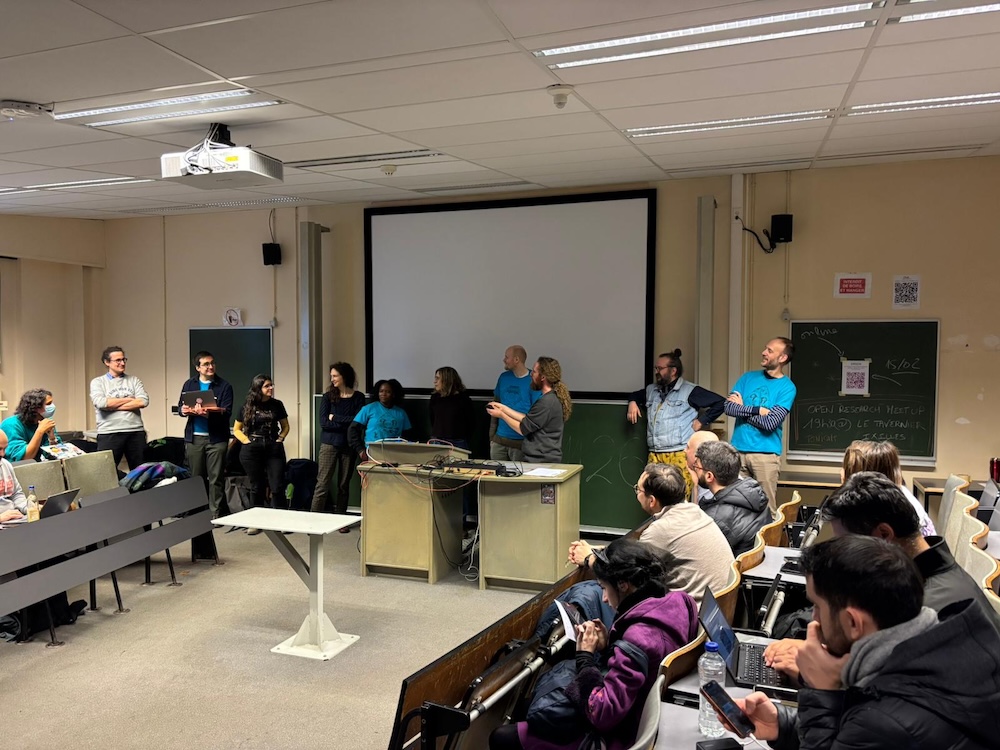
A small classroom, with attendees sitting in rows of chairs, forming an "n" shape. In front of the room is a group of ten (10) people from varying nationalities and gender groups. They are the members of the organising committee of the conference. Behind them is a blank projector screen, and in front, a beige table.

One of my small but exciting contributions was adding the schedule to the website and enhancing it with a little CSS for better aesthetics and UX.

I also got to experience the subtle power of keeping speakers on schedule — holding up signs to let them know they had “x minutes left.” So much power!

Speaker

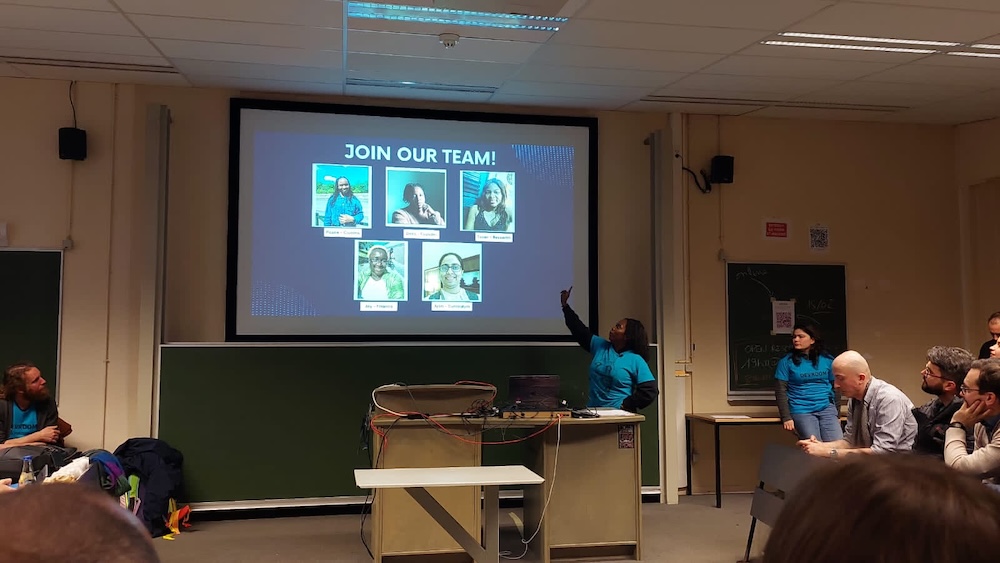
I gave a lightning talk on Pre-seeds, sharing early insights from our ongoing survey on underrepresented groups in research. We have a small team working on this, with a roadmap in place and a survey aimed at understanding what people want in a course like Pre-seeds. This was a great opportunity to showcase our progress and gather feedback.

A conference room, with a speaker, Debs, delivering a talk. Debs is an African woman of average height and dark hair. She is wearing a blue "FOSDEM Organisers" t-shirt over her black long-sleeved sweater, and is pointing at the projected slide. The current slide is a blue page with a title in white text, which reads JOIN OUR TEAM with 5 members of an all-female team in display.

Attendee

Day 1: Open Research Devroom

Some of the standout talks were:

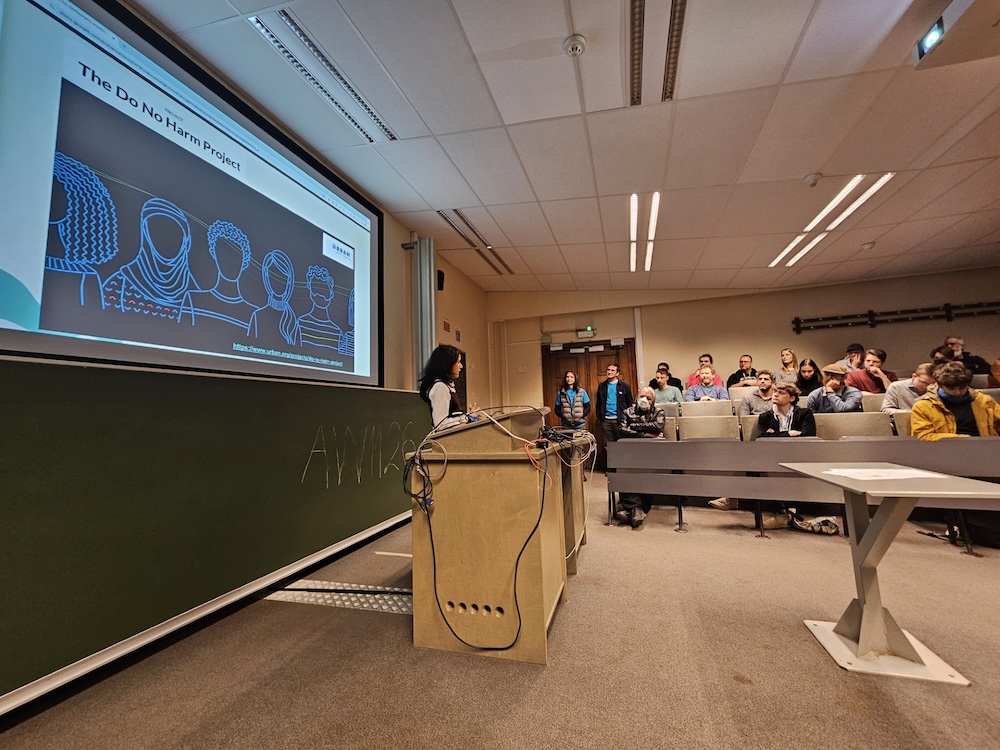
1. “Applying the ‘Do No Harm’ Principle to Open Source Practices and Technology”

This talk drew inspiration from the Hippocratic Oath, where doctors swear to do no harm. It made me reflect on how, while we can’t prevent all harm in open source, we should strive to minimise intentional and avoidable harm. Dr. Malvika Sharan discussed how openness — our invitation for people to use, remix, and build on our work — can sometimes perpetuate harm. This thought-provoking session initiated deeper discussions about the ethical aspects of open science and responsible research practices.

A conference room photographed from the left side of the room, showing a speaker, and some members of the audience. The speaker, Malvika, is an Indian woman of small stature and silky dark hair, wearing a white long-sleeved shirt under a sleeveless maroon dress. She is presenting from a slide that reads The Do No Harm Project
2. JOSSCast: Experimenting with Storytelling in Open Research

Abigail Cabunoc Mayes and Arfon Smith spoke about their experiment with JOSSCast, a podcast designed to connect researchers, developers, and contributors through storytelling. They shared insights into what worked, what didn’t, and how podcasts can strengthen open research by engaging both technical and non-technical audiences. This session reinforced the power of storytelling in science communication and community-building.

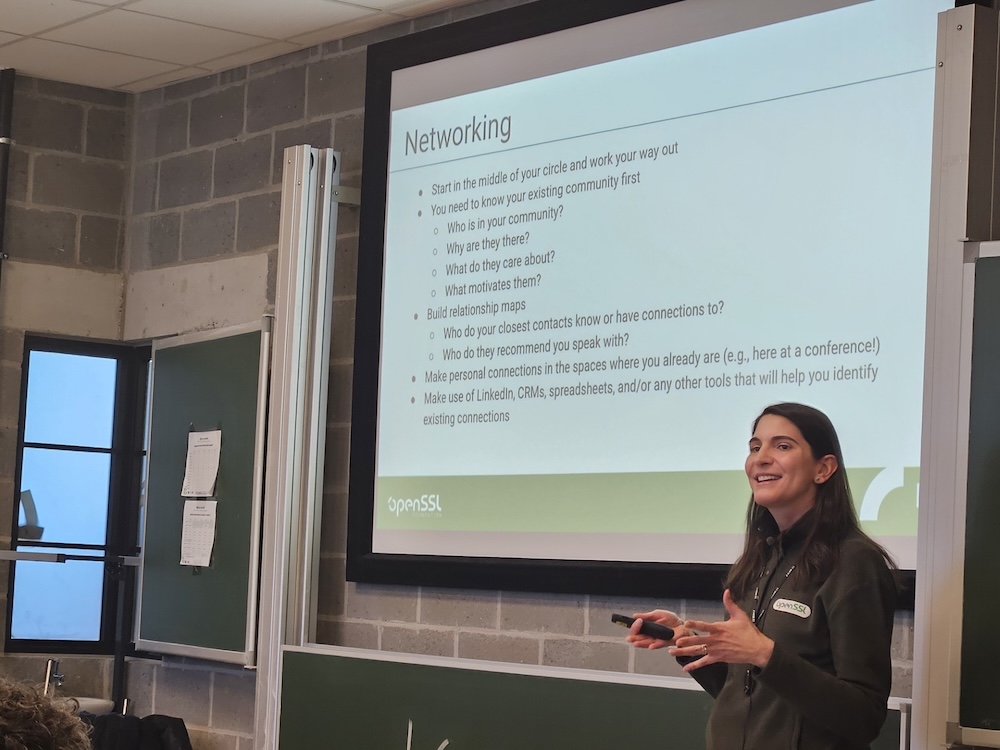
Image shows a speaker, Amy Parker, in front of a well-lit classroom, presenting on "Three Keys to Successful Fundraising." Amy is a white woman with dark hair, wearing an OpenSSL sweater and a bright smile. The slide projected behind her is titled "Networking" and shares on the importance of building connections and relationships.

Day 2: Funders Devroom

The highlights of my day were:

1. “Storytelling, Networking, and Strategy: Three Keys to Successful Fundraising” by Amy Parker.

This was easily my favourite session of the day. She broke down fundraising success into three key components: “the right ask (Storytelling) to the right person (Networking) at the right time (Strategy).” It was a brilliant talk on how to align these elements to secure funding.

2. Funders Devroom organisers AMA Session

I was looking forward to Emmy Tsang’s talk on “Funding the FOSS Ecosystem”, but unfortunately, it was canceled due to her Eurostar delay. That was heartbreaking. However, the Devroom organisers salvaged the situation with an impromptu Ask Me Anything (AMA) session.

3. “Small Seeds — Why Funding New Ideas Matters”

This talk by Marie Kreil and Marie-Lena Wiese (of Prototype Fund) struck a personal chord. They emphasised the importance of supporting young and novel ideas, which resonated with me as I work on Pre-seeds.

4. “When is it Right to Say No to Funding?” by Karen Sandler.

It was a surprising but essential session. In a room with people trying to secure funding, this talk took a different approach — outlining cases where declining funding is the better choice, such as misaligned values, unreasonable workloads, or funders attempting to rewrite the purpose of a project.

The FOSDEM Maze

The sheer size of FOSDEM was overwhelming — multiple buildings, endless rooms, and long queues outside popular Devrooms. Trying to navigate was a bit daunting for a first timer, and I imagine this might be the case even for people who are already familiar with how FOSDEM works.

However, one of the best things about FOSDEM is that all talks are recorded. So, when the chaos becomes too much, you can take a break, grab some waffles, and catch up later.

Also, I can’t not mention ‘sticker heaven’ — There was an entire section dedicated to stickers, and I wanted one (or six) of everything. I need more laptops to put these on!

The Friendships

One of the best parts of FOSDEM was reconnecting with friends and meeting new people:

  • My friend and SSI brother, David Luiz, gave me the most amazing hug — thank you!
  • Sara Petti and I snuck into the Funders Devroom, sat through talks, and chatted about life.
  • Malvika Sharan treated me to lunch on both days, unaware of how much that “small” gesture meant to me. Thank you for the book!
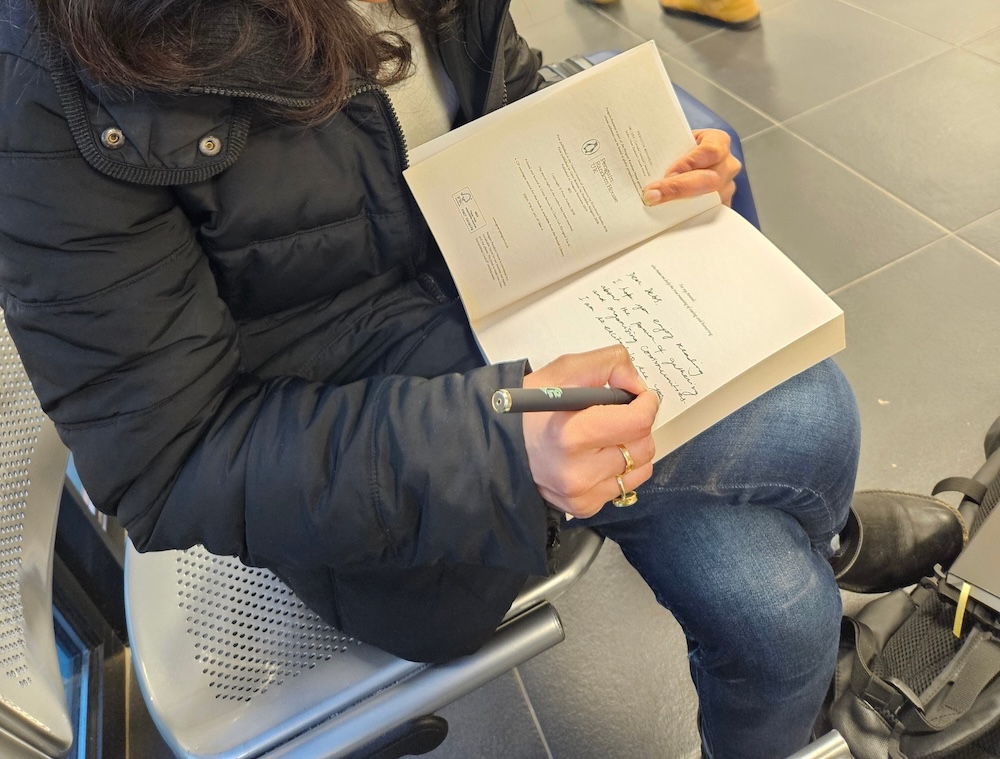
A woman wearing jeans and a black winter jacket sits on a metal chair, with her right leg crossed over the left. An open book is placed on her leg, and she is writing a note on the second preliminary page of the book, with a black pen.
  • Meeting the Open Research Devroom team in person was great too, as they were all welcoming and kind.
  • I finally got to chat with Ruth Ikegah, someone I’ve admired from afar for her efforts to represent Africa in tech.
  • The GitHub Maintainers Afterparty was another highlight — I hung out with Duncan Hall and met Ruth Cheesley, whose calm demeanour was exactly what I needed after two intense days of FOSDEM-ing.

Finally…

I regret not being able to attend CHAOSSCon25, but will try extra hard to be there come 2026 — even though that outcome is not mine to decide.

I also can’t attend the German RSE Conference (25–27th) to present my poster because my visa is only valid until the 21st.

Despite the challenges of getting to FOSDEM’25, it was worth every moment. From speaking and organising to attending brilliant sessions and making meaningful connections, this experience will stay with me for a long time.

Until next time, Brussels!


HomeNews and blogs hub

Latest updates from the National Centre for Research Methods (NCRM)

Bookmark this page Bookmarked

Latest updates from the National Centre for Research Methods (NCRM)

Author(s)
Denis Barclay

Denis Barclay

Communications Manager

Posted on 12 February 2025

Estimated read time: 1 min
Sections in this article
Share on blog/article:
LinkedIn

Latest updates from the National Centre for Research Methods (NCRM)

NCRM logo

The National Centre for Research Methods (NCRM) provides cutting-edge research methods training and capacity building across the UK. The centre runs a diverse programme of courses, workshops and events throughout the year, covering a vast array of topics in a variety of interactive formats.

Find out more about their latest initiatives below:


HomeNews and blogs hub

Save the date: Open Data Day returns from 1 to 7 March

Bookmark this page Bookmarked

Save the date: Open Data Day returns from 1 to 7 March

Author(s)
Denis Barclay

Denis Barclay

Communications Manager

Posted on 27 January 2025

Estimated read time: 1 min
Sections in this article
Share on blog/article:
LinkedIn

Save the date: Open Data Day returns from 1 to 7 March

Open Data Day logo

Open Data Day (ODD) will take place from Saturday 1 to Friday 7 March. This annual global celebration highlights the importance of open data and its impact on communities worldwide. Local groups from almost every country will set up events throughout the week, showcasing how open data can be utilized within their communities. In 2025, ODD is focusing on the theme "Open Data to Tackle the Polycrisis," aiming to shed light on the interconnected issues of poverty, inequality, violence, and climate challenges.

Since 2023, ODD has embraced a more inclusive approach, allowing organizations to choose the best date for their events within a one-week window, promoting representation across different cultures and communities. All outputs from these events will be made available for anyone to use and re-use.

ODD is maintained and supported by the Open Knowledge Foundation (OKFN) through the Open Knowledge Network.

HomeNews and blogs hub

Teaching Programming to Non-Programmers: Edinburgh Winter School 2024

Bookmark this page Bookmarked

Teaching Programming to Non-Programmers: Edinburgh Winter School 2024

Author(s)
Denis Barclay

Denis Barclay

Communications Manager

Posted on 27 November 2024

Estimated read time: 1 min
Sections in this article
Share on blog/article:
LinkedIn

Teaching Programming to Non-Programmers: Edinburgh Winter School 2024

People discussing, a lightbulb

Teaching Programming to Non-Programmers: Edinburgh Winter School 2024 will take place Wednesday, January 8, 2025, 9:00 – 17:00 at the University of Edinburgh, Usher Building (BioQuarter) and online.

This is a follow-up event to the successful 2024 edition which aims to offer opportunities to learn, share, and connect with peers in programming education.

The Winter School will feature practical sessions and discussions on:

  • Teaching programming inclusively and effectively to learners in diverse disciplines, such as psychology, medicine, mathematics, and engineering.
  • Using industry techniques like pair programming and rubber-duck debugging in teaching.
  • Strategies for large-class and online programming education.
  • Lightning and long talks where attendees can share their insights and practices.

Applications for attendees (online and in-person) have been extended to Sunday, January 5, 2025.

For questions, contact the organisers at pairprogramming@ed.ac.uk.

HomeNews and blogs hub

Venezuela, Ecuador, Colombia and Peru on the podium at CoAfina 2024

Bookmark this page Bookmarked

Venezuela, Ecuador, Colombia and Peru on the podium at CoAfina 2024

Author(s)
Reina Camacho Toro

Reina Camacho Toro

SSI fellow

Ysabel Briceño

Alexander Martínez

Posted on 30 October 2024

Estimated read time: 5 min
Sections in this article
Share on blog/article:
LinkedIn

Venezuela, Ecuador, Colombia and Peru on the podium at CoAfina 2024

CoAfina 2024, people sitting around a desk, a lightbulb over their heads

Migration and Xenophobia, microplastics, public domain works and wetlands were the four major social impact themes tackled by the winning teams of CoAfina 2024, the Latin American science and education hackathon, held on 19, 20 and 21 July. They convinced the judging panel by the quality of the solutions proposed using open access data. In this third edition, the podium was made up of students from seven universities in Venezuela, Ecuador, Colombia and Peru.

Eighty students from more than forty universities in Latin America dared to form multidisciplinary and multicultural teams to remotely solve one of the twelve challenges proposed in different scientific and humanistic areas of social impact, presented by professionals and researchers from different parts of the world. CoAfina thus achieves its mission: to create communities in Latin America and train new generations around knowledge and open data. See the challenges presented in the third edition of CoAfina, here.

The first place was awarded to the team called “Función Delta Pizza“, made up of four physics students from the Universidad Centroccidental Lisandro Alvarado in Venezuela: Adriana Araña, Dalia García, Víctor Sánchez, and Bárbara Guanipa, who provided a solution to the detection of negative topics and discourses presented in the news of Colombian newspapers about Venezuelan migration. This challenge was presented by Mairene Tobón, a member of the Entre Dos Tierras Foundation in Colombia.

Second place went to the team “Neotropical 2.0″, made up of students from the Universidad Simón Bolívar, Universidad de Los Andes and Universidad Central de Venezuela (Venezuela); and the Escuela Superior Politécnica del Chimborazo, in Ecuador. The areas of study of the participants in this team were: biology (Emilio Toledo and Rubén Niño), physics (Andrés Caña and Cristian Usca) and anthropology (Isabella Sánchez). This team convinced the jury with their solution route for the citizen classification of microplastics, a challenge presented by Marga Rivas from the University of Cadiz (Spain) and Iskya Garcia from Creative Commons Venezuela.

Third place was awarded to the “Book Finders” team, made up of four Venezuelan students from the Universidad de Los Andes, Universidad Nacional Experimental del Transporte and Universidad Central de Venezuela, in the areas of physics (Reinaldo Díaz, Juan Martínez and Richard Brito) and engineering (Anibal Pico). This team focused its solution on the idea of optimising a Venezuelan search tool for public domain works, scalable to other countries, a challenge created by José Luis Mendoza from the Latin American Centre for Internet Research in Venezuela.

Finally, the team called “Data Fixers” received a special mention for the solution to the idea of citizen recognition of wetland transformations in Colombia, a challenge created by Alejandra Melfo and Yelitza León, from the Universidad de Los Andes (Venezuela) and Óscar Altuve from the Universidad Simón Bolívar de Venezuela. This team was made up of two systems engineering students from the Universidad Autónoma de Bucaramanga (Colombia): Adrián Parra and Luis Jaimes; a physics student from the Universidad Nacional de Trujillo (Peru); and an electronic engineering student from the Universidad Nacional de Ingeniería (Peru).

Highlights of CoAfina 2024

David Sierra, professor at the Technological University of Bolivar (Colombia), who proposed two challenges at CoAfina 2024, expressed his satisfaction with the enthusiasm and creativity that the teams brought to their proposals: ‘I am amazed by the agility of these students from all over the Americas, by the willingness they have and the ideas they generate as a team,’ said Sierra. For her part, Iskya García, a challenger and member of the CoAfina organising committee, explicitly congratulated all the teams for their commitment to accepting something that transcends their area of expertise and described it as an expression of taking on a role as an agent of change in Latin America.

Finally, Reina Camacho, researcher at the French National Research Centre (CNRS) and one of the coordinators of CoAfina, underlined the capacity of the new generations in Latin America to actively participate in good practices that constitute different ways of doing science: ‘We are excited to know that some of the challenges that have been solved in these three editions can become prototypes to be developed in the medium term, with the participation of the community that joins in CoAfina’, an initiative that has already compiled some twenty challenges in the use of open data and that can become examples to be replicated in Latin America.

The awards ceremony culminated with a thank you to the organisations that have been strengthening the sustainability of this initiative. CoAfina is co-organised by LA-CoNGA Physics in collaboration with Creative Commons Venezuela, RedCLARA and the Academic Network of Ecuador (CEDIA). This edition was funded by the Open Research Funders Group (ORFG), inait.ai, the Software Sustainability Institute (SSI) and the Open Life Science (OLS) organisation. ‘See you at the next edition’ was the promise of this community that is growing every year.


HomeNews and blogs hub

Towards an International Research Software Conference: Join our Community Consultation

Bookmark this page Bookmarked

Towards an International Research Software Conference: Join our Community Consultation

Author(s)

Kim Hartley

Posted on 17 October 2024

Estimated read time: 2 min
Sections in this article
Share on blog/article:
LinkedIn

Towards an International Research Software Conference: Join our Community Consultation

Zoom meeting shown on screen of laptop & a coffee mug

Event Summary

This post was first published on the Research Software Alliance website.

Join one of our upcoming webinars to discuss community-supported routes for convening the first-ever international research software conference in 2025/26, or provide feedback asynchronously on the options paper, Towards an international research software conference (version 2).

ReSA is engaging with key stakeholders to identify and recommend possible options, with three conference options proposed currently. These all share a common overarching aim of community building but differ in the communities they focus on.

The next stage of the development of these ideas is to gain feedback through open public consultation. This includes identifying stakeholders who would be interested in shepherding the development of at least one of these ideas in 2025/26, including possible pilots in 2025.

How to join

Anyone can provide feedback or ask questions through the following methods:

Zoom link, Meeting ID: 218 787 3236, Passcode: 446688


The closing date for input and feedback is Friday 15 November, 2024.

HomeNews and blogs hub

Reflections on the Digital Turn in the Humanities and Science

Bookmark this page Bookmarked

Reflections on the Digital Turn in the Humanities and Science

Author(s)
Oscar Seip

Oscar Seip

Research Community Manager

Posted on 5 August 2024

Estimated read time: 4 min
Sections in this article
Share on blog/article:
LinkedIn

Reflections on the Digital Turn in the Humanities and Science

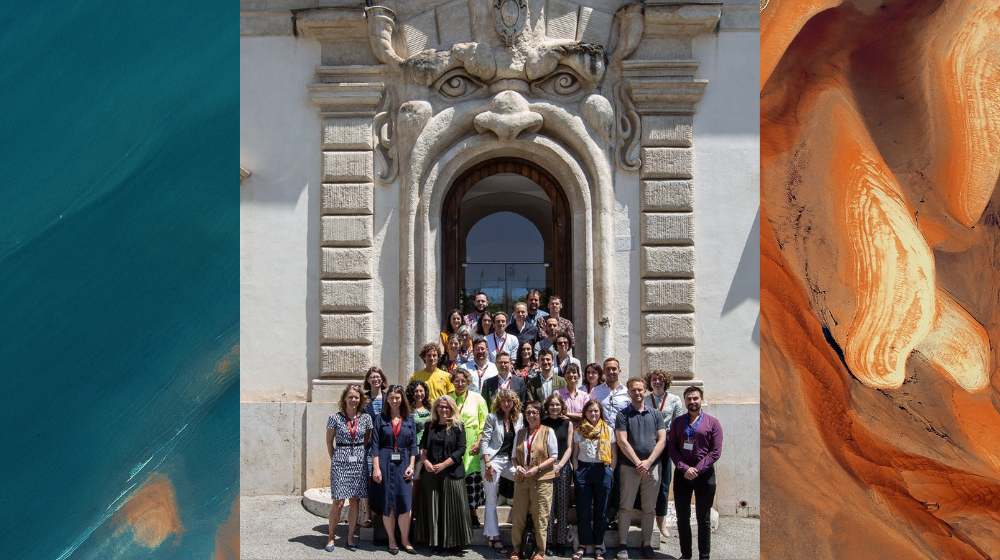
Group picture at the conference Visualizing Science in Media Revolutions

In the ever-evolving landscape of scholarly inquiry, the shift from analogue and mechanical to digital technologies known as the Digital Turn marks a pivotal moment, characterised by a convergence of technological advancements, new methods of information dissemination, and changing research practices. This transformative phase bears striking similarities to the Early Modern period (circa 1450-1700), where new tools such as the telescope and microscope, alongside the advent of the printing press, revolutionised scientific inquiry. Just as early modern scientists began to ask new questions about nature and the world, today's researchers are leveraging digital technologies to explore ideas and phenomena in novel ways. In both instances, the relationship between the tools of scientific inquiry and the scope of research is evident, echoing the SSI mantra: better software, better research.

During the conference Visualizing Science in Media Revolutions at the Bibliotheca Hertziana - Max Planck Institute for Art History in Rome, led by Dr Sietske Fransen, these parallels were explored in depth. Among the highlights of the research group’s activities presented at the conference was a summary of the seminar series "Reflections on the Digital Turn in the Humanities and Sciences", organised by Sietske Fransen and myself. Held between October 2020 and December 2021, amidst the height of the pandemic, these seminars brought together 21 speakers from diverse backgrounds and countries, including scholars, artists, curators, archivists, and library professionals. Topics spanned a wide array, encompassing the shift from analogue to digital formats, advancements in book history, digital correspondence curation, image analysis tools, information management practices, digital model use, and the pandemic's impact on digital transition and remote collaboration.

A final publication detailing the outcomes of the seminars will be published in 2025 as part of the conference proceedings. A recurring theme throughout our discussions was the profound impact of the Digital Turn on scholarly practices. The accelerated shift to digital spaces, propelled by the pandemic, has facilitated broader participation and inclusivity in scholarly discourse. However, this development has also underscored the necessity of digital capital, highlighting the critical infrastructure and skills necessary to navigate the evolving digital landscape. Moreover, the reliance on digital tools and resources has exacerbated societal inequalities and raised concerns about data privacy, copyright, and the ethical representation of historical materials. 

Many speakers emphasised the enduring importance of foundational skills such as archival work and manuscript editing. These aid in mitigating existing biases in library research collections, which are often amplified by current digitisation strategies that focus on the most researched and notable parts of their collections.

Another prevalent theme in the seminars was the shift from analogue to digital formats. Like their early modern counterparts in the age of the printing press, the advent of new technologies has revolutionised the way information is accessed, visualised, and analysed. Presenters explored the challenges and opportunities associated with digitising and consolidating diverse collections, stressing the significance of adopting shared standards to improve the discoverability and reusability of data, thereby enhancing its sustainability. 

Similar to how the emergence of printing shops facilitated the convergence of scholars, printers, artists, and artisans from diverse national and cultural backgrounds, one of the most significant impacts of the Digital Turn on scholarly practices is its demand for a broader skill set and increased collaboration among scholars, data scientists, researchers, artists, and research software engineers. In this vein, the proliferation of new technologies and media has not only revolutionised how scholars and scientists access, visualise, and analyse information, but also catalysed the emergence of new communities of inquiry, fostering interdisciplinary collaborations and the cross-fertilisation of ideas. However, while collaborative efforts between the humanities and sciences foster innovation and raise new questions, the indiscriminate application of disciplinary tools from one field to datasets from another carries inherent risks

In conclusion, it is imperative to highlight the necessity of ongoing reflection and adaptation in response to evolving technologies and research methodologies. Scholars must remain vigilant in critically evaluating the implications of digital interventions on knowledge production and dissemination, ensuring the equality, diversity, inclusivity, and accessibility of scholarly practice. By embracing interdisciplinary collaboration and innovative approaches in an equitable manner, we can navigate the complexities of the Digital Age and drive meaningful change in the pursuit of knowledge, advancing our understanding of the past, present, and future.

Subscribe to Events
Back to Top Button Back to top