
Skip to main content Site map
Category
HomeNews and blogs hub

High Performance Computing and Arts and Humanities Research in the UK

Bookmark this page Bookmarked

High Performance Computing and Arts and Humanities Research in the UK

Author(s)
Katherine McDonough Profile Picture

Katherine McDonough

SSI fellow

Posted on 24 October 2025

Estimated read time: 6 min
Sections in this article
Share on blog/article:
LinkedIn

High Performance Computing and Arts and Humanities Research in the UK

CCPAHC logo, colourful swirls

Thanks to Software Sustainability Institute funding, I attended the first Town Hall meeting for the recently UKRI-funded Toward a new CCP for Arts, Humanities, and Culture research (CCP-AHC) projectCCP-AHC is principally focused on strengthening knowledge about large-scale compute (or high performance computing) and other advanced digital research infrastructures (DRI) for research software in the arts and humanities developed in the UK. The Town Hall focused on soliciting ideas, questions, and updates from scholars in these fields already engaging with DRI resources. I attended the meeting as the director of the MapReader software library, but also with my hat on as an SSI Fellow interested in the broader concerns around research software development and maintenance in the humanities. 

But what is a CCP and why are arts, humanities, and cultural heritage researchers moving towards this? “Collaborative Computational Projects” are funded by UKRI councils and administered by the Computational Science Centre for Research Communities (CoSeC) programme within UKRI’s Science and Technology Facilities Council. CCP-AHC was funded by a 2024 call designed to prepare new scholarly communities to apply for CCP funding in 2026. For the first time, potential future CCPs within the remit of AHRC and ESRC were eligible. As one of 6 new communities, the remit of CCP-AHC is above all to develop a roadmap and plan for the new CCP. In short, CCPs provide long-term funding for academic communities whose work depends on collectively used and maintained sustainable research software. For arts and humanities researchers to have access to such support would be a major stepping stone towards better national recognition of the computational needs of these disciplines.

Led by Eamonn Bell (Durham) with co-leads Karina Rodriguez-Echavarria (Brighton) and Jeyan Thiyagalingam (STFC), at the heart of the CCP-AHC is the issue of scaling up arts and humanities compute activities. As the UK invests in compute, it has been rare for humanities scholars to join the queues waiting to get access. When the MapReader team applied for access to the Bristol-based Isambard AI for some large-scale data processing tasks, we were welcomed with open arms as a novel use case in the humanities. Throughout 2024 and 2025, we used Isambard AI, Baskerville, the N8 Bede, and Lancaster’s HEC for a range of MapReader tasks. For example, for the “Landscape Change and Conservation with MapReader” project at Lancaster, Computational Environmental History Research Associate Kirsty Lilley created the UK’s first open-access datasets of historical vegetation and other landscape features from nineteenth-century Ordnance Survey maps in collaboration with the Peak District and South Downs National Parks (data paper forthcoming!). Simultaneously, we were also using Baskerville for large-scale text processing tasks with historical newspapers (for the now concluded Living with Machines and Data/Culture projects at The Alan Turing Institute). Indeed, because of her work with HPCs for the computational analysis of maps and newspapers, our Turing colleague Rosie Wood was honoured as one of the “Women in HPC” at SC2025 (SuperComputing: The International Conference for High Performance Computing, Networking, Storage, and Analysis).

For scholars to engage with big collections of historical sources that have now been scanned as images, and sometimes further digitised as structured or unstructured data, access to advanced computing resources is essential, and the CCP-AHC can address these needs in a coordinated fashion. With MapReader, and with the Living with Machines newspaper work, we learned two lessons the hard way: 

  1. Assuming you will process data on your local machine puts strict limits on your dataset processing capacity, and for many colleagues without access to a powerful local computer, this is indeed out of the question. We knew we wouldn’t be using local compute for a lot of work, but it did create barriers within the team because core big data sets could be harder to access, sample, and explore from cloud storage locations.
  2. Levelling up to using cloud-based virtual machines is extremely costly. For what we spent on commercial cloud-based compute and storage, we could have extended contracts or hired new team members. At the beginning of Living with Machines (ca. 2019), there was no alternative, and by the time we did have access to other, HPC infrastructure (e.g. Baskerville), we did not have time to rewrite code to work in a new environment or permission to move certain data.

I’m thrilled that colleagues across the UK might, through a new CCP, work together to avoid missed compute opportunities, develop HPC skills, and ensure HPC access. CCP-AHC has rightly identified knowledge about large-scale compute as a blocker to novel computational research in AHRC disciplines, but I would also highlight that this is not the only infrastructural challenge we face. From the lack of a robust, central data service for arts and humanities data to the importance of embracing and maintaining minimal computing workflows (in particular because these are more accessible to students and collaborators who do not have access to HPCs). But perhaps above all, there has been simply a dearth of opportunities to maintain humanities and arts research software as open-source projects. Older CCPs have used STFC support to ensure that key software can live on past its initial development funding. SSI’s Research Software Maintenance Fund offers one solution to this funding gap, but the long-term support of a CCP is unique in the UK. As it develops the roadmap for the future CCP, this is an exciting moment to see how the CCP-AHC leads and the broader community wish to shape computational research infrastructure for the arts and humanities going forward.

If the first Town Hall meeting opened up many perspectives on what we lack in terms of support for building capacity around DRI and sustaining software in the arts and humanities, future events will collect evidence from colleagues based on where they are at now. The CCP-AHC team is collecting information from UK colleagues about research projects using computational resources at all scales. If you’d like to learn more and potentially submit evidence about your own work, check out the details on the dedicated webpage.




HomeNews and blogs hub

Giving a digital humanities voice to skills and competencies for digital research professionals at DHA 2025

Bookmark this page Bookmarked

Giving a digital humanities voice to skills and competencies for digital research professionals at DHA 2025

Author(s)
Phil Reed Profile Picture

Phil Reed

SSI fellow

Dave Horsfall

Dave Horsfall

SSI fellow

Aleksandra Nenadic

Aleksandra Nenadic

Training Team Lead

Picture of Lucia Michielin

Lucia Michielin

Edinburgh Carpentries Coordinator

Anna-Maria Sichani

Anna-Maria Sichani

SSI fellow

Posted on 19 September 2025

Estimated read time: 7 min
Sections in this article
Share on blog/article:
LinkedIn

Giving a digital humanities voice to skills and competencies for digital research professionals at DHA 2025

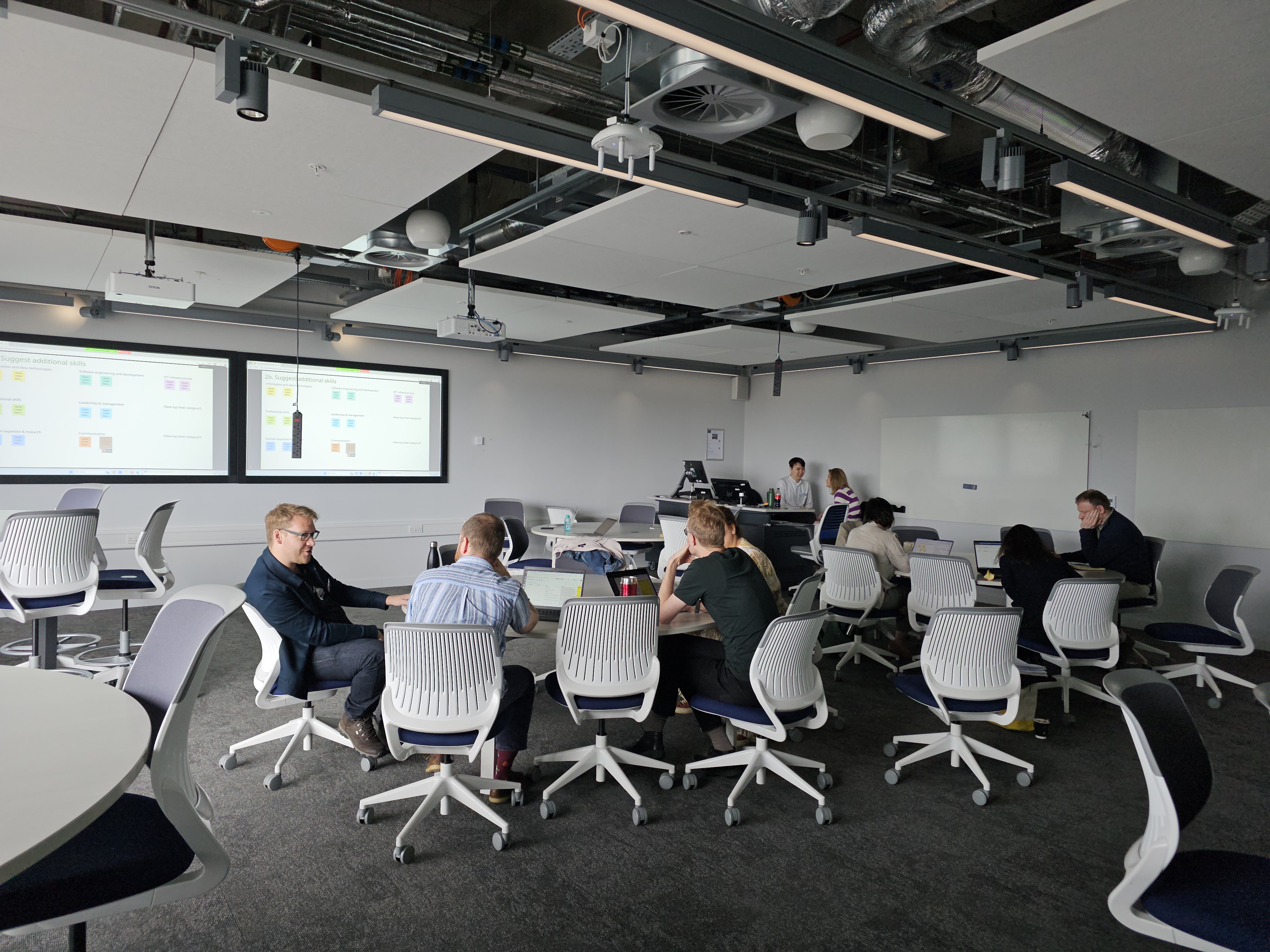
Image of a group of people sitting on chairs around a table and discussing in a meeting room with a screen in the back.

This blog post describes the motivation and learnings from a workshop organised by Phil Reed as part of his SSI Fellowship 2025. It describes challenges facing those working in digital research technical professional roles and a community-driven resource which is being built to address them. It considers the specific challenges that affect digital humanities research and the workshop that was designed and delivered for a UK-Ireland conference in June 2025.

Digital Research Technical Professionals (RTPs) are essential to advancing research in the digital humanities. This diverse group includes Research Software Engineers (RSEs), Data Scientists, Digital Archivists, and other experts who provide crucial support across the research lifecycle. These emerging roles drive the development of digital tools, infrastructure, and data that underpin academic research, particularly within the Arts, Humanities, and cultural heritage sectors.

As digital research becomes more integrated into these fields, the role of RTPs has become increasingly vital, facilitating collaboration and innovation. However, the growing demand for RTPs has highlighted the need for clearer definitions of the skills required and pathways for professional development. To address this gap, a new ‘DIRECT Framework’ is proposed – a community-driven resource designed to define, visualise and track the progression of essential skills. The Toolkit will offer a structured collection of skill sets and levels, accompanied by a range of visualisations. It will provide immediate value to individuals, allowing them to periodically assess their skills (individually or with a manager) and identify opportunities for progression, with five levels largely mapped to Bloom’s taxonomy [1]. Managers will benefit from a clear view of their team's current and projected skill status, aiding in task allocation. The Toolkit will cover both technical and non-technical skills, including time management and interpersonal skills. While the Toolkit’s initial focus has been on RSEs, professionals in the Digital Humanities face similar challenges in identifying and articulating the multidisciplinary skills they possess. Additionally, many academics in these fields perform work that aligns with RSE and RTP roles, even if they don’t hold these titles, and would benefit from exposure to this skills framework.

An interactive workshop aimed to extend the Toolkit to better capture the evolving expertise of RTPs in the Digital Humanities, including roles such as Digital Humanities Developers, Data Archivists, and Research Infrastructure Engineers. We are creating a more inclusive and comprehensive resource that provides career pathways and skills development for individuals, teams, and organisations, ensuring that Digital Humanities professionals have the tools and recognition they need to thrive.

Various initiatives have tried so far to map community needs, such as the RSE AH iDAH task force [2], the RSE AH community interest group of the DH UK IR Association, and the recent Roadmap work around a National Research Software Engineering Capability in Arts and Humanities Research as part of the Data/Culture project at the Alan Turing Institute. In addition, collaborative summer schools and training initiatives have been organised over the last years to “assess by practice” the necessary skills and knowledge for an RSE in Arts and Humanities and the paths to undertake such a role. We think it's time for the DIRECT Framework to assess and give a Digital Humanities voice for RTPs, and our workshop was the first step towards this goal.

DIRECT Framework meets DH: Outputs from the collaboration

Work has begun to populate the skills and requirements in the DIRECT Framework and develop the platform and interface. So far, most engagement has been with STEM (science, technology, engineering, and medicine) research software engineers. Phil Reed (corresponding author of this blog post) has received a Fellowship with the Software Sustainability Institute (SSI) to take the DIRECT Framework to galleries, libraries, archives, and museums (GLAM) communities and Digital Humanities researcher networks through workshops and conferences. We delivered a workshop at the UK-Ireland Digital Humanities Association (DHA) annual event, this year 16-18 June in Glasgow, Scotland.

The outputs from the workshop include:

  • Recommendations for a schema of skills that considers the needs of digital humanities researchers and their career development opportunities.
  • Further feedback on the Toolkit for the development team, considering the needs of digital humanities research and other areas.
  • Continued discussions and collaborations between the DHA RSE community interest group and the RSE Society and community.

Format of the DHA workshop

One month before the workshop, we shared a short video introduction to the project, inviting delegates to look through the current schema of skills. People could share contributions with us in advance, even if they could not attend the workshop. We asked questions to help us preallocate participants to mixed groups, such as:

  • How many years have you been in the role?
  • What kind of digital skills/tools are you using in your work?
  • Share with us any other relevant competency frameworks you know about.

Our 90-minute workshop was organised into three main parts.

First, attendees worked in pairs to perform some assessments and give feedback. They were able to study a subset of skills from the Framework and self-assess against, considering a recently completed research project they have been a part of. We applied the “Three Stars and a Wish” method to help complete this task and observe where they find gaps.

Second, we looked at a schema of skills, collecting suggestions from the DH audience and comparing them against the existing STEM-led schema collected from RSECon24.

Third, we planned to relate the Toolkit to existing alternative or complementary toolkits, asking participants to create an action plan relevant to their home institution or domain. There was no time to complete this section due to a delayed start of the session.

Our audience included researchers, research technical professionals, trainers, and funders. It was a hybrid format, with participants in the room and on Zoom. We chose Miro as the digital engagement tool for the workshop. It provides a good balance of features for presenting and collecting content; we could share our screen with people in person and online, while participants could also progress individually at their own pace on their devices. The educational offer from Miro allows anyone with a university or college email address to set up a board with my preferred sharing permissions, so that participants can contribute without having to register for a Miro account first, thus removing a barrier to engagement. Our Miro board remains open for all to view.

Next steps

We confirmed that there is an appetite for career progression support tools for research technical professionals in the digital humanities, and that there are particular considerations which will inform the development of the DIRECT Framework. The outputs of the workshop have been shared with the Toolkit team to update the schema of skills accordingly. The team are meeting with other interested groups in the UK and internationally, where there is further interest and overlap. For Phil’s Fellowship, the next steps include participating in these and other efforts, considering the wider landscape of research software competency frameworks in Europe.


[1] Bloom, B. S.; Engelhart, M. D.; Furst, E. J.; Hill, W. H.; Krathwohl, D. R. (1956). Taxonomy of educational objectives: The classification of educational goals. Vol. Handbook I: Cognitive domain. New York: David McKay Company.

[2] iDAH Research Software Engineering (RSE) Steering Group. (2023). iDAH Research Software Engineering (RSE) Steering Group Working Paper (v.0.2). Zenodo. https://doi.org/10.5281/zenodo.8060003


HomeNews and blogs hub

The Case for Investment in the Digital Arts and Humanities

Bookmark this page Bookmarked

The Case for Investment in the Digital Arts and Humanities

Author(s)
Oscar Seip

Oscar Seip

Research Community Manager

Posted on 22 May 2025

Estimated read time: 8 min
Sections in this article
Share on blog/article:
LinkedIn

The Case for Investment in the Digital Arts and Humanities

A man and woman shaking hands, arrows, trophy and stars around them

Digital methods have become essential to innovative research across the arts and humanities (Taylor, R., Walker, J., Hettrick, S., Broadbent, P., & De Roure, D., 2022). From the use of machine learning in textual analysis to high-performance computing in heritage science, the possibilities are many, but so are the challenges (Sufi, S., Bell, E., & Sichani, A.M., 2023). As projects increase in ambition and complexity, they depend more and more on research software engineering (RSE) expertise. Yet across the UK, that expertise remains unevenly distributed and, in many cases, inaccessible to researchers in the Arts and Humanities.

To address this gap, the newly released Towards a National Research Software Engineering Capability in Arts and Humanities Research: a Roadmap led by The Alan Turing Institute, offers a strategic, community-authored plan to build a sustainable national capacity for digital research in the Arts and Humanities (A&H). Co-developed with over 40 contributors from across the A&H and RSE communities, including institutions, independent researchers, and practitioners, the Roadmap outlines a people-centred approach to ensure RSE skills are embedded, accessible, and thriving across the UK. 

The main report is published alongside one companion report and one evidence base: Evidencing the Impact of Research Software Engineers on Arts & Humanities Scholarship and Evidencing the Impact of Research Software Engineers: Survey Database, which together provide a richer picture of the value and current state of RSE engagement in the sector.

What’s in the Roadmap?

The Roadmap identifies several steps to establishing a sustainable A&H RSE Capability:

  • A national directory and network of RSEs with relevant A&H experience.
  • Skills and training initiatives, building on existing programmes and developing new targeted resources.
  • Matchmaking mechanisms to connect researchers and RSEs for collaborative opportunities.
  • Community-building and outreach to encourage open, inclusive, and interdisciplinary research practice.
  • An innovation incubator, supporting the development of reusable tools and methods tailored to A&H needs.
  • Continuous monitoring and evaluation to ensure progress and adaptability.

This approach recognises that building capacity is not just about tools and infrastructure. It is about people, relationships, and shared best practices.

Why now?

Christopher Smith, Executive Chair of the Arts and Humanities Research Council (AHRC), stresses the need for the UK to grow its teaching and research ambitions to match the scale of digital transformation. In his blog post, he argues that underinvesting in the Arts and Humanities risks missing opportunities to address global challenges. The UK must invest in skilled researchers and the infrastructure needed to realise the full value of digital collections and support the collaborative, interdisciplinary work that will drive future innovation. Ultimately, investing in people is essential to unlock the full potential of its collections and maintain the UK’s leadership in global research. For example, only 6% of the UK’s national collection of objects in museums and galleries is digitised, missing an opportunity to create a powerful sovereign data asset, as noted in the government’s AI Opportunities Action Plan.

Benefits beyond the Arts and Humanities

The economic value of digitisation and computational research in the Arts and Humanities, including Galleries, Libraries, Archives and Museums (GLAM) is underscored by the Natural History Museum’s Digital Collections Programme, which offers economic and research benefits far beyond its original scope. A 2021 report commissioned by the Museum explored the economic impacts of digitising natural science collections, modelling the benefits for the UK. Using case studies across key thematic areas, return-on-investment analyses, and efficiency savings calculations, the study demonstrated that open digital collections could deliver benefits exceeding £2 billion over 30 years, representing a seven- to ten-fold return on investment. This report supports the case for digitising all UK natural science collections as a national research infrastructure, a model that could similarly be applied to other collections, where the lack of sustained technical support and infrastructure limits impact and scalability.

This need for a national approach to digital research infrastructure is further reinforced by the 2024 report Unlocking the Potential of Digital Collections: A Call to Action, which outlines policy recommendations from the Towards a National Collection (TaNC) initiative. This £18.9 million investment in the UK’s museums, archives, libraries, and galleries, funded by UK Research and Innovation’s Strategic Priorities Fund and delivered by the AHRC, aims to create a unified UK digital collection. 

TaNC argues that common technical standards, cybersecurity provisions, and long-term preservation strategies are critical to enabling cross-sector collaboration and ensuring that digital collections can be accessed, shared, and reused effectively. The initiative highlights the transformational potential of such an infrastructure—not only in expanding access to cultural heritage but also in enabling collaborative research and development (R&D), interdisciplinary innovation, and economic spillovers into the sciences and emerging fields such as artificial intelligence (AI). 

Unlocking Economic Value Through Arts and Humanities Investment

Furthermore, previous investments like the £56 million Creative Industries Cluster Programme and recently CoSTAR, which is a £75.6 million national R&D network of laboratories developing new technologies to maintain the UK’s world-leading position in gaming, TV, film, performance, and digital entertainment, demonstrate that transformative digital projects are already making a real impact. These projects harness arts and humanities research to deliver both cultural and economic benefits through innovative digital tools and robust infrastructure.

However, these projects will not be able to reach their full potential and return on investment without a dedicated team of skilled Research Software Engineers (RSEs) and research technical professionals, particularly those with domain knowledge who understand the unique challenges and opportunities within the Arts and Humanities. As the AHRC boosts its funding for digital research and infrastructure, it is important that we also match this investment in a national network for developing these specialised skills.

As highlighted in the 2023 The UK’s research and innovation infrastructure: opportunities to grow our capability:

“The development of software and the support of the UK’s e-infrastructure relies heavily on skilled researchers. If the UK is to meet the ambition of remaining at the forefront of computational and data-intensive science, the career development of research software engineers and research data professionals is critical. These professionals also have important roles in teaching and training at both undergraduate and graduate level and may be based in universities, research institutes or businesses.

Until recently, the career paths for software engineers and research data professionals within academia had not been well defined. These skill sets are already in high demand across both industry and academia, so it is critical that the UK provides the environment to nurture and retain these highly skilled individuals.

Future needs could be addressed through existing mechanisms or through the creation of a national network of facilities for research software engineering, which could help broker access to these skills across the UK. Investment in business engagement and development of skills would also enable enhanced collaboration with industry.” (p. 126)

This statement underscores a dual imperative. First, it recognises that technical skills ranging from advanced software development to data management are foundational to sustaining digital research infrastructure and advancing research excellence. Second, it calls for a strategic framework to nurture these skills through clearly defined career paths, targeted investment in training, and robust collaborations between academia and industry.

In the context of Arts and Humanities research, where traditional methodologies are being enhanced by digital innovation, the need for Research Software Engineers (RSEs) and related technical professionals is particularly pressing. Their contributions not only improve the reproducibility and integrity of research but also expand the potential for interdisciplinary innovation, bridging the gap between technical expertise and humanistic inquiry. Establishing a national capability in this area would ensure that the UK can leverage these skills to drive both academic excellence and broader economic growth.

What’s next?

This Roadmap is a call to action. It invites institutions, funders, and researchers to join the call for building a national A&H RSE Capability. For those already working in this space, we hope the Roadmap highlights the value of your work and offers a framework for building greater impact. If you’re interested in learning more or getting involved, please get in touch via ahrsecapability@turing.ac.uk or email me directly.


HomeNews and blogs hub

Call for Participation: Research Software Engineering Survey

Bookmark this page Bookmarked

Call for Participation: Research Software Engineering Survey

Author(s)
Oscar Seip

Oscar Seip

Research Community Manager

Posted on 25 October 2024

Estimated read time: 1 min
Sections in this article
Share on blog/article:
LinkedIn

Call for Participation: Research Software Engineering Survey

Research Software Engineering Survey

The Software Sustainability Institute (SSI) is pleased to support our Fellow Anna-Maria Sichani and the Research Software Engineering in the Arts and Humanities Community Interest Group (CIG) in their efforts to gather insights from professionals involved in the design, development, and maintenance of research software within the Digital Humanities field.

If you identify as a Research Software Engineer—someone who applies software engineering skills in a research environment—or if you are a researcher, data steward, research infrastructure engineer, or developer contributing to Research Software Engineering initiatives in the Arts and Humanities or cultural heritage research domains, we invite you to participate in the survey.

This survey aims to map the current needs of an inclusive Research Software Engineering community in the UK and Ireland. Your feedback will play a crucial role in informing our advocacy, engagement, and policy efforts in this space.

We also encourage you to share this survey with colleagues who may not be affiliated with any specific institution but have relevant experience. Their perspectives are invaluable to our mission.

HomeNews and blogs hub

Reflections on the Digital Turn in the Humanities and Science

Bookmark this page Bookmarked

Reflections on the Digital Turn in the Humanities and Science

Author(s)
Oscar Seip

Oscar Seip

Research Community Manager

Posted on 5 August 2024

Estimated read time: 4 min
Sections in this article
Share on blog/article:
LinkedIn

Reflections on the Digital Turn in the Humanities and Science

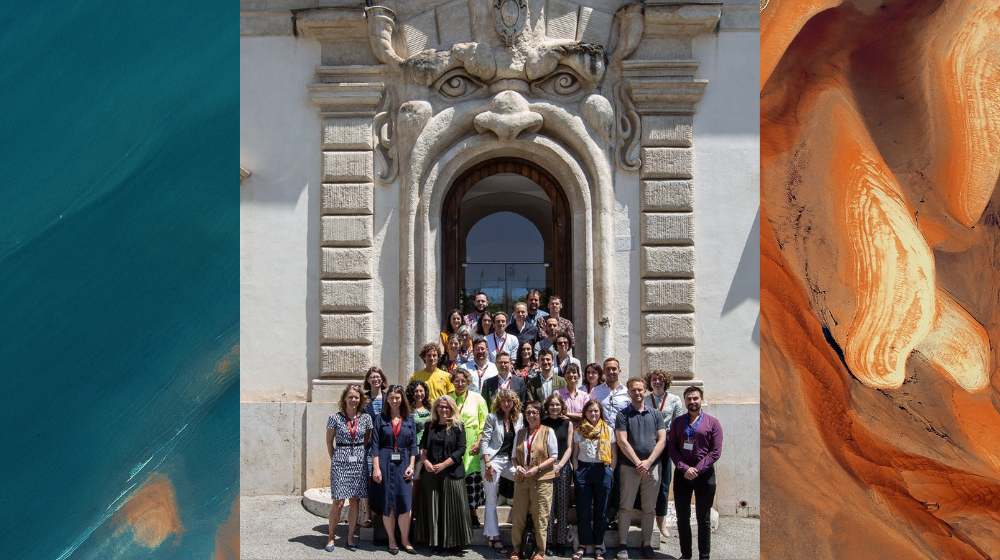
Group picture at the conference Visualizing Science in Media Revolutions

In the ever-evolving landscape of scholarly inquiry, the shift from analogue and mechanical to digital technologies known as the Digital Turn marks a pivotal moment, characterised by a convergence of technological advancements, new methods of information dissemination, and changing research practices. This transformative phase bears striking similarities to the Early Modern period (circa 1450-1700), where new tools such as the telescope and microscope, alongside the advent of the printing press, revolutionised scientific inquiry. Just as early modern scientists began to ask new questions about nature and the world, today's researchers are leveraging digital technologies to explore ideas and phenomena in novel ways. In both instances, the relationship between the tools of scientific inquiry and the scope of research is evident, echoing the SSI mantra: better software, better research.

During the conference Visualizing Science in Media Revolutions at the Bibliotheca Hertziana - Max Planck Institute for Art History in Rome, led by Dr Sietske Fransen, these parallels were explored in depth. Among the highlights of the research group’s activities presented at the conference was a summary of the seminar series "Reflections on the Digital Turn in the Humanities and Sciences", organised by Sietske Fransen and myself. Held between October 2020 and December 2021, amidst the height of the pandemic, these seminars brought together 21 speakers from diverse backgrounds and countries, including scholars, artists, curators, archivists, and library professionals. Topics spanned a wide array, encompassing the shift from analogue to digital formats, advancements in book history, digital correspondence curation, image analysis tools, information management practices, digital model use, and the pandemic's impact on digital transition and remote collaboration.

A final publication detailing the outcomes of the seminars will be published in 2025 as part of the conference proceedings. A recurring theme throughout our discussions was the profound impact of the Digital Turn on scholarly practices. The accelerated shift to digital spaces, propelled by the pandemic, has facilitated broader participation and inclusivity in scholarly discourse. However, this development has also underscored the necessity of digital capital, highlighting the critical infrastructure and skills necessary to navigate the evolving digital landscape. Moreover, the reliance on digital tools and resources has exacerbated societal inequalities and raised concerns about data privacy, copyright, and the ethical representation of historical materials. 

Many speakers emphasised the enduring importance of foundational skills such as archival work and manuscript editing. These aid in mitigating existing biases in library research collections, which are often amplified by current digitisation strategies that focus on the most researched and notable parts of their collections.

Another prevalent theme in the seminars was the shift from analogue to digital formats. Like their early modern counterparts in the age of the printing press, the advent of new technologies has revolutionised the way information is accessed, visualised, and analysed. Presenters explored the challenges and opportunities associated with digitising and consolidating diverse collections, stressing the significance of adopting shared standards to improve the discoverability and reusability of data, thereby enhancing its sustainability. 

Similar to how the emergence of printing shops facilitated the convergence of scholars, printers, artists, and artisans from diverse national and cultural backgrounds, one of the most significant impacts of the Digital Turn on scholarly practices is its demand for a broader skill set and increased collaboration among scholars, data scientists, researchers, artists, and research software engineers. In this vein, the proliferation of new technologies and media has not only revolutionised how scholars and scientists access, visualise, and analyse information, but also catalysed the emergence of new communities of inquiry, fostering interdisciplinary collaborations and the cross-fertilisation of ideas. However, while collaborative efforts between the humanities and sciences foster innovation and raise new questions, the indiscriminate application of disciplinary tools from one field to datasets from another carries inherent risks

In conclusion, it is imperative to highlight the necessity of ongoing reflection and adaptation in response to evolving technologies and research methodologies. Scholars must remain vigilant in critically evaluating the implications of digital interventions on knowledge production and dissemination, ensuring the equality, diversity, inclusivity, and accessibility of scholarly practice. By embracing interdisciplinary collaboration and innovative approaches in an equitable manner, we can navigate the complexities of the Digital Age and drive meaningful change in the pursuit of knowledge, advancing our understanding of the past, present, and future.

HomeNews and blogs hub

Digital Humanities & Research Software Engineering Summer School 2024

Bookmark this page Bookmarked

Digital Humanities & Research Software Engineering Summer School 2024

Author(s)
Denis Barclay

Denis Barclay

Communications Manager

Posted on 9 May 2024

Estimated read time: 2 min
Sections in this article
Share on blog/article:
LinkedIn

Digital Humanities & Research Software Engineering Summer School 2024

Three people looking at a computer screen, the logos of the Edinburgh Centre for Data, Culture & Society, Cambridge Digital Humanities, King’s Digital Lab and The Alan Turing Institute

The Edinburgh Futures Institute will host the Digital Humanities & Research Software Engineering Summer School 2024 between Tuesday 2 and Friday 5 July. Applications are now open and will close on Friday 17 May.

The summer school is aimed at researchers in the digital humanities who intend to professionalise their software engineering skills. It will combine talks and practical activities and explore how the intersection of digital humanities and software engineering is shaped across different UK institutions. Participants will have an opportunity to gain an invaluable insight into the roles and practices of Research Software Engineering in Digital Humanities research. Each day one of the partner institutions will take the lead in showcasing the practicalities of working in the field. Mornings will start with a series of presentations on matters ranging from careers in RSE to project life cycles. The afternoon sessions will consist of hands-on activities spanning topics such as effective data visualisation to sustainable coding and peer programming.

The event is co-organised by the Edinburgh Centre for Data, Culture & Society (Lucia Michielin), Cambridge Digital Humanities (Mary Chester-KadwellJonathan Blaney), King’s Digital Lab (Neil Jakeman), and The Alan Turing Institute (Federico Nanni) and it is supported by the Data/Culture Project (AHRC Grant Ref: AH/Y00745X/1) and the Society of Research Software Engineering.

The event has been hosted in the past by The Alan Turing Institute and Cambridge Digital Humanities.

HomeNews and blogs hub

Registration open for Alan Turing Institute Digital Humanities & Research Software Engineering summer school

Bookmark this page Bookmarked

Registration open for Alan Turing Institute Digital Humanities & Research Software Engineering summer school

Author(s)

Jacalyn Laird

Posted on 14 May 2021

Estimated read time: 2 min
Sections in this article
Share on blog/article:
LinkedIn

Registration open for Alan Turing Institute Digital Humanities & Research Software Engineering summer school

Share on blog/article:
LinkedIn
Subscribe to Digital Humanities
Back to Top Button Back to top