Skip to main content Site map
Old Tag
Fellows 2013
Fellows 2014
Fellows 2015
Fellows 2016
Fellows 2017
Fellows 2018
Fellows 2019
Fellows 2020
Fellows 2021
Fellows 2022
Fellows 2023
Fellows inaugural meeting
Fellows newsletter
Fellows selection
Category
HomeNews and blogs hub

Open source AI/ML guided drug discovery workshop: translating learnings from Africa to LATAM

Bookmark this page Bookmarked

Open source AI/ML guided drug discovery workshop: translating learnings from Africa to LATAM

Author(s)
Gemma Turon

Gemma Turon

SSI fellow

Posted on 16 March 2026

Estimated read time: 6 min
Sections in this article
Share on blog/article:
LinkedIn

Open source AI/ML guided drug discovery workshop: translating learnings from Africa to LATAM

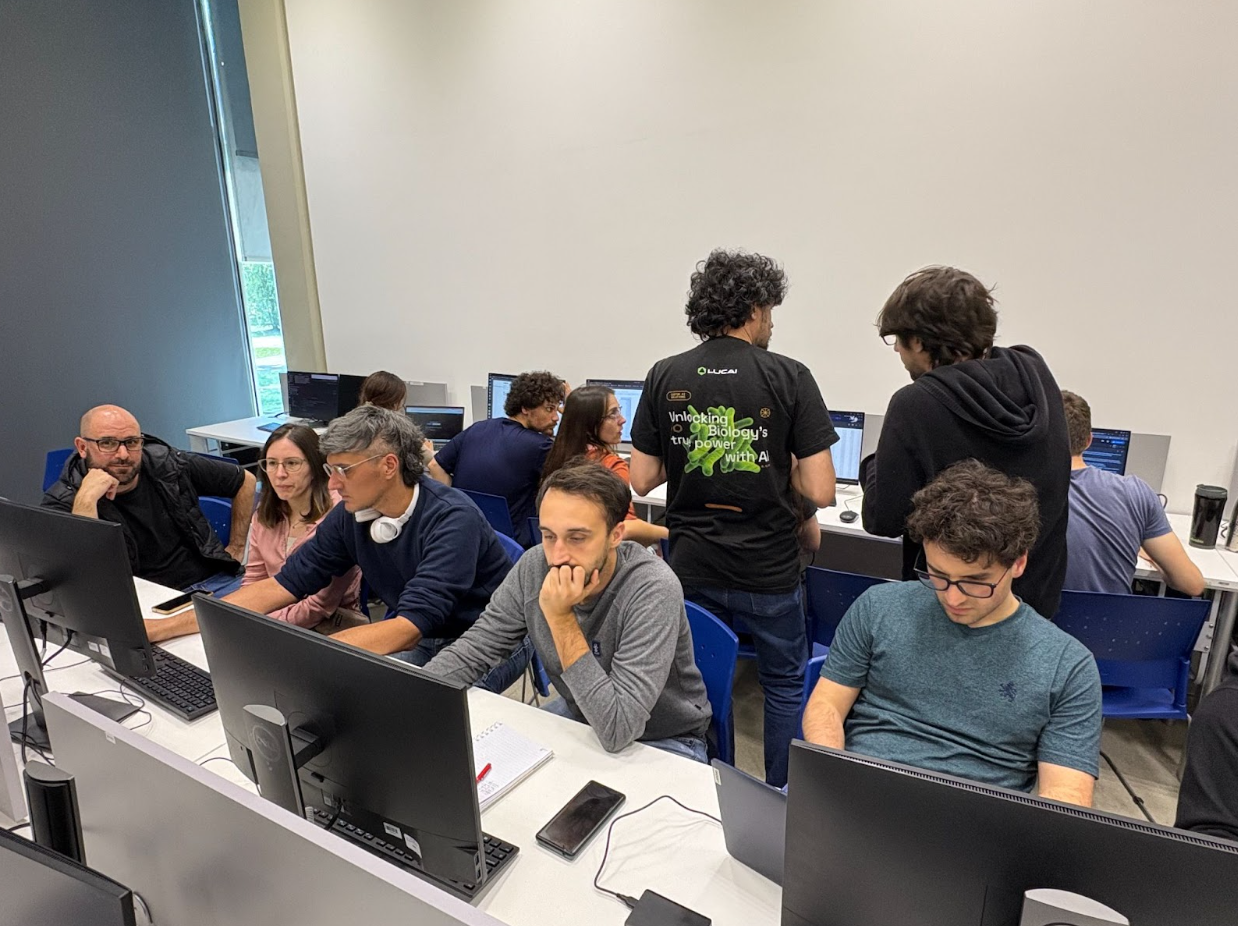
image of a group of people working behind computers

Image: Hands-on session ongoing at the Facultad de Ciencias Exactas y Naturales, UBA

The Ersilia Open Source Organisation, the research non-profit I co-founded and lead since 2020, was founded with a clear objective: equip laboratories in low-resource regions with open source AI/ML tools for infectious disease research. As part of our mission, we focus on three areas of impact: i) development of AI-based research software for drug discovery, ii) research in infectious diseases, and iii) capacity strengthening in AI. On the latter, we organise workshops on the application of AI methods for drug discovery and target medicinal chemists, molecular biologists, pharmacists and bioinformaticians in regions where these diseases are endemic. Oftentimes, we group the countries we support under the controversial “global south” term. While widely used to make a distinction between westernised or global north countries (a.k.a, Europe, North America and Australia), it lumps together very different countries, and is even geographically incorrect. Most of Ersilia’s work has so far been developed in Africa. Through a series of grant-funded events, we have delivered in-person workshops in South Africa, Cameroon, Kenya, Ghana and Zambia, and our experience in other “global south” countries, including the Latin American (LATAM) region, is scarce. Therefore, we were thrilled when the opportunity appeared to co-organise a workshop in Buenos Aires, Argentina.

For a successful event, having a local host that can support the event organisation, connect with relevant experts for course contributions and continue the networking activities after the event is key. In previous workshops co-organised with the H3D Foundation we have counted with the support of the University of Cape Town, the University of Ghana or the KEMRI, respectively. In this case, the connection arose naturally thanks to the Open Life Sciences program. After completing my own OLS training, I have acted as mentor for two Argentinian-based projects, MetaDocencia (led by Dr. Nicolas Palopoli) and TidyScreen (Dr. Alfredo Quevedo; Universidad Nacional de Córdoba). Through these collaborations, we identified a common interest in open science, LATAM-focused training and particularly, AI for drug discovery. Together, we designed an event with the following goals:

  • Learn how to adopt open source AI models for drug discovery
  • Understand the FAIR principles for research software
  • Understand and get experience in the use of Open Source AI/ML tools for cheminformatics and drug discovery: The Ersilia Model Hub, TidyScreen, AutodockBias, and others
  • Establish a community network of researchers and software developers in Argentina who are interested in utilizing open-source AI/ML tools for Cheminformatics and drug discovery.

At Ersilia, we were really keen to translate our learnings from African-focused workshops to this first event in LATAM, and adapt our content and training materials for future opportunities. Unlike other courses, on this occasion we counted with a strong local community developing their own tools for drug discovery, such as TidyScreen, which was a great starting point to consolidate a shared curriculum giving relevance to not only one, but several computational approaches to drug discovery. In addition to Ersilia’s and the University of Cordoba team, the facilitators included the hosts at the University of Buenos Aires, Prof. Marcelo Martí and Prof. Adrian Turjanski.

In this post, we try to summarise the key elements that made this course a success:

  1. Blending keynote sessions with hands-on practice with real examples. Previously we had to limit hands-on sessions to smaller exercises or less applied to real world, due to technical and infrastructural constraints
  2. Linked to the above, having a computer room set up for the entirety of the course accelerated troubleshooting and allowed for previous installation, system-wide of the needed software. This is truly location-dependent and we are really thankful to the University of Buenos Aires for their support.
  3. Focusing on reproducibility and training materials. Ensuring that participants will be able to reproduce the course, play with the software and propose improvements or make requirements based on their needs is essential to increase tool adoption. At Ersilia we always prepare a Gitbook for the course, and TidyScreen also has abundant and clear documentation and case examples.
  4. Demonstrating the relevance of open source software. The best demonstration of this is the integration of the Ersilia Model Hub, our flagship AI platform, inside TidyScreen. Dr. Quevedo and his team took the lead in integrating our software into their pipeline and showcasing how collaboration can bring more and better research outcomes
  5. Adapting the concepts to the local research interests. As much as possible, using context-relevant  examples makes the course more appealing to scientists. In this case, we focused on antibiotic-resistant infections and Chagas disease.
  6. Moving beyond English. While English is the predominant language in the scientific arena, we should acknowledge the limitations it poses to non-native speakers (including the Ersilia team). For example, we struggled previously in French-speaking Cameroon. Translation can be expensive and time consuming, but we fully advocate for it as much as possible. This time around, all course facilitators were Spanish-speaking, and the entirety of the course was delivered in Spanish, even though written course contents and documentation were in English.
  7. Allowing for in-person interactive time. While online training enables wider access, the opportunity to spend time together with students and other researchers sparks discussion and collaboration that is slower to build in online settings. However, to ensure equitable participation, we offered a hybrid course, and online participants could join in all sessions, including the hands-on.

In sum, we offered a course that blended several open-source tools for drug discovery from local (Universidad de Buenos Aires), regional (Universidad Nacional de Córdoba) and international (Ersilia) organisations, demonstrating how different research software tools can interact and complement each other. We had fifty in-person and twenty online attendees, and after the four-days course, participants left with a solid understanding of how to use the tools, guidance for implementing the learnings in their own projects and a network of contacts to expand their career opportunities and research interests, a networking that continued in the adjunct RICiFa conference. The support through the Further Development Grant from the Software Sustainability Institute (of which I am a fellow) was key to enable the participation of Ersilia facilitators in the event.


HomeNews and blogs hub

PyCon UK 2025 Through My Eyes: Creativity, Collaboration, and Community

Bookmark this page Bookmarked

PyCon UK 2025 Through My Eyes: Creativity, Collaboration, and Community

Author(s)
Jyoti Bhogal Profile Picture

Jyoti Bhogal

SSI fellow

Posted on 12 March 2026

Estimated read time: 7 min
Sections in this article
Share on blog/article:
LinkedIn

PyCon UK 2025 Through My Eyes: Creativity, Collaboration, and Community

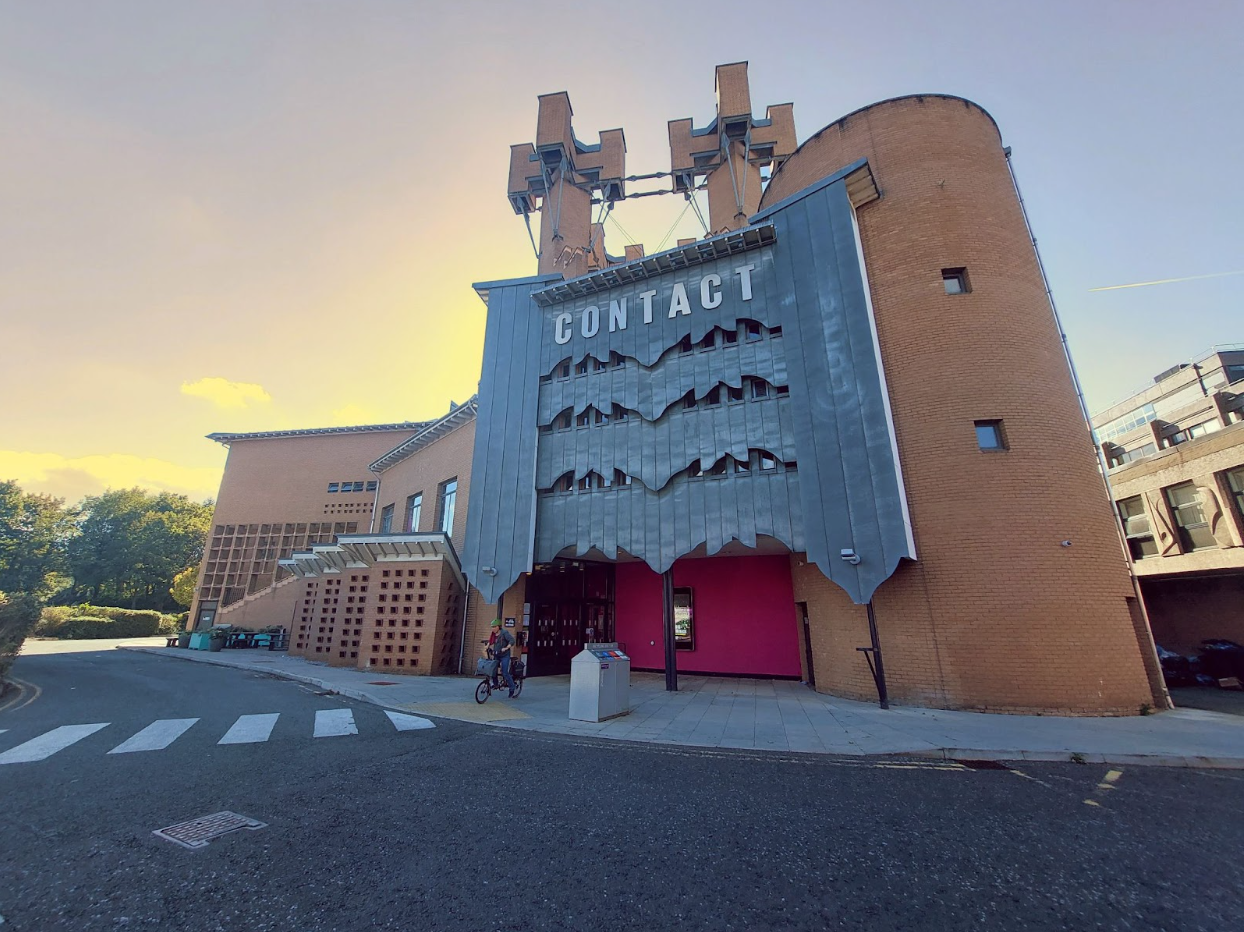
Image of Contact Theatre in Manchester

Header image: Picture of the conference venue, Contact Theatre, Manchester, with its architecture inspired by a castle.

PyCon UK 2025 took place at the Contact Theatre in Manchester, and the atmosphere was nothing short of inspiring - vibrant, diverse, friendly, and full of learning. Over four exciting days, the conference brought together an incredible mix of talks, workshops, collaborative dev sprints, amazing people, and, of course, great food. It was a space where ideas flowed freely, communities connected, and I had a lot of meaningful learnings to take away. The venue itself has a unique architecture, which is so conducive to creative and collaborative work.

Day 1
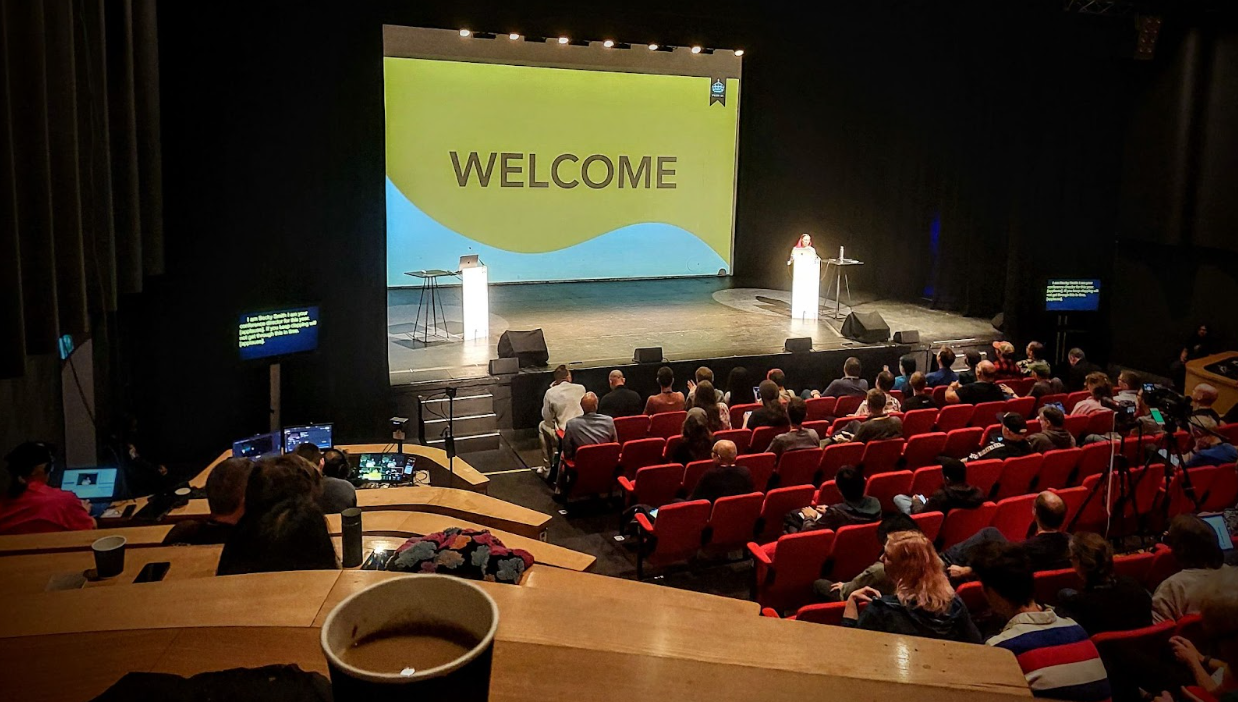
Image: Picture of Becky Smith giving the welcome note of the conference, image by me.

Day 1 began with a warm welcome note from Becky Smith, who introduced us to the Python community across the UK and beyond. The first keynote of the conference was delivered by Hynek Schlawack on “Python’s True Superpower.” Among the many insights, one key takeaway for me was learning about uv - a powerful Python tool that simplifies installation, project setup, and package management.

I also attended a fantastic talk by Sasha Romijn titled “8 Python Performance Mistakes I Will Not Make Again.” Sasha spoke in detail about common pitfalls such as skipping conversations about performance requirements with clients, making assumptions about bottlenecks without evidence, misreading profiling data, underestimating complexity, ignoring lessons from past work, and sticking rigidly to a single-core CPU. It was full of practical lessons that I’ll carry forward in future work.

Later in the day, participants were invited to pitch ideas for the lightning talks, which would take place in the final session. I pitched my idea on creating a Python package using Hatch for research data management - and it got selected! I eventually presented “Five Common Research Data Management Issues & How to Resolve Them: With Python Packaging using Hatch from PyPI.” You can watch the recording here, and the slides are available as well.

Day 2
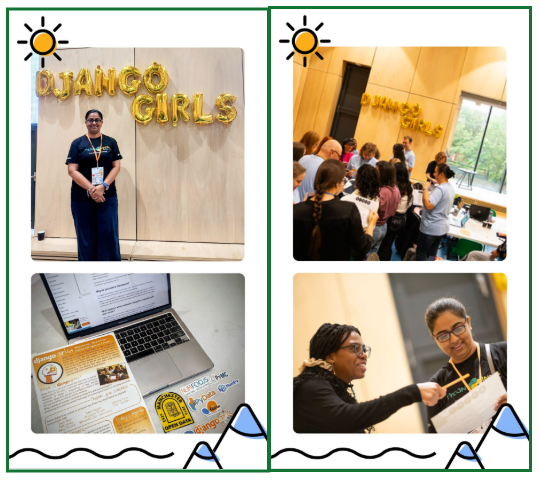
Image on the left: Picture of me clicked by a fellow participant at the PyCon UK Django Girls Workshop. Picture of the PyCon UK Django Girls Workshop material, image by me. Image on the right: Picture of the Bingo game at the Django Girls workshop, image by Mark Hawkins for the PyCon UK 2025.

I dedicated the entire second day to the Django Girls workshop, and it was one of the highlights of the conference. The Django Girls volunteer team had curated a thoughtful, beginner-friendly program structure: participants were grouped into pairs or trios, and each group was assigned a coach. Throughout the day, we followed a detailed tutorial that guided us step-by-step - from creating folders on our local machines to building a complete web app.

What stood out was how incredibly patient and knowledgeable the coaches were. Even the smallest questions were answered with clarity and depth, helping me connect how local code and servers relate to remote hosts and deployment. The detailed explanations really helped me understand the bigger picture of how Django works.

Here’s the GitHub repository for the Django app I built during the workshop.

I also spent some time chatting with sponsors at their stalls and participated in a fun Python quiz organised by Flok Health, where I learned something new about Python generators being a function or an expression that allows you to create iterators in a memory-efficient way! They are particularly useful for working with large datasets or potentially infinite sequences, as they generate values on demand rather than storing the entire sequence in memory.

Day 3
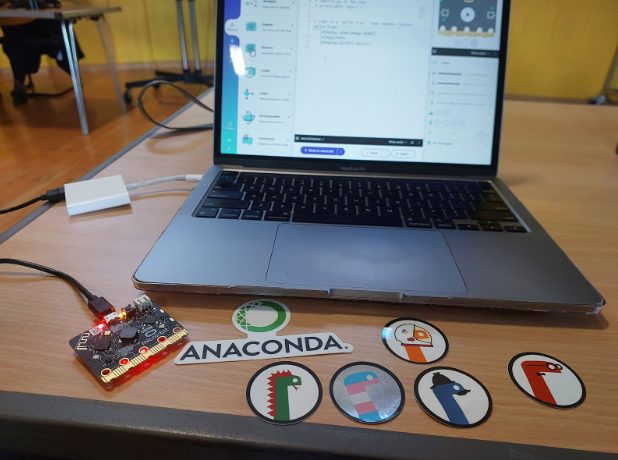
Image: Picture at a PyCon UK 2025 workshop, image by me.

Day 3 also had talks and workshops running in parallel. The day began with a keynote by Sheena O’Connell titled “Playing the Long Game.” I really appreciated the advice Sheena shared for early-career professionals. When it comes to using GenAI and LLMs, Sheena emphasised that while they are great as a starting point, it is still essential to understand what the generated code actually does.

I participated in three hands-on workshops:

1. What We Can Learn from Exemplary Python Documentation by Christian Heitzmann

In this workshop, we explored documentation tools used in well-known Python projects such as NumPy and pandas. It was a very practical session that gave insights into how good documentation is structured and maintained.

2. Theming Workshops for Education via “Coding a Satellite” by Sarah Townson

This was an excellent workshop by Sarah, where she walked us through her process for designing programming workshops for school students. I got hands-on experience writing simple programs using the child-friendly interface of the learning platform.

A unique part of the workshop was working with micro:bit devices - small boards with mounted  LEDs. We coded using the Code with Mu editor, which provides several ready-to-run modules with sample code that can be modified. Each participant was given a micro:bit, and it was a lot of fun seeing our code come alive on the device.

3. How to Measure and Elevate Quality in Engineering Practice by Daniele Procida

The final workshop of the day was a brainstorming session led by Daniele Procida, Director of Engineering at Canonical. He introduced a team-progress tracking system with multiple maturity levels, each containing sub-goals. He set up a system where teams can choose which sub-goals they want to focus on within a given level. This self-reporting system - centred on small, incremental, and realistic progress steps - has proven effective precisely because teams are free to choose their path.

Day 4

Day 4 was intentionally shorter after three intensive days of talks and workshops. It was the Dev Day, where around ten organisations presented their open-source projects and invited participants to contribute - whether through ideas, documentation, or code!

I contributed to the ACTS Research Software Stories component of the {RSQ}Kit, developed within the EVERSE project. The dev sprint was hosted by Michael Sparks and Caterina Doglioni from the University of Manchester.

Please feel free to check out my contributions through this GitHub link!     

Social Sessions

Across the conference days, PyCon UK 2025 offered plenty of opportunities to unwind, connect, and discover new experiences beyond the talks and workshops.

Day 1

I attended a live reading of “Ada: A play inspired by Ada Lovelace”, written by Pythonista Emily Holyoake. The play beautifully weaves Ada Lovelace’s life with a contemporary narrative on artificial intelligence. With one director and five readers voicing Charles Babbage, Ada Lovelace, Lady Byron, a learning machine named Ginny, and a journalist, the one-hour reading felt incredibly immersive. It transported me to the 19th century, reminding me of Ada’s pioneering contributions to computing, mathematics, and imagination itself. Her legacy continues to inspire all who want to think beyond, and especially women in STEM.

Day 2

I spent the evening in a lively round of Scrabble and Taboo. It was energising to stretch my brain both for forming clever Scrabble words and for guessing (or explaining!) tricky Taboo prompts. Lots of laughter, lots of competition.

Day 3

A group of us headed out to a Middle Eastern restaurant, where I enjoyed Baba Ghanoush with warm pita bread - a simple but delightful end to a long day.

Throughout the conference, during the welcome and closing sessions, Mark Smith kept the whole room entertained with his iconic tractor jokes - ones that I find myself still laughing at!

Coming soon: A Django web app I built during one of the workshops - stay tuned!

 

HomeNews and blogs hub

Co-Creating DAHRSE Midlands: Vision, Voices, and Next Steps

Bookmark this page Bookmarked

Co-Creating DAHRSE Midlands: Vision, Voices, and Next Steps

Author(s)
Godwin Yeboah Profile Picture

Godwin Yeboah

SSI fellow

Posted on 5 March 2026

Estimated read time: 6 min
Sections in this article
Share on blog/article:
LinkedIn

Co-Creating DAHRSE Midlands: Vision, Voices, and Next Steps

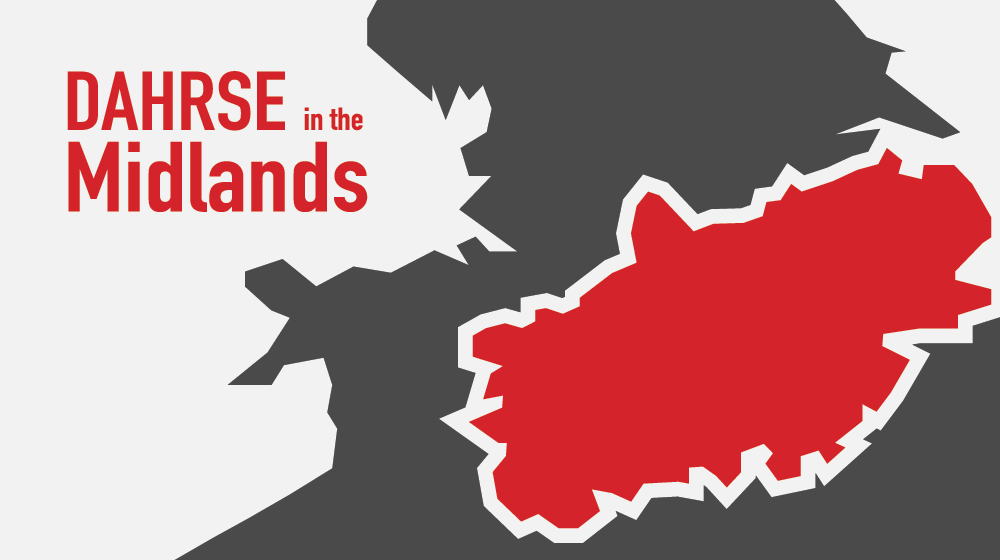
DAHRSE in the Midlands

In November 2025, the Digital Arts and Humanities Research Software Engineers Midlands (DAHRSE Midlands) community gathered online for its first meeting. The theme “Co-Creating DAHRSE Midlands: Vision, Voices, and Next Steps” was all about collaboration, inclusivity, and building momentum for Digital Arts and Humanities Research Software Engineering in the Midlands.

The DAHRSE Midlands community is growing as a collaborative space for Digital Arts and Humanities Research Software Engineers (RSEs) across the region. This meeting focused on shaping our shared vision, amplifying voices, and planning actionable next steps to strengthen our network.

This event was proudly supported by the Software Sustainability Institute (SSI) via their fellowship programme; their commitment to building sustainable software communities made this event possible.

Highlights from the Talks

Welcome & Vision Setting

Godwin Yeboah, from the University of Warwick and SSI Fellow, introduced the DAHRSE Midlands initiative, outlining its goals, objectives, and early activities. These were further discussed during the community discussion section, where members contributed ideas and feedback.

He also proposed a desktop study titled:

“Exploring the Landscape of Digital Arts and Humanities Research Software Engineers in the Midlands: A Preliminary Desktop Study and Working Paper.”

This study aims to explore the institutional landscape of DAHRSEs in the Midlands—mapping where Digital Arts and Humanities Research Software Engineers are based, particularly within universities, the GLAM sector (Galleries, Libraries, Archives, and Museums), and research groups. It will examine their contributions, especially those visible online, and highlight the roles these RSEs play within their respective institutions.

Working research question:

What is the current landscape of Research Software Engineers in the Digital Arts and Humanities in the Midlands, and how do they contribute to, and impact the field?

This initiative and the proposed study represent an important step toward understanding and strengthening the role of RSEs in the digital arts and humanities ecosystem.

Browser Extensions for Accessibility Testing

Catherine Smith, from the University of Birmingham and SSI Fellow, demonstrated practical tools for manual accessibility testing of websites—an essential step beyond automated CI tools. Her talk highlighted how browser extensions can help improve accessibility compliance in humanities web projects.

Catherine reminded us why manual accessibility checks matter:

“Automated tools can only take you so far—manual checks are essential to check accessibility criteria are being met.”

She demonstrated browser extensions that make manual accessibility testing easier and more effective, helping humanities web projects ensure that there are no barriers for people interacting with the material and also that they comply with legal standards.

Tools mentioned:

Reuse, Remake, Recycle: Working with Older Mobile Devices

Iain Emsley, from the University of Warwick, shared insights from a project using older mobile devices for AI mapping in urban spaces. His discussion raised critical questions about planned obsolescence, sustainability, and policy implications for Digital Humanities hardware projects.

Iain’s talk sparked a fascinating discussion on sustainability and innovation:

“Planned obsolescence creates challenges—but it also opens creative possibilities for reusing older hardware.”

He shared lessons from a project using old mobile phones for artificial intelligence (AI) mapping, raising questions about policy, testing constraints, and the skills needed to keep legacy devices in play.

Community Discussion: Shaping the Future (Together)

The most dynamic part of the meeting was our open discussion. A clear theme emerged: start small, grow organically. Rather than chasing big, shiny ideas, we’re building momentum through doable, repeatable activities that help people connect and share.

Activities that build connection and skills
  • Short talks, lightning demos (tools and techniques), and show‑and‑tells (experiences and insights) to share best practices.
  • Informal Teams chats to surface topics and quick wins.
  • Resource repositories on our website—starting with practical collections (e.g., accessibility tools) that teams can use immediately.
  • Joint seminars with RSE Midlands and participation in external activities led by SSI and SocRSE.
Growing an inclusive membership

We agreed to refine the “Join our community” page so it reflects the breadth of roles in our space—especially those without a formal “RSE” title who still write code, build workflows, or steward research software.

Guiding questions we’ll feature:

  • Do you work in the GLAM sector and write code?
  • Do you work in Digital Arts & Humanities and write some code or work with research software?

We’ll also conduct a desktop study (see above) to understand the regional landscape and publish blogs that share ideas and practice.

Communication & onboarding

To improve visibility and make joining easier, we’re streamlining our channels and processes:

For those who prefer updates without formal membership, we’re adding a “Stay informed without joining” option on the website.

Acknowledgment

A big thank you to the Software Sustainability Institute (SSI) for sponsoring and supporting this meeting and overall initiative. Their work in promoting sustainable software practices continues to empower communities like ours.

Thanks also to DAHRSE community members Catherine Smith and Iain Emsley for their insightful talks and contributions to the discussion. We would also like to acknowledge SSI Fellow Iain Barrass for kindly volunteering to review our draft.

What We’re Doing Next

We agreed to:

  • Refine communication channels and onboarding to make it easier to connect and participate.
  • Iterate on community activities (talks, demos, resource pages) for steady, organic growth.
  • Conduct desktop study and publish blog posts that share findings, ideas, and best practices.

Get Involved

Want to help shape the future of DAHRSE Midlands?

Together, we’re building a connected, sustainable community for Digital Arts & Humanities RSEs in the Midlands—one small, purposeful step at a time.


HomeNews and blogs hub

CaSDaR for professionalisation of data stewardship roles in the UK

Bookmark this page Bookmarked

CaSDaR for professionalisation of data stewardship roles in the UK

Author(s)
Phil Reed Profile Picture

Phil Reed

SSI fellow

Posted on 3 March 2026

Estimated read time: 2 min
Sections in this article
Share on blog/article:
LinkedIn

CaSDaR for professionalisation of data stewardship roles in the UK

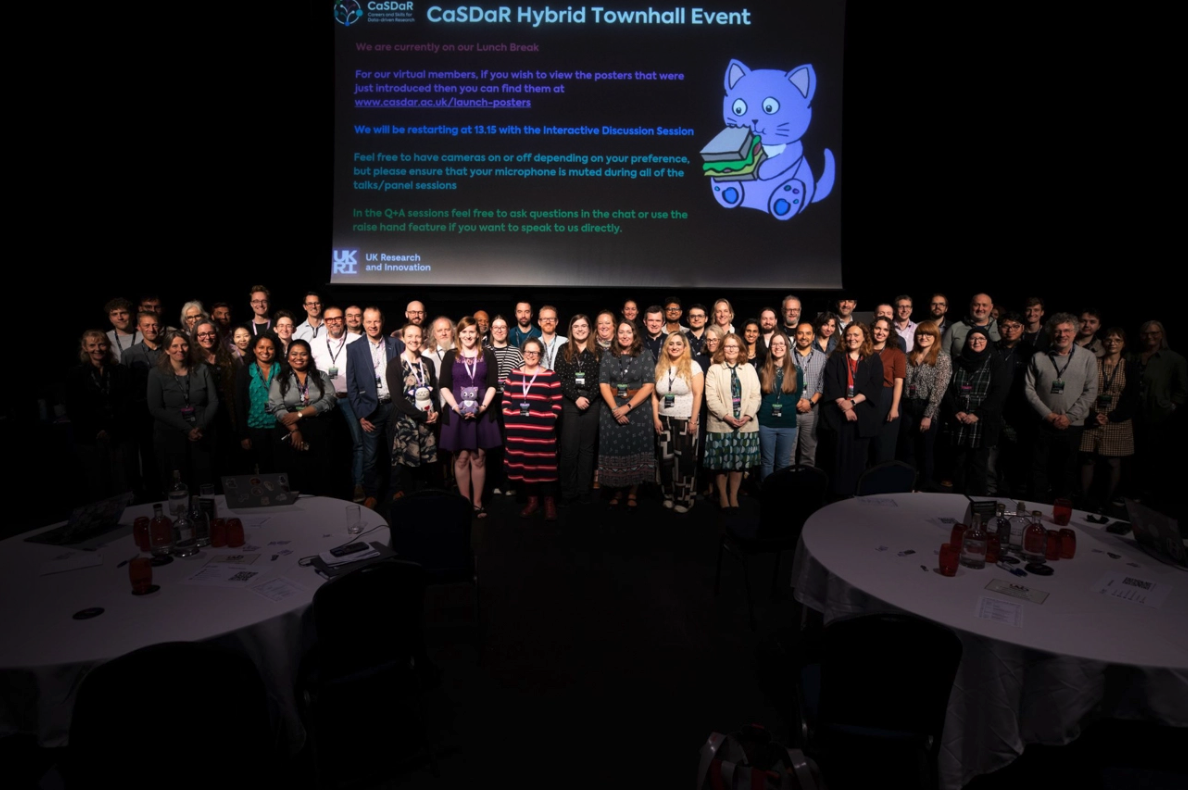
Group photo of attendees at the CaSDaR event

In 2025, I attended the launch of the CaSDaR Network+ platform in Birmingham, UK. Careers and Skills for Data-driven Research (CaSDaR) aims to help to define the role of Data Stewards within the UK research landscape and advocate for their recognition and representation across institutions. The programme featured insights from its project partners ELIXIR-UKUK Reproducibility NetworkDigital Curation Centre and Physical Sciences Data Infrastructure, and culminated with the launch of the CaSDaR funding call.

I delivered a lightning talk about the DIRECT, the UK community developed Research Technical Professionals (RTP) skills framework (see previous SSI blog posts). There was ample opportunity to discuss common interests with people from across the country and further during the poster sessions.  

A highlight for me was the keynote presentation by Anneke Lubben (University of Bath). She spoke about leadership from the perspective of someone who progressed from a research technical professional background, rather than a traditional academic route. When presented with a crisis, she advises people to focus on fires not fireworks: Fireworks will happen regardless but will fizzle out whatever you do; fires will generally burn the house down so you need to get involved. If you can identify whether the crisis is a fire or a firework, proceed accordingly. 

Finally, a takeaway action I set myself was to look into the RCM Cooperative, for research community managers. This new initiative was described by SSI Fellow Emma Karoune as part of her presentation on the Turing Way, and is another network of people in roles similar to my own. I plan to find more opportunities here to collaborate and share experiences so that I can continue to improve my professional development.


HomeNews and blogs hub

Time spent unconferencing at ODC10

Bookmark this page Bookmarked

Time spent unconferencing at ODC10

Author(s)
Jyoti Bhogal Profile Picture

Jyoti Bhogal

SSI fellow

Posted on 24 February 2026

Estimated read time: 5 min
Sections in this article
Share on blog/article:
LinkedIn

Time spent unconferencing at ODC10

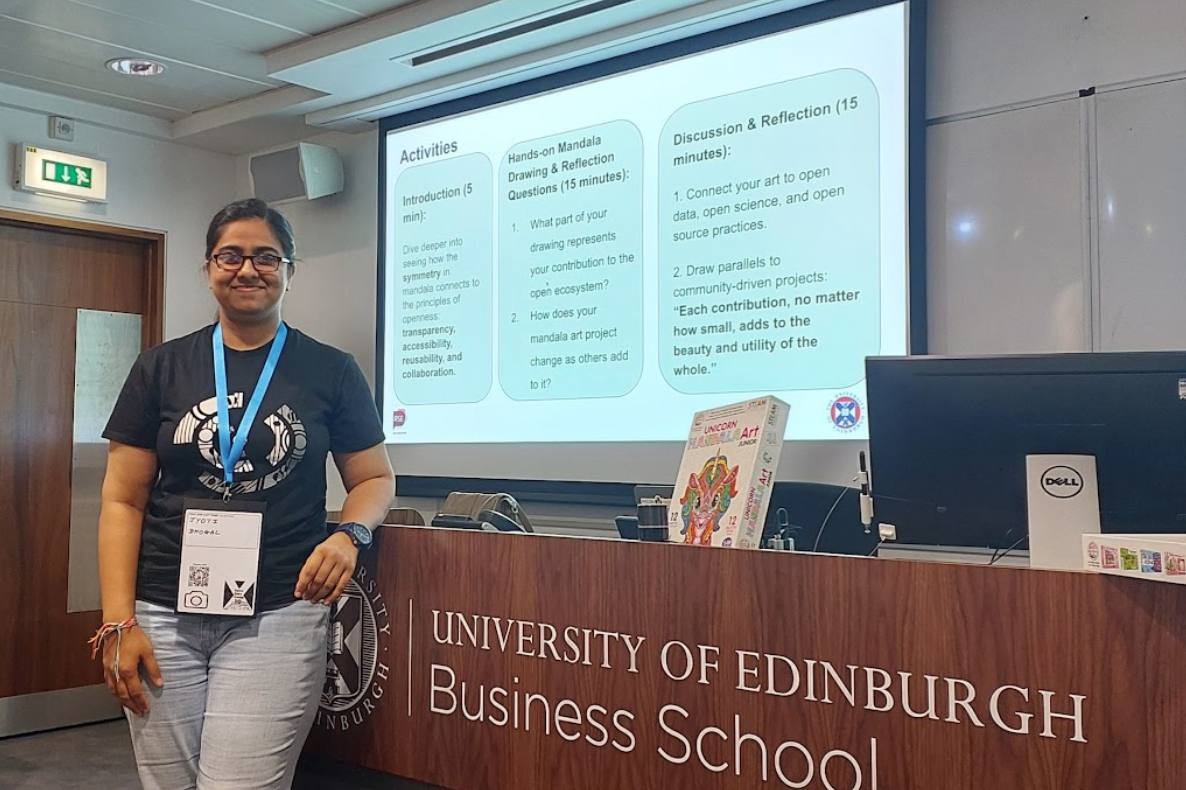
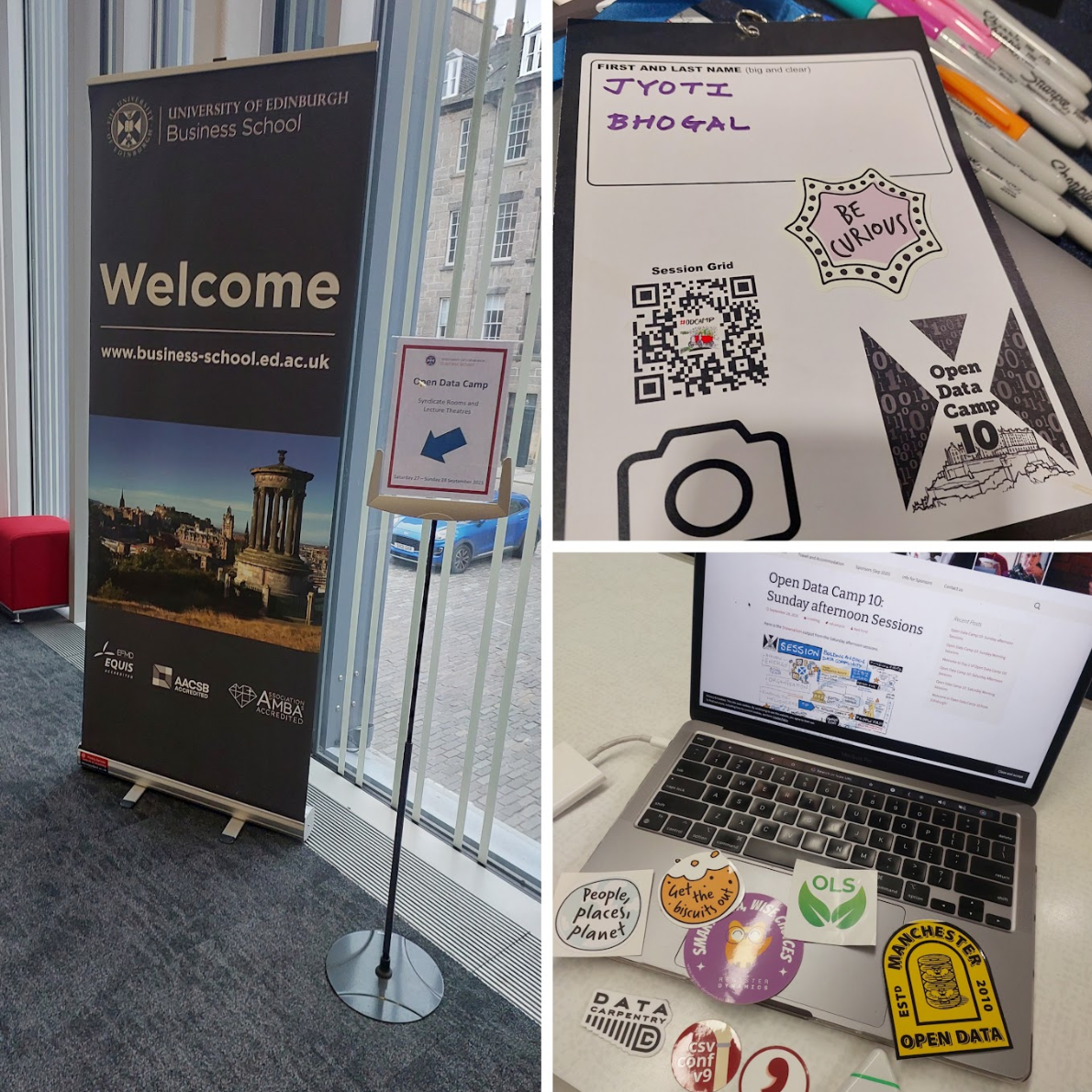
Image of Jyoti Bhogal at University of Edinburgh

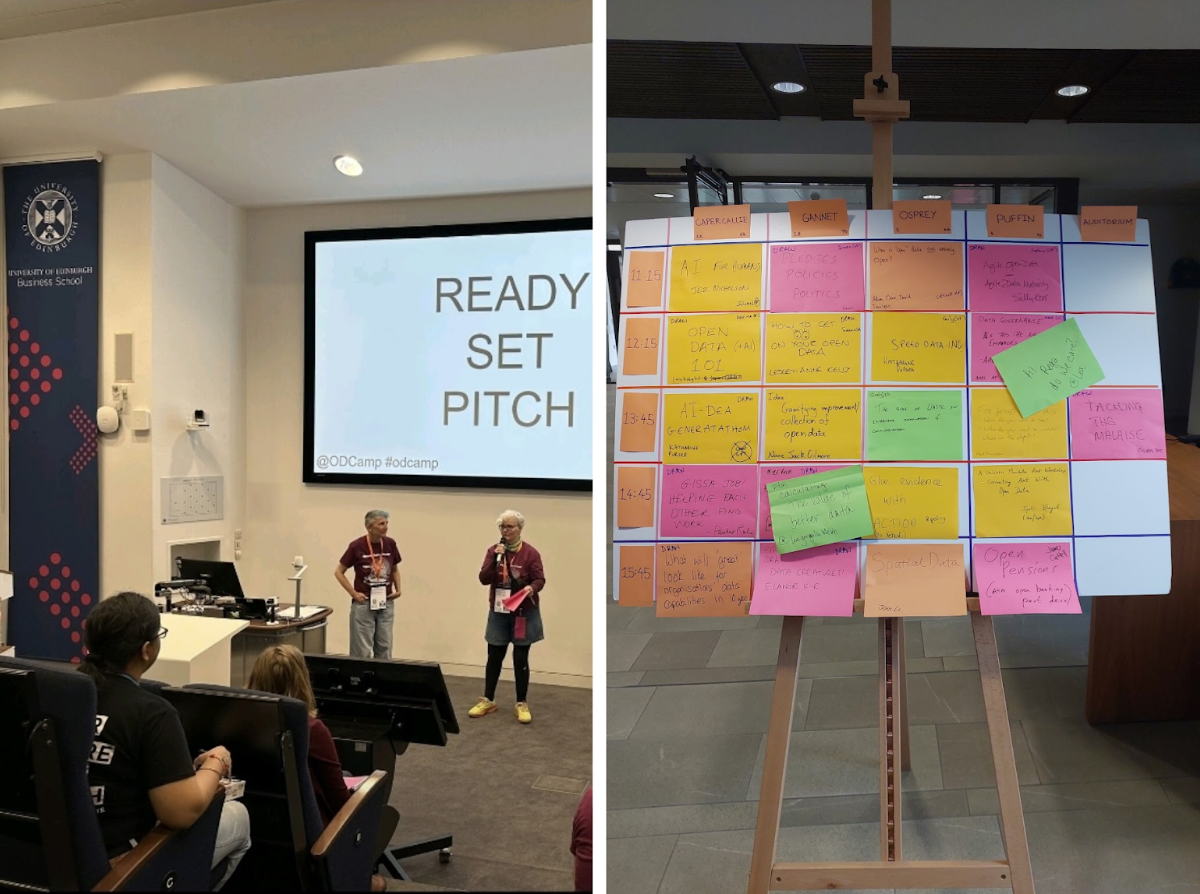
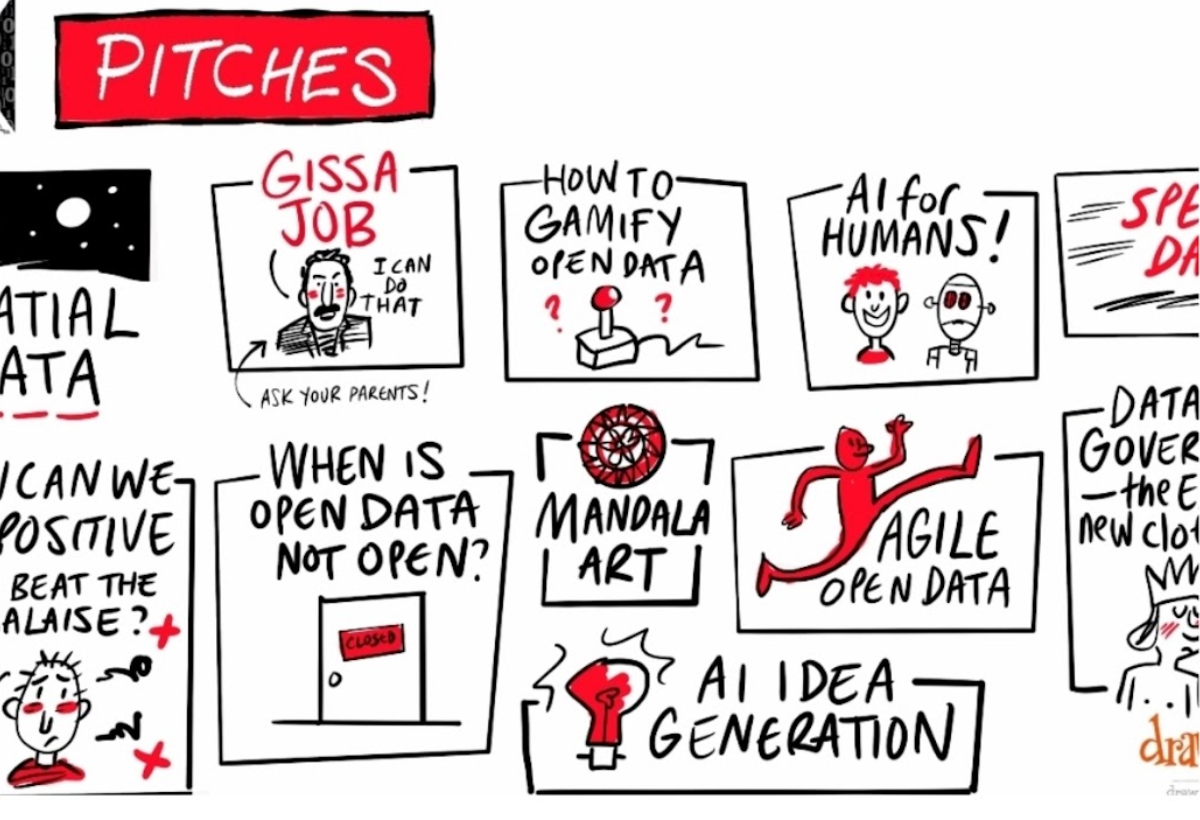
Recently, I got the chance to attend Open Data Camp 10 (ODC10) for the very first time! The event took place on 27–28 September 2025 at the University of Edinburgh Business School. It was an unconference style, which meant the event agenda was driven by the people, for the people. Each morning started with a pitching session where anyone was welcome to share their elevator pitch idea (in just 30 seconds!). All the ideas were then put up on a big board (colourful sticky notes!), and everyone was free to choose the topic they wanted to be a part of. I pitched something too, more on it later in the blog.

Image: (Left to right) Morning welcome and pitching sessions, session grid for day 1.

One of the discussions that stood out for me was on Maturing Open Data. I liked the idea of treating data like a product, something that has versions, documentation, and dedicated roles like analysts and lawyers. There was also discussion about platforms like Hugging Face for AI and how something similar could exist for data. In another session, there was a discussion on how to convince senior leaders to support open data policies, which made me think a lot about the different skills needed at different stages.

Image: (Left to right) Morning welcome and pitching sessions, session grid for day 1.

There were some big-picture policy discussions too. One of them was about the UK’s plan for a National Data Library (NDL), with the idea of having a single federated place to store and access data. Another one was on Digital IDs, where the participants were asked to think about it both as citizens and as data professionals. This made the discussion really interesting.

Unicorn Mandala art session

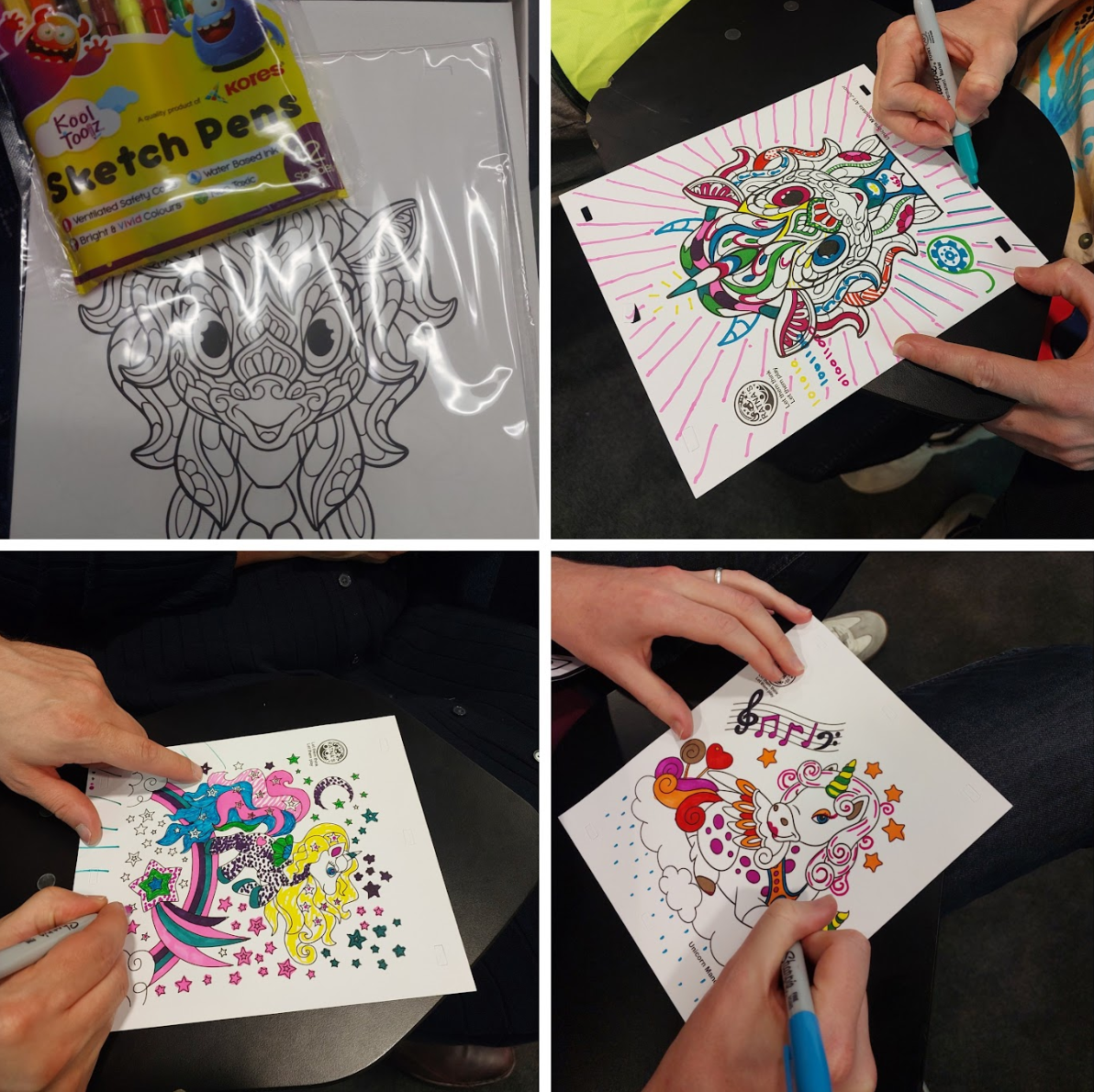
I pitched and ran a hands-on creative session called “Drawing Parallelism: A Unicorn Mandala Art Workshop on Open Data and Collaborations.” For this session, the participants were divided into three teams and I provided mandala kits to everyone so they could collaboratively create a unicorn design, chosen to honour Scotland’s national animal. My inspiration was simple: just as a mandala is built from many shapes and colours, the open ecosystem is built from many contributions. No single piece stands alone, but together they form something beautiful and meaningful.

Image: sketch from Drawnalism Pvt. Ltd.

As people coloured, we reflected on how this connected to open data and collaboration. Some participants approached it like their day-to-day work, for example, starting with the “infrastructure base” of the unicorn. Others experimented with by trying different colours and asymmetry, some chose non-convential colours for the rainbow, and while others kicked off with a group chat about colour schemes. Some joined in later, just like how people can enter a project midway. A few filled entire sections at first but then shifted to patterns like dots and lines, showing how approaches evolve over time. We even had binary 1s and 0s added outside the design to represent data, and others added entirely new elements of their own.

Image: Unicorn mandala art work pieces created by three teams.

When teams swapped their mandalas, keeping the same pens but working on someone else’s design, the dynamics shifted. People noticed it was harder to feel invested in a project they hadn’t started, and some worried the original team might disapprove of their additions, echoing real fears in collaborative projects. Yet, over time, new ideas emerged: like patterns, reflections on perspective (how the colours stayed even when the lines disappeared), and new layers that blended with the old. These discussions beautifully mirrored the challenges and joys of open collaborations: ownership, trust, creativity, and seeing projects evolve beyond their original intent.

Check out the session slides.

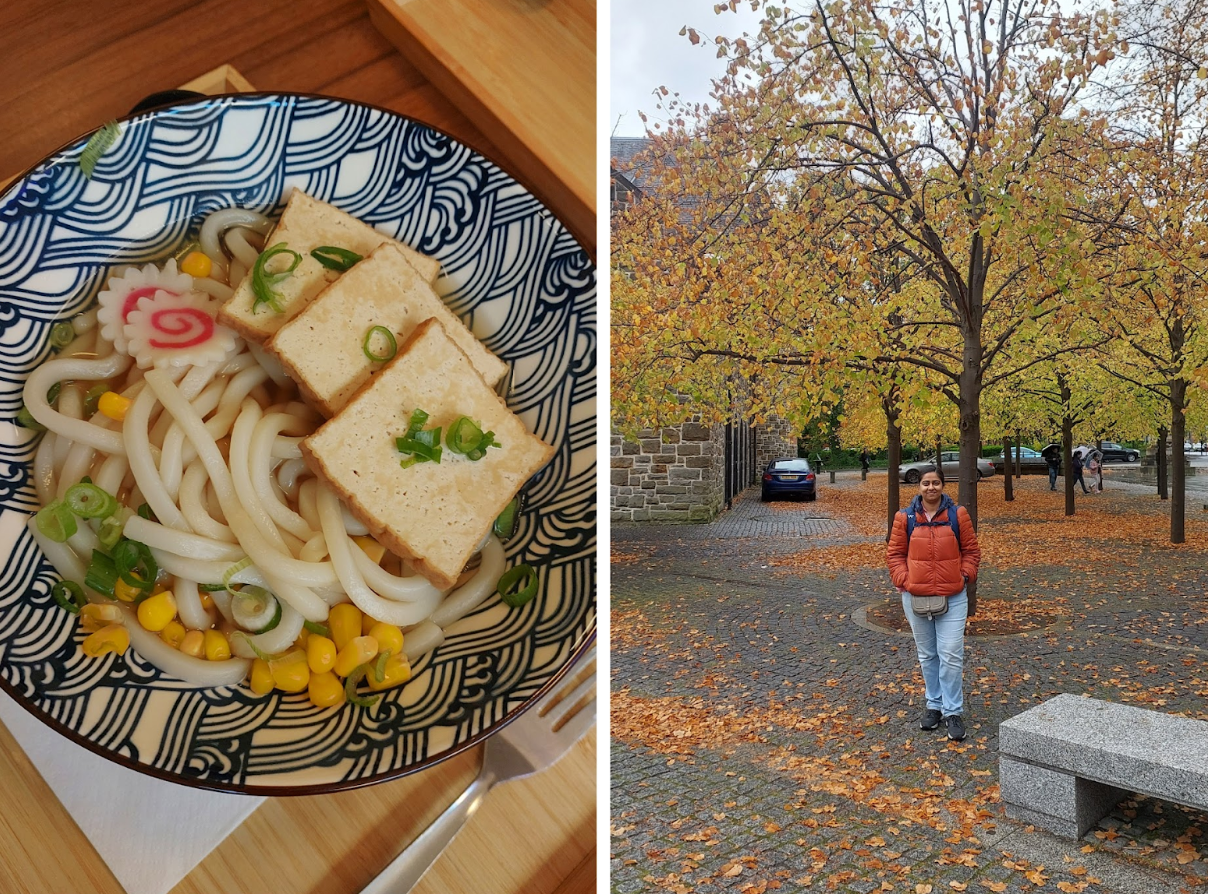
Image: (Left to right) Udon bowl at a restaurant, a picture of me in the autumn of Scotland.

What I really loved about the event was the freedom to move around thanks to the “Law of Two Feet: If a session didn’t feel meaningful to you, you are welcome to join another one”. There was also a fantastic team from Drawnalism who created live sketch notes of the sessions. As this was my first Open Data Camp, I was struck by how friendly, collaborative, and creative it was. Walking away from Edinburgh, my big takeaway is that open data is not just about technology, it’s about people, culture, trust, and creativity!

Get In Touch:

Email: bhogaljyoti1@gmail.com
LinkedIn: jyoti-bhogal
GitHub: jyoti-bhogal
Website: https://jyoti-bhogal.github.io/about-me/index.html
Mastodon: jyoti_bhogal
Bluesky: jyoti-bhogal.bsky.social

HomeNews and blogs hub

SSI Fellow awarded BioFAIR Pathfinder Project

Bookmark this page Bookmarked

SSI Fellow awarded BioFAIR Pathfinder Project

Author(s)
Oscar Seip

Oscar Seip

Research Community Manager

Posted on 23 February 2026

Estimated read time: 1 min
Sections in this article
Share on blog/article:
LinkedIn

SSI Fellow awarded BioFAIR Pathfinder Project

BioFAIR logo

SSI 2026 Fellow Kevin Rue-Albrecht has been awarded a BioFAIR Pathfinder Project for his proposal, "Connecting Bioconductor, Galaxy, and nf-core: FAIR, AI-ready workflows and training for single-cell analysis." The project is closely related to his SSI Fellowship plans. You can find out more about his plans on his SSI Fellow profile page, which includes a link to a screencast of his application and outline of his plans.


HomeNews and blogs hub

Better Hardware, Better Research at the HPC-AI Advisory Council

Bookmark this page Bookmarked

Better Hardware, Better Research at the HPC-AI Advisory Council

Author(s)
Jo Walsh Profile Picture

Jo Walsh

SSI fellow

Posted on 16 February 2026

Estimated read time: 7 min
Sections in this article
Share on blog/article:
LinkedIn

Better Hardware, Better Research at the HPC-AI Advisory Council

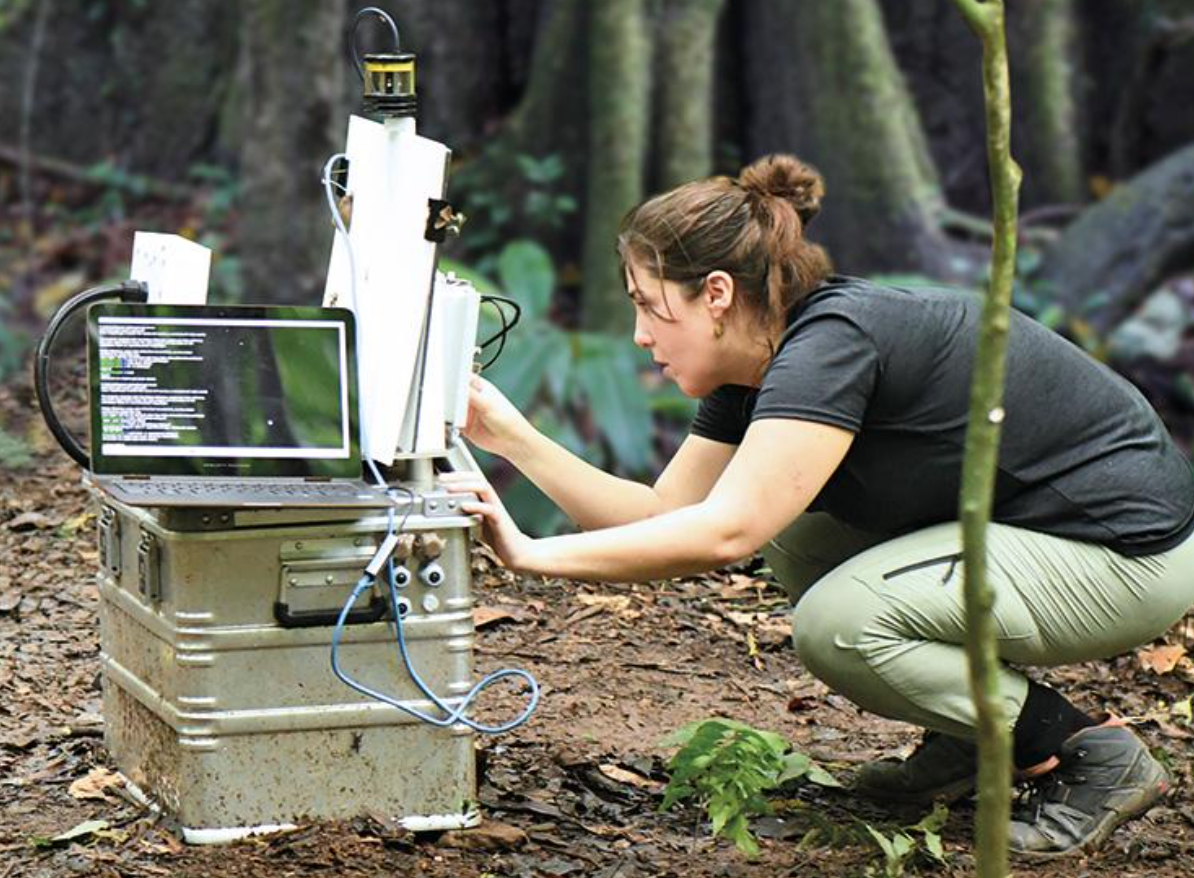
Image of a female scientist kneeled down looking at an instrument, reading its measurements.

I was happy but surprised at the offer of an invited talk slot at 2025’s HPC-AI Advisory Council Annual Conference, hosted by SFTC DiRAC, on my SSI Fellowship theme of “Better Hardware, Better Research” - applying the principles of open source software to hardware, specifically in environmental science. The theme was “Trustworthy computing at a range of scales”; talk of open source microsystems feels a world away from massive HPE supercomputing clusters. But I gamely went along, and really enjoyed the event. The rest of this post is a condensed summary of the talk.

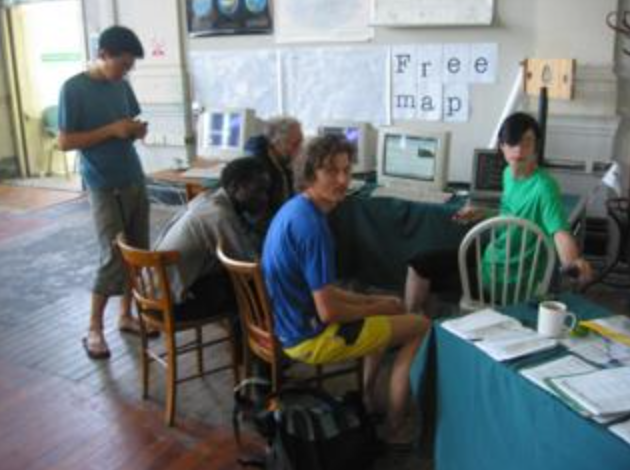
This picture is the best credential I’ve got to offer - 20 years ago, on the right in the green t-shirt, at Map Limehouse, coordinating the first OpenStreetmap mapping party. I may not have changed much, but the tech looks pretty retro now!

I got involved with OSM through local community wireless networks. These were the days before home broadband was widespread, or "smart" phones existed. A network of idealistic artists and hackers set up consume.net, then later Wireless London; our London Free Map project which got folded into OSM was a spin-off from that.

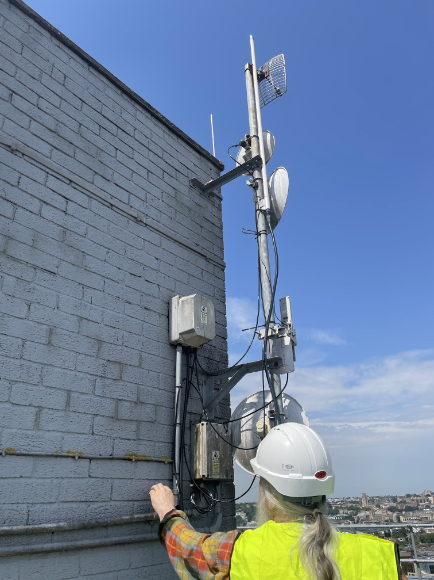
I was a software artist then, but I'm a "Research Software Engineer" now, working my way through different kinds of land survey organisations to end up at the UK Centre for Ecology and Hydrology. UKCEH has some lake environmental monitoring projects continuously in place since the 1940s! Monitoring work takes in atmospheric chemistry, air and water quality, biodiversity, and land use change. It's field samples, lab-based work, and electronic monitoring, as well as a lot of modelling.

UKCEH also hosts an Engineering Workshop, a kind of in-house hackerspace where a group of engineers collaborate with researchers on prototypes. Their best inventions aren’t electronic - like this river flume, designed neither to float or sink, that collects algae on ceramic plates infused with different chemicals. There are training courses in developing and debugging field electronics and sensors

There are "pockets of excellence" whose work is either inspired by open source hardware (the AMI+ system, a setup similar to the open source MothBox and growing some elements of the AudioMoth) or directly reusing it (bioacoustics surveys using the MicroMoth). Colleagues follow the progress of open source research hardware projects with intense interest, motivated by the potential of AI-assisted research - automating manual tasks, or aggregating many data sources to analyse whole landscapes or soundscapes.

But for larger infrastructure projects, the organisation still buys in proprietary dataloggers and devices. A few months after I joined UKCEH, I sat in on a project kickoff meeting, wondering why research hardware wasn't being considered in the same way as research software - open, collaborative, reproducible at minimal cost, with funder incentives to do so.

When the Software Sustainability Institute announced its call for Fellows for 2025, and a colleague encouraged me to apply, I didn’t have to think very long about the theme. I proposed to coordinate a series of workshops bringing together field researchers with hobbyist hardware hackers. I enlisted Libby Miller as a collaborator, bringing their model of participatory, hands-on, community-oriented “social invention” developed at BBC R&D.

I was full of visionary optimism, and soon discovered not only how much I don't know, but how much prior art and groundwork has been done. I want to highlight the work of Julian Stirling, the founder of the Open Flexure high resolution microscopy project. They say it all in Open instrumentation, like open data, is key to reproducible science. Yet, without incentives it won’t thrive

Open Flexure is redistributed in the UK by Labcrafter, a startup founded by Margriet and Gerrit Nielsen, focused on open research hardware. It was when I read that Open Flexure had been supported by the NLNet fund for next generation internet infrastructure that I got an inkling of why my talk had been welcomed by the HPC-AI Advisory Council.

The work of the Open Source Hardware Association is essential here. The OSHWA certification programme offers a hardware equivalent of the Open Definition for data. If it’s OSHWA-certified,is reproducible and reusable without constraints.,

As an RSE, exploring hardware is a route away from "stick a camera on it" solutions, and approaches that reuse image deep learning architectures. To ask the same questions, gather the evidence, act on the answers, in ways that don't need as much data, storage, bandwidth, power or scale. 

I’m also seeing from the perspective of the art practice of locative social media in the 2000s. The idealised future of "locative, ubiquitous and pervasive computing" has become a behaviour modification surveillance infrastructure. As technologists, it’s on us to plan for a built-in resistance, to consider whose hands our work could end up in, how it could be used. 

The tendency to foresee the unexpected negative applications of new inventions put me off doing any creative technology work for a long time. I definitely have a tendency towards terrible inventions. This is one of my most least-favourites: a dog backpack LoRaWAN gateway/aggregator. The dog's going for a walk and gathering at the trees where its peers gather anyway. Why not collect and deposit telemetry on the way? As terrible inventions go, #dogtech relatively benign.

I'm inspired by the recent work and speaking of Dan McQuillan here, on the topic of "Decomputing" - Decomputing takes the idea of ‘computing within limits’ to refer not only to the scale of computational machinery but to limits of extractive and colonial logics, limits to a biosphere’s ability to recover, limits to our Western knowledge systems and limits to tech solutionism… rejection of scale as a heuristic for the way forwards".

As Libby Miller writes, "Change comes from coalitions of groups with the same interest" - but when you're interested in so many things, how do you find the smallest core of shared interest to move forward from? I visited the Gathering for Open Science Hardware to learn. And there are so many different kinds of interests there! Folks working on genomics, on lab instruments, in materials engineering. Glimpses of untapped potential for fundamental change in how we react to and modify our environment, at a scale that's hard to take in.

I wanted to end the talk on an up note, so offered this - the RC2014 Mini II Picasso. It's an open source hardware art project that was launched as an April Fool's joke that's also a shippable product serious. A beautiful piece of retro hardware design by a practitioner with a loyal interest community, a project full of joy and care. (I'm still halfway through building mine - I solder slowly!) For me, Open Source Hardware is as essential to joyful art computing, as much it is a conceptually essential part of Digital Research Infrastructure that supports open and collaborative science.


HomeNews and blogs hub

Knowledge graphs for metadata on training at ELIXIR BioHackathon Europe 2025

Bookmark this page Bookmarked

Knowledge graphs for metadata on training at ELIXIR BioHackathon Europe 2025

Author(s)
Phil Reed Profile Picture

Phil Reed

SSI fellow

Posted on 9 February 2026

Estimated read time: 5 min
Sections in this article
Share on blog/article:
LinkedIn

Knowledge graphs for metadata on training at ELIXIR BioHackathon Europe 2025

Image of a group of people standing in front of two boards with post its on them

Introduction

The core goal of my SSI Fellowship is to facilitate knowledge exchange of skills and competencies between humanities and sciences. This includes improving my own knowledge and skills relating to the latest AI techniques and their relevance for teaching and learning.

In November 2025, I attended the ELIXIR BioHackathon Europe event at Bad Saarow near Berlin, Germany. The BioHackathon runs every year thanks to ELIXIR Europe and provides space for collaboration and innovation in computational biology and bioinformatics. Participants engage in intensive, hands-on programming and content-creation activities, data integration and software development. I joined the project ”Knowledge graphs for metadata on training”, led by Geert van Geest (SIB Swiss Institute of Bioinformatics), Harshita Gupta (SciLifeLab Sweden), and Vincent Emonet (SIB).

Outputs, report and user stories

The project has published a report of its outcomes on BioHackrXiv [precise link and citation to follow]. Highlights of the report include:

  • A description of what a knowledge graph is, and how this structured data representation can greatly facilitate complex querying and applications to deep learning approaches like generative AI.
  • A description of the training registry metadata sources we used (TeSS and Galaxy Training Network) and the most important metadata fields.
  • A description of the code written to build the knowledge graph, and Model Context Protocol (MCP) server we developed that exposes a suite of tools for searching and querying training materials. 

Several projects at the BioHackathon featured Model Context Protocol (MCP), and this was a new concept for me. MCP is an open standard produced by Anthropic (the company responsible for Claude); think of it as a more powerful kind of API. An MCP server gives AI agents a consistent way to connect with data, tools and services, while reducing hallucination. Agents can perform multi-step tasks, reducing the effort for the user who can interact via a natural language interface. For us, we can present a LLM chat bot that can query multiple training registries at once and provide answers to much deeper questions.

When I applied to this project, I had intended to work on the Python code directly. In the end, I changed my focus to provide project and community management. My most significant contribution to the project was to lead the development of 11 user stories. These user stories are a representative selection of the kinds of queries a user might make of the system, following a popular format:

  • As a [user persona]
  • I want to [do task]
  • …so that [outcome/benefit]

An example user story we created is:

  • As a bioinformatics scientist
  • I want to define a learning path of training materials and/or events
  • …so that I can become a specialist in artificial intelligence within the following specified time and resources: I have 6 months, a workload of 14 days, I live in Sweden and I can travel within Europe once.

Having a range of user stories ready to refer to throughout the project helps the developers to keep the requirements in mind when coding and allows them to focus on the software development.

Impact and opportunities

The project was a successful creation of a proof-of-concept for the ELIXIR ecosystem and beyond. There is a promising possibility of MCP for scientific applications, where used in combination with a LLM, to allow for natural language querying while including information from a trusted resource.

Participating in the BioHackathon gave me a better appreciation of current AI applications and features, in turn supporting me in my core work and with other aspects of my SSI Fellowship. I learned more about the importance of having persistent, unique identifiers for all nodes in a knowledge graph, and how it is valuable for various concepts described within the source materials to be described with an ID. The knowledge graph we built had gaps which had to be filled afterwards, and it would be more accurate if these gaps were already filled by the training providers before we scraped the training materials. We already associate the URL of a training course or event as the unique identifier for the material as a whole, but what about the trainers, the hosts and the locations of events? There are recommended authorities to consider, such as ORCiD for personsROR for organisations, and Open Street Map for places. I can now advocate for training registries and providers to host additional metadata for these inner entities within a given training material.

Thank you to the project leaders Geert van Geest, Harshita Gupta, Vincent Emonet, and all the other project members Finn Bacall, Jerven Bolleman, Jacobo Miranda, Dimitris Panouris. Thank you also to the people who kindly helped answer my questions during the hackathon: Alex Botzki, Eli Chadwick, Alban Gaignard, Helena Schnitzer, Ginger Tseung, Bérénice Batut, Carole Goble.


HomeNews and blogs hub

Animals in Motion: empowering behavioural researchers with open-source tools

Bookmark this page Bookmarked

Animals in Motion: empowering behavioural researchers with open-source tools

Author(s)
Niko Sirmplatze Profile Picture

Niko Sirmpilatze

SSI fellow

Posted on 22 January 2026

Estimated read time: 9 min
Sections in this article
Share on blog/article:
LinkedIn

Animals in Motion: empowering behavioural researchers with open-source tools

Scientific fields converging on computer-vision-based methods for quantifying behaviour. Deep-learning approaches extract user-defined body parts directly from video without markers, enabling high-throughput, non-invasive motion tracking across species.

Figure 1. Scientific fields converging on computer-vision-based methods for quantifying behaviour. Deep-learning approaches extract user-defined body parts directly from video without markers, enabling high-throughput, non-invasive motion tracking across species.

Overview

Niko Sirmpilatze is a 2025 Software Sustainability Institute (SSI) Fellow and Senior Research Software Engineer at the Sainsbury Wellcome Centre, a neuroscience research institute affiliated with UCL in London. He builds open-source tools to study brains and the behaviours they produce, and leads movement—a Python package for analysing animal motion.

I organised the first Animals in Motion workshop in London, which was the central goal of my Software Sustainability Institute (SSI) Fellowship. The event brought together early-career researchers from diverse disciplines, all united by a shared aim: quantifying animal behaviour using open-source software.

Animals in Motion formed part of a broader Open Software Week held on 11–15 August 2025, which I co-organised with SSI Fellow Alessandro Felder, supported by many of our colleagues at the Neuroinformatics Unit. You can read more about the wider week in this companion post, where Alessandro and I reflect on the added value of combining our Fellowship activities.

In this post, I share highlights from the Animals in Motion workshop, reflect on what we achieved, and outline what comes next. Throughout, I use “we” to refer to the full team behind Animals in Motion—including Sofía Miñano and Chang Huan Lo, who were instrumental in designing, developing, and delivering the workshop materials.

Fellowship goals

When proposing my Fellowship project, I argued that several scientific fields interested in animal behaviour—from neuroscience to behavioural ecology—are converging on shared, computer-vision-based methods for measuring motion. Thanks to advances in machine learning, researchers can now track body movements directly from video, at scale and low cost (see Figure 1).

I saw this convergence as an opportunity to bring together researchers from these diverse communities and train them in using sustainable, open-source tools that support their common workflows. The goal was to build bridges between these communities and to create a two-way exchange between researchers and tool developers:

  • Researchers would gain theoretical grounding, practical skills, and a new peer network.
  • Tool developers (including the organising team) would learn from real users, building relationships and gathering feedback to guide future work.

By blurring the lines between these groups we hoped to consolidate and strengthen the shared ecosystem of open tools for behavioural analysis.

Workshop attendees

We promoted Animals in Motion widely across social media, mailing lists, online communities, and Slack channels, as well as through targeted outreach to graduate programmes and institutes focused on animal behaviour. As this was the first event of its kind, we were unsure how much interest it would attract. The response exceeded all expectations: we received 60 applications from around the world, most of them of high quality.

We selected 25 participants, the maximum number we could accommodate for hands-on teaching, and were delighted that 24/25 attended both workshop days—dispelling our concerns about potential no-shows. Thanks to support from the SSI and our other funders—described in the companion post about the Open Software Week post—we were able to charge no registration fees, provide catering for all, as well as fund travel for four Animals in Motion attendees. This helped us achieve strong geographic diversity: 9 attendees from London, 7 from the rest of the UK, 6 from Europe, and 2 from India.

We succeeded in bringing together diverse disciplines, species, and experience levels. Based on an opening poll (Figure 2), we welcomed researchers working with animals ranging from mice to… “flying” frogs—and spanning fields including neuroscience, behavioural ecology, biomechanics and conservation. Career stages ranged from Master’s students to early-career principal investigators. Two-thirds of attendees identified as women, likely reflecting the underlying demographics in these fields.

Figure 2. Word clouds generated using mentimeter.com show the range of scientific disciplines and model species across attendees.

From both direct observation and participant feedback, this mix of varied backgrounds and shared technical interests worked extremely well. Engagement levels remained high throughout the workshop and participants felt enriched by the diversity of attendees.

Workshop content

We began the workshop with a primer on deep learning for computer vision, in which Sofía Miñano introduced the concepts and technologies that underpin modern animal tracking tools. Several participants appreciated the accessible introduction to what can often feel like a complex and opaque field.

I liked the fact that we got an overview of the theoretical aspects as well. Hailing from a non-computational background, it always felt like a blackbox while trying out multiple software…

Lavanya Ranjan, Indian Institute of Science Education and Research, Pune

In the afternoon, we switched to practical training with SLEAP, using materials prepared by Chang Huan Lo. Participants learned how to annotate videos, train computer vision models, and use them to track animals. We provided sample videos to ensure everyone could follow along, although some people experimented with their own data, resulting in a fun showcase of diverse animals.

Day two focused on analysing motion tracking data using our open-source Python package movement. Participants worked through exercises that introduced them to loading, cleaning and visualising data, as well as asking questions about the animals’ kinematics. We finished with two real-world case studies that demonstrated how the tools covered in the course support ongoing scientific research.

Catering to the wide range of coding experience among attendees proved to be a challenge, especially during the Python-heavy second day. We had offered an optional introductory Python session before the workshop, but that could only go so far. To address this, we encouraged more experienced coders to support classmates, which had the added benefit of contributing to a strong sense of community.

I loved how it felt like nobody was left behind in the course, without this having a hard impact on those with more experience in computational methods. The heterogeneity of the attendees was truly enriching and gave me perspective on a wide-range of needs that movement wants to target. 

Carlo Castoldi, Institute of Molecular and Cellular Pharmacology, France

Participants told us they would have appreciated even more time for exercises and discussion, and that is something we are keen to build into future editions. It was also extremely rewarding and useful to see our movement package in action, crash-tested in the hands of so many users.

We have chosen to openly share all workshop materials in the Animals in Motion Online Handbook. The handbook contains chapters written by Sofía, Chang Huan and myself, and it can be followed independently as a self-paced resource. We intend to keep expanding and updating it in response to feedback gathered during the workshop, so that it remains a freely accessible and reusable teaching tool for the community.

Blurring the lines between users and developers

A healthy open-source ecosystem relies on helping users become contributors. Hence a key aim of my SSI Fellowship was to give animal behaviour researchers the skills and confidence to take that step.

The Hackday, held on the final day of Open Software Week, was our main way of putting this into practice. About half of the Animals in Motion participants stayed on, joining attendees from other tracks of the week. To help everyone get started, we preceded the hackday with an optional half-day workshop on Collaborative coding with git, delivered by Joe Ziminksi and Laura Porta.

The hackathon itself followed a format inspired by the SSI Collaborations Workshops. You can browse the projects on this board. Some teams explored open-source tools using their own data, while others made contributions upstream—including several pull requests to movement, two of which have already been merged. One participant, Carlo Castoldi, also wrote a blogpost about his contribution, published on the movement website.

I will take this opportunity to especially thank Sofía Miñano, who proposed no less than five project ideas, mentored multiple teams during and after the hackday, and helped Carlo with finalising his contribution. She was the true hackday hero.

What's next

Organising and leading Animals in Motion has been the most rewarding experience of my professional career. I’d had ideas like this floating around for some time, but the SSI Fellowship was the catalyst that turned them into something real. The process of articulating those ideas for the Fellowship helped give them structure, and feedback from colleagues—as well as from my SSI mentor Colin Sauze—further refined them into a concrete plan.

I’m excited to keep building on this work. It’s been wonderful to see Animals in Motion so warmly supported by my team and our host institute. Animals in Motion will return on 17–21 August 2026, as part of the Neuroinformatics Unit Open Software Summer School—an event we aim to make an annual tradition.

My hope is for the workshop, alongside its online handbook, to form the nucleus of a growing community of practice for open-source tools in animal behaviour. In the long run, I’d love to see other teams around the world running their own versions of the workshop, building on the open materials we’ve created. If you would be interested in supporting such an effort, I'd love to hear from you. You can find my contacts through nikosirmpilatze.com.


HomeNews and blogs hub

Bridging communities around big imaging data for brain microscopy and beyond

Bookmark this page Bookmarked

Bridging communities around big imaging data for brain microscopy and beyond

Author(s)
Alessandro Felder Profile Picture

Alessandro Felder

SSI fellow

Posted on 22 January 2026

Estimated read time: 9 min
Sections in this article
Share on blog/article:
LinkedIn

Bridging communities around big imaging data for brain microscopy and beyond

brain neurons

Alessandro Felder is a 2025 SSI fellow and a Senior Research Software Engineer in the Neuroinformatics Unit (NIU) and in the Advanced Research Computing Centre at University College London. He is a core developer of the BrainGlobe Initiative, an open-source suite of tools to process, analyse and visualise brain microscopy data. He is also active in local and international community-building activities in bioimage analysis.

In this blog, I share the motivation for applying to the SSI fellowship programme, what the contents of my fellowship event were, what I’ve learnt during my fellowship, and how I think my fellowship activities fit into the wider landscape.

My fellowship event consisted of two "tracks" that formed part of Neuroinformatics Open Software Week—a larger event that I co-led with my colleague Niko Sirmpilatze (also a 2025 SSI fellow). I am deeply grateful to him and my other NIU colleagues for their support in making our vision into a reality. You can read our joint blog to know more about how we coordinated our fellowships, and our overall conclusions.

I would also like to thank my SSI mentor Richard Abel, who gave me some particularly helpful advice around how my fellowship could fit into my wider career plans.

Motivation—The Missing Bridge

I’ve spent the past decade of my professional life (as a PhD student, postdoc and then “official” Research Software Engineer) working at the interface between biological image analysis and research software engineering—both are fields that I have grown to care deeply about, and I like to share this enthusiasm with others.

During this time, I noticed various similarities in the community efforts in both fields: Research Software Engineers and Bioimage Analysts both see themselves as performing critical and underappreciated technical roles in the interest of scientific progress that lack appropriate career paths. The self-reported activities of a recent survey of bioimage analysts (see Supplementary Figure 1B of the preprint) overlap significantly with "the mixture of service delivery, research, innovation and teaching activities" cited in the job descriptions of generalist research technology professionals at UCL (e.g. for RSEs). There is even a recent paper which advocates for embedding software engineers in imaging facilities.

Despite these similarities, I was not aware of community initiatives that linked the two fields. I decided that an SSI fellowship event could help bridge the communities—in the hope that jointly advocating for recognition of technical roles in academia might result in better career paths for both.

As someone that works with whole-brain microscopy data, I was also aware that advances in imaging techniques mean imaging data is getting bigger, and that we need software that keeps pace with these developments. I also realised how important the perspective of bioimage analysts (here meaning anyone with a need to analyse imaging data, such as microscopy facility staff and early career researchers) is in addressing these software challenges. This was yet another reason to connect the specialist bioimage analysts with more generalist research software engineers.

One very awkward self-tape and an afternoon of interactions with amazingly collaborative people later, I was happy to find out that I was awarded the fellowship… and the real work began.

As I was planning the event, I decided to divide my fellowship event into a whole-brain microscopy data part, the BrainGlobe track, and a more general Big Imaging Data track with a focus on community and file formats. Participants could join just one track, or both.

BrainGlobe

In the BrainGlobe track, we strongly favoured applications where there was evidence for a clear immediate use for the BrainGlobe tools. We selected 15 applicants from around 50 applications—eight were based in London or Surrey, four were based in Europe and three came from further away (Singapore, USA, Australia).

The event itself consisted of hands-on BrainGlobe tutorials, a suite of open-source software tools for neuroanatomy I co-develop. BrainGlobe helps researchers process, analyse and visualise their brain microscopy data—an important datatype for my institute and a key application driving the need for software that can handle big imaging data. Participants were encouraged to bring their own data along. Fellow BrainGlobe core developer Igor Tatarnikov also helped a lot with this and led some of the teaching itself.

BrainGlobe is an impressive open-source project that gives researchers tools to work with whole-brain microscopy data. During the workshop, I gained hands-on experience with tools like cellfinder for automated cell detection and brainreg for image registration, along with others for mapping and segmentation. It was incredibly valuable to learn directly from the developers and share the space with researchers from across the field. 

Farahnaz Yazdanpanah Faragheh, University of Surrey, United Kingdom

We were impressed with the level of preparation of the participants: many had brought their own data and detailed questions— and this led to the event being more of a two-way learning experience than we expected: we took note of 13 issues, mostly related to user experience or unusual setups, that we weren’t aware of. Two attendees went a step further and contributed improvements to BrainGlobe since attending.

We found this experience rewarding and highlighted the importance of a continued dialogue between users and developers.

Big Imaging Data

We selected 23 applications for the Big Imaging Data track—19 made it, with eleven attendees from outside the UK showing the global reach of the participants. Again, we were quite selective with the applications (we had space for 25 participants). I was particularly pleased to welcome four imaging facility staff, who I see as an integral part of the community because their role often includes training researchers on acquiring and analysing big imaging data.

The morning included an introduction and a hands-on tutorial around OME-Zarr, the "next-gen" community-centred big imaging data format. Designing these materials, I relied heavily on the open-source OME-Zarr for Big Bioimaging Data textbook, led by my colleague David Stansby and invited textbook co-authors Kimberly Meechan and Ruaridh Gollifer to present their work about benchmarking OME-Zarr libraries—thank you! I learnt a lot from them, and from designing the tutorial—a major take-away was that despite community support and a clear need for OME-Zarr, much of the software ecosystem around it is rather fragmented and immature, and more work needs to be done here.

In the afternoon, I introduced my personal perspective on the missing interactions between the bioimaging community and the RSE community—which was my motivation for applying for an SSI fellowship. We then transitioned into a speed-blogging session: I invited participants to discuss a related topic of choice in a small group and then write this up as a blog. I provided some possible topics as a prompt, but participants were free to come up with their own. This resulted in four blogs (in preparation), which centred around career paths, the notion of open science, guidelines for using OME-Zarr and bridging communities.

I was very inspired by the level of buy-in from all participants, especially for the speed-blogging session and I am excited to see our blogs published. Going beyond learning technical skills and into community building was an important part of my plans— and while the community-building aspect was built-in throughout Open Software Week, this part let us explicitly think about and imagine the communities we want to be part of.

It was also great to see an OME-Zarr-related hackday project. We started writing jupyter notebooks that showed how different libraries can be used to convert datasets to OME-Zarr.

…had my first (ever!!) Hackday which involved working on a collaborative coding project revolving around OME-Zarr file format. Learned how to implement Python libraries that I've never used before on-the-fly, so that's a major skill upgrade for me!

Minyu Chan, Monash University Malaysia, Malaysia

The bigger picture

My hope is that my fellowship event was a small step in coordinating technical development and career paths in both fields. I believe it was a timely step, too: for example, the Global Bioimage Analysts' Society is aiming to include software developers in their scientific advisory committee.

My fellowship made me realise how interested I am in seeing where domain specialists and generalists meet, and how this helps drive research forward. I see this as a key area of growth for the Research Software Engineering movement, and we need to find solutions to include more people from domain-specific backgrounds.

Leading this event also helped me become more visible in my communities—alongside my SSI fellowship, I have helped organise the upcoming Crick Bioimage Analysis Symposium, which will feature a panel discussion around software sustainability and funding (kindly supported by the RSE Society) and I am also involved in organising the data session of a university-wide bioimaging conference. Finally, BrainGlobe was recognised with an Open Science prize recently.

I look forward to the next iteration of the BrainGlobe and Big Imaging data tracks next year!

Subscribe to Fellows
Back to Top Button Back to top