Skip to main content Site map
Old Tag
Fellows 2013
Fellows 2014
Fellows 2015
Fellows 2016
Fellows 2017
Fellows 2018
Fellows 2019
Fellows 2020
Fellows 2021
Fellows 2022
Fellows 2023
Fellows inaugural meeting
Fellows newsletter
Fellows selection
Category
HomeNews and blogs hub

Greater than the sum of its parts — Establishing Open Software Week by combining our SSI fellowships

Bookmark this page Bookmarked

Greater than the sum of its parts — Establishing Open Software Week by combining our SSI fellowships

Author(s)
Niko Sirmplatze Profile Picture

Niko Sirmpilatze

SSI fellow

Alessandro Felder Profile Picture

Alessandro Felder

SSI fellow

Posted on 22 January 2026

Estimated read time: 10 min
Sections in this article
Share on blog/article:
LinkedIn

Greater than the sum of its parts — Establishing Open Software Week by combining our SSI fellowships

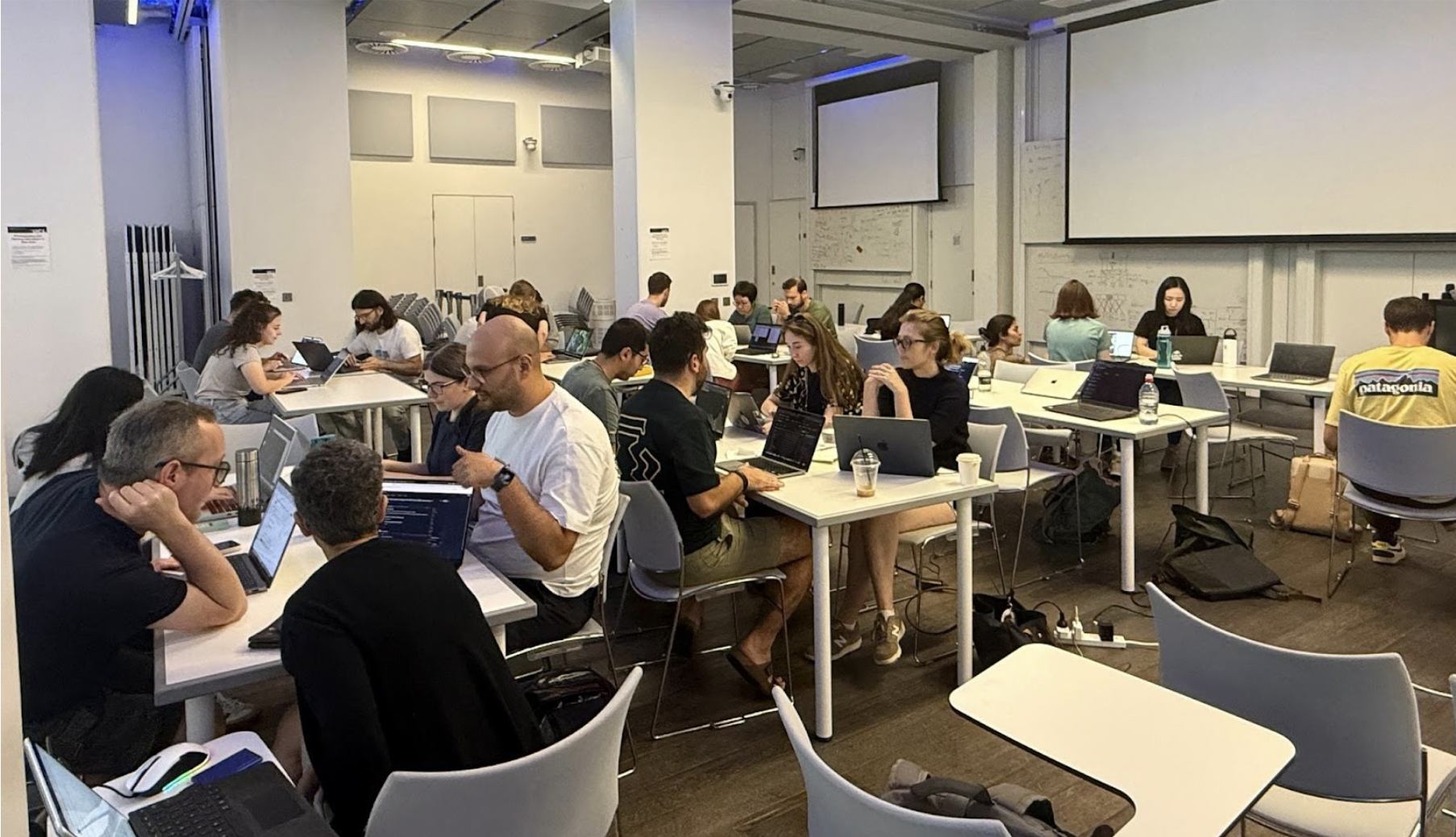
Participants of the Open Software Week looking laser-focused on their hackday projects.

Alessandro Felder and Niko Sirmpilatze are both 2025 SSI Fellows and Senior Research Software Engineers at the Sainsbury Wellcome Centre, a neuroscience research institute affiliated with UCL in London. Alessandro is a core developer of the BrainGlobe Initiative, an open-source suite of tools for processing and visualising brain microscopy data. Niko leads movement, an open-source Python package for analysing animal body movements from video.

Overview

In August 2025, we co-organised the Neuroinformatics Unit Open Software Week (OSW) a five-day event that brought together 44 attendees from 12 countries across four continents to learn open-source approaches for handling large imaging datasets, processing whole-brain microscopy data, and analysing behavioural videos. OSW emerged by combining our SSI Fellowship plans into a single, larger initiative.

Across the week, 13 speakers delivered seven sessions, grouped into three main tracks supported by four shared satellite events:
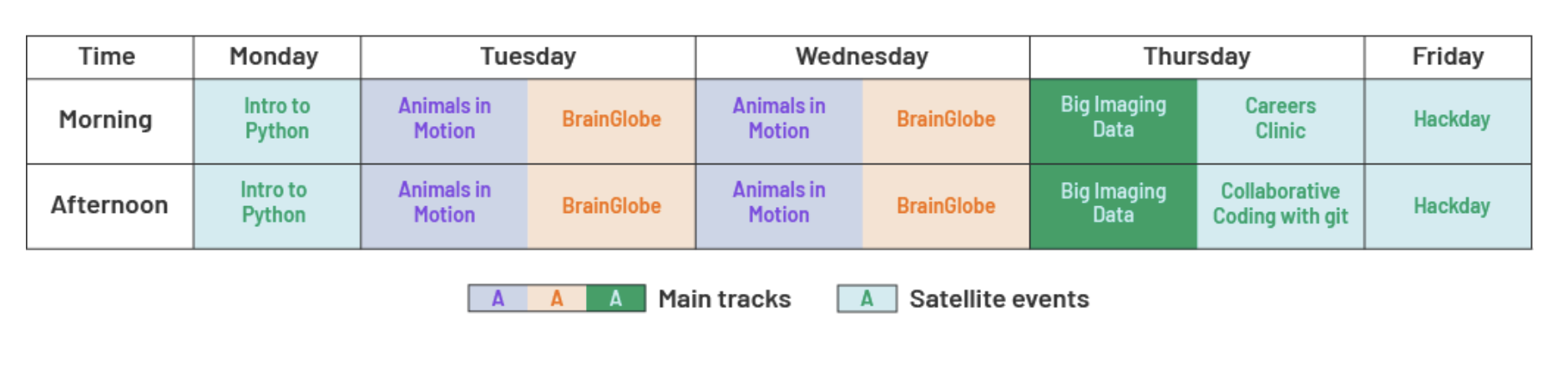
Schedule of the Neuroinformatics Unit Open Software Week.

Main tracks
  • Animals in Motion focused on open-source tools for tracking and analysing animal motion from video.
  • BrainGlobe consisted of a hands-on introduction to open-source tools to process, analyse and visualise brain microscopy data.
  • Big Imaging Data featured introductory technical tutorials and a community session around big imaging data formats and libraries.

Animals in Motion was led by Niko, while the other two tracks were led by Alessandro.

Shared satellite events
  • Introduction to Python — optional one-day refresher for participants wanting to strengthen their programming foundations ahead of the technical sessions.
  • Careers Clinic — a panel discussion with five Research Technology Professionals from life sciences, highlighting diverse career routes and opportunities.
  • Collaborative Coding with Git — practical guidance on version control and contributing to projects on GitHub.
  • Hackday — a dedicated day for participants to collaborate on small projects, drawing inspiration from the SSI’s Collaborations Workshops.

The programme was supplemented by a series of diverse social events in the evenings, including a walk in the Regents Park, an Irish folk music jam session, a neuroscience-themed pub quiz, and a creative live-coding evening.

In the two companion blog posts, we describe the individual training tracks we led and how they helped advance our respective Fellowship goals.

In this post, we reflect on the experience of joining forces to achieve something more ambitious than either of us originally envisioned. We share how the event came together, the synergies that shaped it, and our plans for the future.

Synergistic fellowships

Open Software Week wasn’t part of our original plan. We had each proposed independent Fellowship projects and were simply lucky that both were funded in the same cohort. The idea to combine them came to us later. It made sense — we work side by side at the same institute and had already planned to use the same spaces for our respective events. We expected that we could combine some parts of our events, such as the hackday, and share the logistical and administrative burden. To our surprise, joining forces came with other unforeseen benefits, too!

We didn't expect how much working together would help us when we needed someone to bounce ideas off, or someone to hold us accountable for getting things done (including writing this blog post!).

We also benefited from each others' and our line manager Adam Tyson's perspective as we reviewed an overwhelming amount (~120) of high-quality applications. We were limited to 50 participants - the maximum number we could teach hands-on in our space. It was a lot easier to make tough decisions together. It helped that Niko wasn't as emotionally close to Alessandro's plans, and vice-versa. Adam could tie-break and keep a higher-level perspective.

Making our fellowships into a larger event with existing seed-funding allowed Adam to secure additional sponsorship for OSW. We got small grants from the Society for Research Software Engineering and AIBIO-UK, as well as support from our host institute. The Sainsbury Wellcome Centre provided funding for OSW in addition to their already generous in-kind contribution of administrative support and provision of teaching rooms. This enabled us to provide catering throughout the week, not charge registration fees and support eight participants with accommodation and travel costs.

Attending tracks on different topics did not prevent our participants from making friends during the shared breaks and social events. The boundaries between our events were fluid and we were happy to see many engaging interactions: a participant switched tracks at the last minute, an Animals in Motion attendee helped with BrainGlobe problems during the hackday, and a few participants took time out of the Big Imaging Data event to attend the Careers Clinic.

Although OSW grew out of our SSI Fellowship initiatives, it was quickly and enthusiastically adopted by our fellow research software engineers in the Neuroinformatics Unit. A final positive outcome was that organising and leading OSW (it was pretty intense, to be honest!) brought us closer together as a team. The end of the week found us having tea and biscuits together, exchanging stories and cooling down from all the excitement.

What made Open Software Week a success

OSW was rewarding and worthwhile for us organisers, and we hoped that the participants would share this experience. Gratifyingly we received overwhelmingly positive feedback; we've included some anonymous excerpts below.

Sparked a bit of a eureka moment after months of agonising over how to analyse my data!

My whole PhD feels doable now!

The heterogeneity of the attendees was truly enriching.

Atmosphere was very friendly and down to earth.

The communication and offers of help were incredibly kind and respectful. I felt uninhibited to ask questions, which I don't take for granted!

It was incredibly valuable to learn directly from the developers and share the space with researchers from across the field.

I thought the motivations behind the week and the organising team were eye-opening as to how to make a career supporting research and doing this type of work. I didn't expect to feel as welcomed and motivated to keep going in this field…

Moreover, we had little to no decline in participation as the week progressed. Attendees, including the locals, kept showing up for all the days they'd signed up for. Many of them remain engaged on our public discussion forums and some have already contributed multiple times to our open-source tools. One of our participants, Marco Dalla Vecchia, wrote a first-hand account of his experience, which you can read on the Neuroinformatics Unit website.

We have been reflecting on what made this event such a success.

One factor that stood out was our model of combining domain-specific data analysis training with general good research and software practices. Because participants were already motivated to learn skills they could immediately apply in their own work, they were more engaged and receptive to topics that can otherwise seem dry, such as version control or introductory Python. We think this integrated approach may be more effective than teaching software skills in isolation. Our selection process also reinforced this, as we prioritised applicants who were likely to make immediate use of the tools and methods covered.

We also made a concerted effort to create a welcoming and informal atmosphere, using techniques from SSI Collaborations Workshops and other communities with a similar ethos—like Brainhack. Each day started with a welcome session, where everyone was reminded to follow the Code of Conduct, be collaborative and respectful, make friends and have fun. We encouraged participants to follow the Pacman rule and tried to lead by example on that. We also made sure to include unconference-type sessions with participant-led co-working activities and provided an online platform for people to chat during the event.

Looking ahead

We plan to build on the success of OSW by growing it into an annual summer schoolNext year's event is scheduled for August 17th-28th 2026 and registration opened on December 1st 2025.

We aim to expand the programme to two weeks. This will allow us to introduce a dedicated additional track on electrophysiological data, an important neuroscientific modality that was missing in 2025. The 2026 event will also provide more opportunities for participants to present their work and have more time for collaboration.

To ensure long-term sustainability, we will shift to a mixed funding model that combines sponsorship with registration fees, while continuing to offer travel support for participants from under-resourced institutions and countries.

We are excited to host our next cohort in London next summer!

Acknowledgments

Looking back, OSW feels like the most impactful initiative we have undertaken so far. Experiencing how our efforts helped connect researchers across disciplines and career stages was deeply fulfilling. We are grateful to everyone who helped transform our initial fellowship ideas into something far greater.

We wish to thank all of our colleagues in the Neuroinformatics Unit. Shout-out to Adam, Chang Huan, Igor, Joe, Laura and Sofía, who all contributed in multiple ways, from developing and delivering training materials, to organising social activities and leading hackday projects.

OSW would not have taken place without the generous funding from the SSI, the Sainsbury Wellcome Centre, the Society for Research Software Engineering and AIBIO-UK. The finance teams at SSI and the Sainsbury Wellcome Centre also helped streamline the admin and ensured we never had to cover costs out-of-pocket. Our Events Manager Karen Fergus was instrumental in arranging room bookings and, crucially, managing travel and reimbursements for the eight stipend recipients. The food provided by the catering team received frequent praise in participant feedback, and the security team supported us with room set-up and access throughout the week.

We extend our thanks to our panelists — Mayo FaulknerVicki Yorke-EdwardsLaura PortaJonas Hartmann, and SSI Fellow Batool Almarzouq — for generously sharing their time and career insights with participants.

Finally, we appreciate the contributions of those who brought creativity and fun to our social events. Jesse Krichefski and Ryan Cini prepared questions for our pub quiz, and the creative group pastagang performed live-coded music and visuals in a collaborative jam with OSW participants.

The most important people to thank are the participants themselves, who trusted us with a week of their time, and contributed not only intellectually, but also by shaping a positive and supportive atmosphere. We are greatly enriched by our interactions with them, and we hope they were too.

 

HomeNews and blogs hub

Mental Health Challenges and Solutions from the Research Software Community

Bookmark this page Bookmarked

Mental Health Challenges and Solutions from the Research Software Community

Author(s)
Mike Simpson Profile Picture

Mike Simpson

SSI fellow

Posted on 15 January 2026

Estimated read time: 8 min
Sections in this article
Share on blog/article:
LinkedIn

Mental Health Challenges and Solutions from the Research Software Community

Let's talk about Mental Health - ConveRSE

I’ve been giving a talk called “ConveRSE - Let’s Talk About Mental Health” as part of my SSI Fellowship. I most recently gave the talk at the Alan Turing Institute, and I thought I’d write a brief update on how it went. But also, during that talk, I used Mentimeter to ask the audience some questions, and in this blog post, I wanted to take an initial look at some of the responses to those questions. 

A word cloud showing the most common words used when talking about mental health challenges in the research software community. Prominent words include "Context switching", "Imposter Syndrome" and "Time/Deadlines".

ConveRSE at the Alan Turing Institute

I was invited by David Beavan and Levan Bokeria to speak at the Turing as part of their Tech Talks series. I always try to attend these events in person, because I think it's important given the subject matter. Plus, I like to hang around so I can talk to people afterwards.

I arrived at the British Library early, giving me a chance to explore the building and its amazing collections, including some of Leonardo Da Vinci’s notebooks. I then made my way past an original Enigma Machine and into the Turing itself. It’s an impressive space; surprisingly light, with fancy coffee machines, well-stocked fridges and free fruit for staff and guests. It feels like it would be a nice place to work, which was only enhanced when the big screen in the entrance changed to show that there were more than a dozen Mental Health First Aiders working there!

We went into a meeting room, and I presented to around 15 people in the room and online. The talk was a variation of the one I gave at RSE Con, but it’s constantly evolving (because I’m a perfectionist with ADHD who can’t leave the flipping thing alone!). We had lots of time for Q&A, plus I chatted to a few members of the Turing REG (Research Engineering Group) before and after the talk. I also got to meet with David (as I am Vice-President of the RSE Society and he’s the President), to discuss the onboarding of new Trustees and our plans for the next twelve months.

The talk seemed to go well; everyone was friendly and welcoming, and my meeting with David meant we got a lot more done than we would have been able to over Zoom. So, a very productive day, all in all. And I haven’t even got to the data yet!

The Questions

At the end of the talk, I switched over to Mentimeter -  an interactive tool that allows the audience to use their phones or laptops to respond to questions from the presenter. 

I ask two questions during the talk:

  1. What are your biggest challenges/barriers to mental health in the workplace?
  2. Do you have any tips or advice for managing mental health, or any good examples of things people have done to support the morale of their teams?

The first question helps us understand the most common issues, which tells us where we should focus the efforts of the ConveRSE project. The second question is potentially more interesting, if harder to answer. I was hoping that it would result in some good tips and advice - for individuals and for leaders - that we can feed back into conversations, advice and blog posts for the project.

The Data

So, was that the case? Well, let’s take a look at the data, but first, some context.

Participation + Responses

First, some stats:

  • 108 participants logged on to Mentimeter during various talks, including at RSECon and the Turing. 
  • Each question received responses from around 87% of the participants.
  • Participants can submit multiple responses to each question. We got 128 responses to Question 1 and 197 responses to Question 2.

Analysis

So far, we have only been able to do basic analysis on the data. The responses were free text, so the data is qualitative. To do this initial review of the data, I have taken two approaches:

  1. Using Power BI, I created a Word Cloud for each question. This is essentially a count of how many times each word was used. This is how the visual featured earlier in this post was created.
  2. I have attempted to categorise the submissions and amalgamate them, as described below.

Each response was assigned a number of categories. For example:

  • Amalgamating different spellings (“impostor syndrome” and “imposter syndrome”)
  • Combining similar advice: (lots of people mentioned “fresh air”, “nature”, “touching grass” or “get outside”).
  • Separating multiple responses. For example, one response was: “Yoga, Work from home more often, Team lunch on pay day, No work on weekends", which was assigned four categories.

There is more work to be done, but this initial processing has allowed us to take a look at the most common responses to each question.

Question 1 Results

Question 1 was “What are the biggest challenges/barriers to mental health in the workplace?” The graph below shows the number of times each of the most common issues was mentioned. 

A bar graph showing the number of times each issue was reported. "Workload" was mentioned over 20 times, with others like "context switching" and "impostor syndrome" being mentioned more than 10 times.

The three most reported issues were: Workload (22 responses), Context Switching (13) and Impostor Syndrome (11). These are common issues that have cropped up in various conversations over the last few months. You could argue that these are just part of everyday life for RSEs, but there must also be more that we can do to mitigate these issues, or to support people who are struggling with them.

The next two most reported issues were Workplace Culture (9) and Management/Leadership (7). This just goes to show how important leaders and line managers are, both in supporting individuals and in supporting their teams.

This data seems to support my current conclusions from my Fellowship so far:

  1. Self-care is important, and we need to provide people with the information, support and tools they need to look after themselves.
  2. We need to give leaders and line managers the tools they need to manage not just the projects and workload of their teams, but the morale and wellbeing too. 

Question 2 Results

Question 2 was “Do you have any tips or advice for managing mental health or any good examples of things people have done to support the morale of their teams?”. The graph below shows the number of times each suggestion was made.

A graph showing the count for each suggestion. The top results are summarised in the paragraph below the image.

The top three suggestions were Exercise (25), Socialising - both with colleagues and outside of work - (24) and Setting Boundaries (21). Touching Grass (i.e. getting out into nature) was another popular one, along with hobbies, mindfulness and making sure to take breaks and holidays.

Setting Boundaries is anything that involves establishing a clear separation between work and home, such as breaking up the day when working from home and protecting personal time. Similarly, there is “No Notifications” (8), which could mean not having work Slack or work emails on your phone, or having designated quiet times where you focus on work without interruptions (Incidentally, I have recently written a blog post about both of these things on the ConveRSE Website).

There were also a few interesting insights that came out of the data, even though they weren’t the top-scoring categories. For example, a few of the suggestions were specifically to find hobbies “that do not look like work”. I’m guilty of this; a lot of my hobbies involve sitting in the same room, at the same desk, using the same computer and staring at the same screen that I’ve just been using all day for work!

Final Thoughts

I think that giving these talks in person has been a very useful experience. The conversations I’ve had continue to inform the ConveRSE project, and the Mentimeter data has been a good source of information about common issues in the community.

I acknowledge that there is a balance to be struck here. It’s good to know what the most common problems are, as by focusing on them, we can make the biggest impact on the community as a whole. But we also don’t want to ignore the less common issues, as we don’t want to neglect or marginalise anyone. 

However, this experience has reaffirmed my belief that we make a difference by providing leaders with tools to support their teams and providing individuals with the tools they need to look after themselves.

Thanks for reading. If you’d like me to give my “Let’s Talk About Mental Health” talk at your institution, please get in touch (the SSI Fellowship will cover travel, accommodation, etc. until the end of March 2026).

Take care of yourselves!


HomeNews and blogs hub

2025 SSI Fellows on the Code for Thought Podcast - Part Two

Bookmark this page Bookmarked

2025 SSI Fellows on the Code for Thought Podcast - Part Two

Author(s)
Peter Schmidt

Peter Schmidt

SSI fellow

Oscar Seip

Oscar Seip

Research Community Manager

Posted on 16 December 2025

Estimated read time: 1 min
Sections in this article
Share on blog/article:
LinkedIn

2025 SSI Fellows on the Code for Thought Podcast - Part Two

Code for thought logo, mic and sound waves

Launched in 2021, SSI Fellow Peter Schmidt’s Code for Thought podcast has become an important space for conversations about research software and the people who make it. In a recent episode, Peter speaks with three of our 2025 SSI Fellows about their motivations, research interests, and what they hope to achieve through the SSI Fellowship Programme.

HomeNews and blogs hub

ELIXIR All Hands 2025

Bookmark this page Bookmarked

ELIXIR All Hands 2025

Author(s)
Saskia Lawson-Tovey

Saskia Lawson-Tovey

SSI fellow

Posted on 15 December 2025

Estimated read time: 8 min
Sections in this article
Share on blog/article:
LinkedIn

ELIXIR All Hands 2025

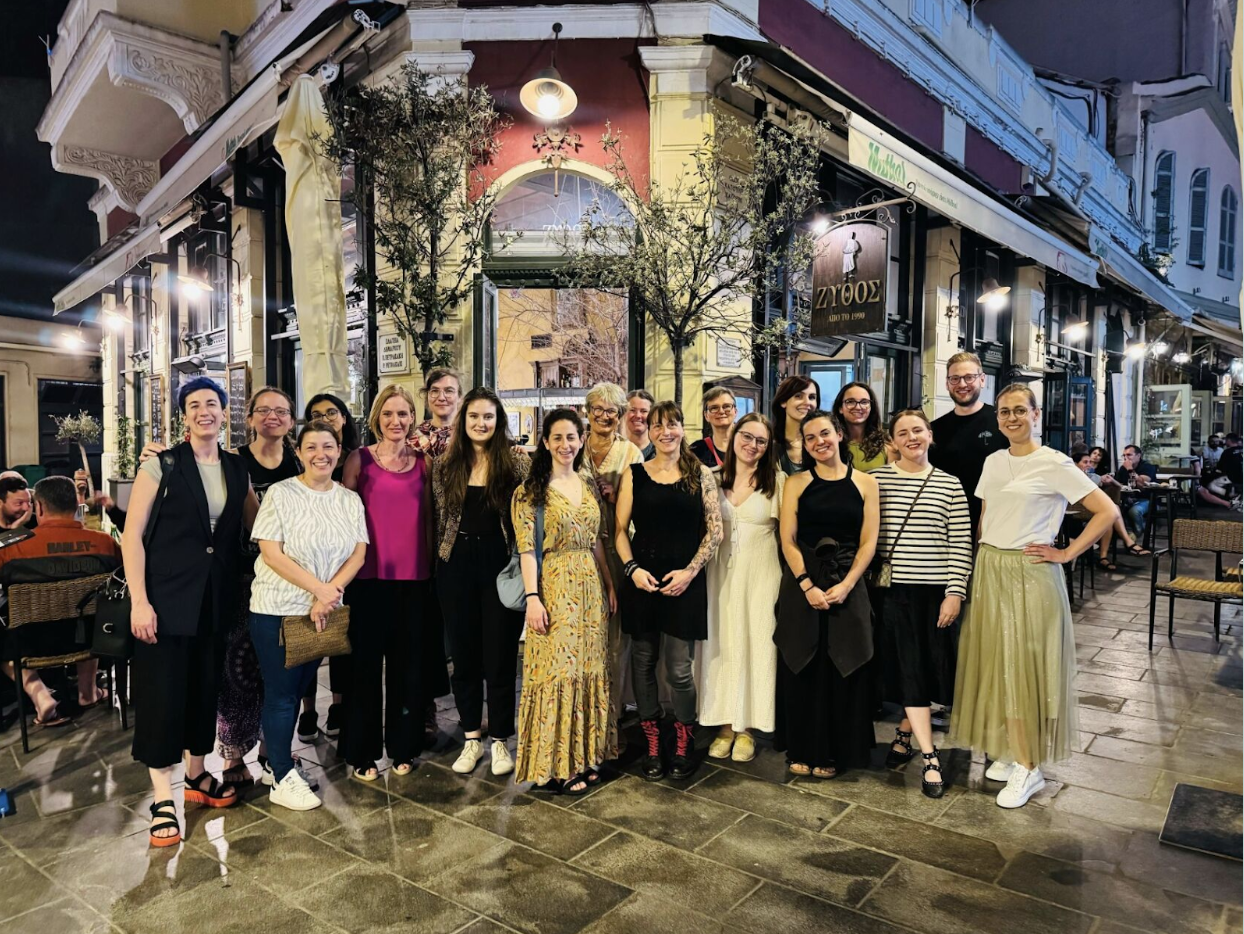
ELIXIR All Hands 2025 - Photo credit: Aina Jene Cortada

Event info:

For the first week of June 2025, I was at the ELIXIR All Hands meeting in Thessaloniki, Greece. ELIXIR is an intergovernmental European life sciences infrastructure with members from over 240 research institutes in 21 countries. All Hands is an annual event bringing together members of the ELIXIR community and partner organisations from across Europe to review ELIXIR’s achievements, ongoing activities and future plans.

This year was the 11th annual meeting - my 3rd All Hands. The event was full of opportunities to build networks and community, as well as learn about inter/national successes and challenges to anything life science infrastructure related. I was also there as a participant in the second cohort of ELEAD, ELIXIR’s leadership and diversity mentoring programme to support women’s leadership growth in ELIXIR.

Pre-All Hands:

I flew to Thessaloniki early to attend a networking dinner and peer-mentoring workshop as part of the ELEAD programme. This was the first time our ELEAD cohort met in person, along with the ELEAD programme team and our trainer, Louise Schubert. We had a lovely dinner on the Sunday evening, full of good food and positive connections with my female colleagues.

The next morning, we were all up bright and early for our workshop. Starting with an introduction to peer mentoring and how it is set up for ELEAD, we formed our peer mentoring groups, an essential part of ELEAD. Throughout the programme we meet regularly in our groups to reflect on our own professional practice and support each other through career successes and challenges. It’s a very rewarding part of ELEAD and I felt right at home with the rest of my group - being honest about things we have been finding difficult at work quickly brought us close together, and I left the workshop feeling a lot of inspiration and gratitude.

All Hands:

Day 1:

Then it was time for the main event! Which importantly started with lunch.

As always, the first session was opening remarks from the host node (Greece) followed by a keynote from Naveed Aziz, Vice President of R&I at Genome Canada, who covered infrastructure and governance similarities between EU and Canada and an interesting overview of the past 25 years of Genome Canada. 

After a coffee break, it was time for the first parallel sessions. I went to the mini-symposium on Cross-border Access to Human Genomes and Linked Data at Scale. This session covered advances in European genomic data infrastructure, including federated infrastructure and its practical barriers, and a walk through of how ELIXIR is involved with the European Cancer Mission, before ending with a panel discussion. The day ended with a very busy poster session and welcome drinks at the venue.

Day 2

The second day kicked off with 2 back to back parallel workshop sessions. I first attended the workshop on Enhancing RDM Resources led by the ELIXIR RDM community. After a brief introduction, we discussed various RDM topics, from incentives, physical data needs, and RDM training for overlooked professions.

Then I went to the workshop led by the ELIXIR Cancer Data communityTrends in Services for Cancer Research. Here I learnt a lot about cancer data (I work with musculoskeletal data but we covered a lot of relevant topics such as multi-omic data integration), as well as standards such as DOME for improving trust in AI.

There was then a 90-minute lunch & networking break - a great chance to catch up with international colleagues and have a more in-depth look at the posters when it’s less crowded. It was then time for the second plenary, Global Collaborations: Perspectives from Research Infrastructures, with representatives from Euro-BioImaging, Instruct-ERIC, and the ELIXIR Staff Exchange and Global Engagement initiatives. One set of flash talks and fascinating panel discussion later, I had a much better idea of the achievements, challenges, and opportunities that come with large international collaborations.

Another coffee break, then the final parallel session of the day - 3 mini-symposia on biodiversity data, empowering knowledge sharing, and node and people development. I skipped this session - it had been an intense 2 days so far and I needed a break if I was going to make it to the end! The evening ended with the ELIXIR-UK node dinner, unsurprisingly as we’re in Greece there was amazing food, a great chance to catch-up with UK colleagues.

Day 3

It was again a jam packed day of workshops, a plenary, and symposia. First, I went to the ELEAD workshop where we heard about other leadership initiatives for women in infrastructure in Europe and beyond, before a very interactive session mapping all initiatives we knew of and reflecting on which ideas could be useful for us to put into practice.

Then I sat in the ELIXIR & EOSC workshop, an important and exciting discussion around the future development of EOSC nodes, how they’re structured and linked with ELIXIR, and how to stay up to date on EOSC developments and strategy. I came away with more knowledge of EOSC than the year before but still a bit confused - initiatives as big as EOSC are hard to get your head around!

There was then a long lunch/networking session, where I met my ELEAD mentor for the first time. Another key part of ELEAD is being paired with a senior mentor to support your career development - it was exciting to finally meet each other and start this process. There was another plenary on ELIXIR Node Roles, Services, and Connections, an informative session from the ELIXIR Hub and several national nodes on the different node coordinator roles and how the nodes and ELIXIR hub interact and engage on various projects and services.

The final session of the day I went to was on Federated Service Delivery: Enabling Sensitive Data Computing in ELIXIR, covering the complex additional needs of sensitive data, what projects are working on this in ELIXIR, other domains we can learn from (e.g. climate data), ending with a discussion on all the above and what is needed to federate compute services in ELIXIR.

The day didn’t end there! That evening was the conference dinner at another venue in Thessaloniki. We had a nice drinks reception overlooking the sea before heading inside for a delicious meal accompanied by a fantastic display of traditional Greek dancing and music. 

Day 4

The final day had sadly arrived. Again, it kicked off with parallel workshop sessions - I went to a very engaging workshop on Data Annotation and Representation delivered by colleagues from the University of Nottingham. After a brief introduction to the workshop, we were split into two teams, debate style, to argue for or against the contentious statement: “All annotated datasets are unreliable”. We had a lot of interesting discussions in our teams before a fun debate at the end.

A quick pit-stop for coffee and then the closing plenary session. Irene Papatheodorou gave an insightful talk on her work on phenotypes at the Earlham Institute, and then we heard an overview of ELIXIR’s 2026 plans before poster prizes were awarded. The session ended with the most anticipated slide of the meeting, where is next year’s All Hands? [Drum roll] Lyon, France!

Lunch was a final chance to say goodbye to colleagues before heading back home. It was a fantastic All Hands as always, and although I was very exhausted from an intense 4 days of networking and new information, I left feeling very connected, inspired, and full of ideas. Until next year.

Slidesposters, and an event report from ELIXIR All Hands 2025 are available to all.


Thank you to the Software Sustainability Institute for funding my accommodation for this meeting.

HomeNews and blogs hub

Introducing the 2026 Fellowship Cohort: Insights and Celebrations

Bookmark this page Bookmarked

Introducing the 2026 Fellowship Cohort: Insights and Celebrations

Author(s)
Oscar Seip

Oscar Seip

Research Community Manager

Posted on 11 December 2025

Estimated read time: 12 min
Sections in this article
Share on blog/article:
LinkedIn

Introducing the 2026 Fellowship Cohort: Insights and Celebrations

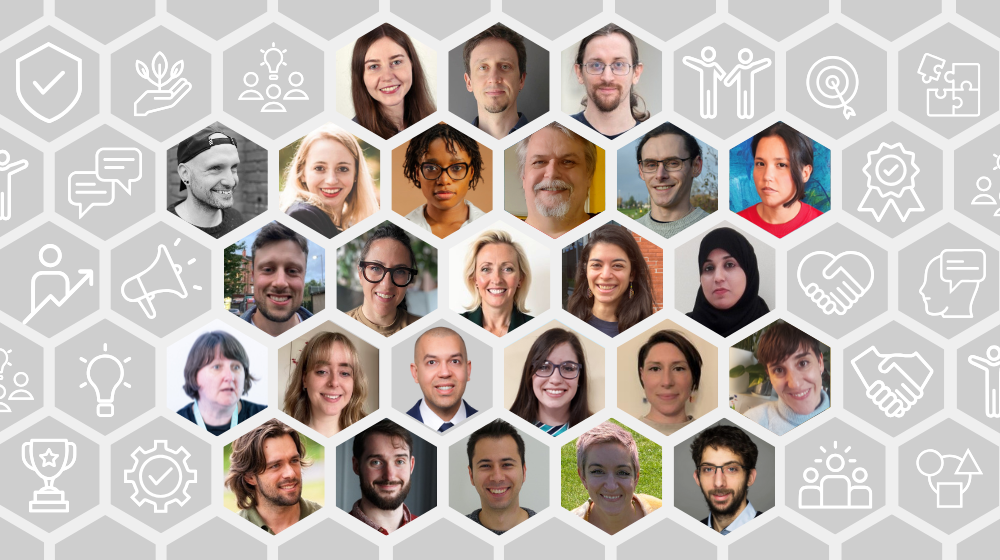
SSI Fellows 2025 collage

The SSI Fellowship Programme supports passionate individuals in research and software, empowering them as ambassadors of good practice to shape the future of research software. The selection process for this year’s cohort has now ended and we’re excited to introduce the 2026 Fellows and share their plans for the Fellowship.  

For the 2026 cohort, we received 85 applications from 57 institutions, spanning 38 research areas based in 16 countries. After rigorous review – 255 assessments by 39 reviewers, mostly SSI Fellows, staff, and collaborators – we shortlisted 39 candidates.  

The shortlisted applicants participated in our Online Selection Day, featuring group discussions and event planning activities that tested collaboration, communication, and contribution. Based on these activities and initial scores, 25 wonderful new Fellows were selected to join the Fellowship Programme.

Insights from the 2026 Selection

Continued improvement of support

Following last year’s changes to improve transparency, including clearer eligibility criteria and the publication of our shortlisting and online selection day criteria, we continued to build on this momentum. We expanded our ‘Ask Me Anything’ sessions and doubled the number of Fellows available for support to applicants, increasing from 10 to 20. While it’s difficult to draw a direct link, we saw a notable rise in high-scoring applications with submissions rated 4/5 or higher increased by nearly 50% (from 20 to 31), alongside a 23% rise in total applications (from 69 to 85, a new record). Importantly, all 85 applications progressed for review this year, compared with 69 out of 75 last year.

Broadening horizons

In relation to our continued dedication to broaden our engagement, the 2026 cohort includes Fellows from six institutions that have never been represented before in the Fellowship Programme. We also welcomed applicants from fields that have historically been underrepresented in the programme, including the Creative Arts, Education, Medicine and Dentistry, Linguistics, Sociology, and most notably the Biological Sciences, from which five Fellows were selected.

Gender and career trends

While most applicants continue to be men (55%), candidates who identified as women, non-binary, or preferred not to disclose their gender had higher success rates at every stage of the selection process, making up 64% of selected Fellows, mirroring trends from last year. Early-career applicants represented 48% of selected Fellows. Under current criteria, Research Software Engineers (RSEs) are placed in the early-career category. However, we recognise that RSEs vary widely in experience. To support clearer and more accurate alignment, we plan to review how the RSE career path corresponds to our current (academic) career stages. We also see limited applications and lower success rates from Phase 4 applicants. Since we value applicants at this stage, we are reviewing our processes, criteria, and communications to clarify expectations for both applicants and reviewers.

Evolving leadership in the community

Last year’s strong participation from RSEs highlighted both the growing recognition of technical and research software roles and their increasing confidence to step into leadership positions. This year, we again saw strong representation, with 10 of the 25 selected Fellows (40%) working in RSE or similar technical roles. However, we also selected more Research-Focused Academic roles (7 Fellows, or 28%), which creates a well-balanced cohort. We would love to see even more junior and early-career researchers apply in future cycles to maintain this balance.

In addition, this year we saw an increase in applications from those in Leadership or Community Management roles, with 5 Fellows (20%) selected. This reflects the growing recognition of community-building roles within the research software ecosystem and – like their RSE colleagues – their confidence to take on leadership positions in the research software community. This also highlights how the SSI Fellowship Programme is becoming a hub of expertise for people who create, sustain, and professionalise communities of practice across the research software landscape.

The Plans of the 2026 SSI Fellows

The new Fellows bring forward a broad array of plans that highlight the broad impact of the Fellowship Programme. They are establishing diverse Communities of Practice (CoPs) and peer networks across areas including ethical and reproducible AI, green and sustainable computing, inclusive and neurodiverse research practices, creative computing, and specialised research domains such as chronobiology, high-energy physics, and taxonomic research.

Their projects combine practical training, workshops, hackathons, and community-led events to improve coding practices, build grassroots networks, and foster collaboration between research software engineers, domain specialists, and artists. Several Fellows are developing tools and resources to enhance reproducibility, sustainable computing, and open science, including lightweight computing environments, workflow templates, and AI fairness frameworks.

These initiatives extend globally, linking communities in the UK, Latin America, Asia, and Australia, while addressing inclusivity, mental health, and professional development across research software and data-science communities. By connecting training, open-source development, and community-building efforts, the 2026 cohort advances research software practice, fosters responsible AI adoption, and strengthens the foundations of open and collaborative science.

(The new 2026 Fellows are listed here in alphabetical order by first name, followed by their institutional affiliations and JACS subject area)

Adrian D'Alessandro (Imperial College London)

Building an open source developer community around the DIRECT Framework through a series of hackathons and contentathons. 

Alan O'Callaghan (University of Edinburgh - Biological Sciences)

Creating two short Carpentries-style courses to teach image analysis (and other) researchers how to effectively use version control and how to easily publish blogs and protocols.

Andre Piza (Alan Turing Institute - Creative Arts and Design)

Starting a community of practice that brings together arts practitioners and digital research technical professionals to develop digital skills, methods and creative projects through a facilitated knowledge exchange programme.

Anne Steele (Freelance - Creative Arts and Design)

Connecting computational artists to sustainable software practices.

Carlos Cámara-Menoyo (University of Warwick - Social Studies)

Creating CriticAI, a community of practice to critically enquiry about AI’s adoption in HE and influence in the decision-making processes to ensure that AI usage is aligned with academia’s ethos.

Cassandra Gould van Praag (Open Life Sciences - Mathematical Sciences)

Facilitating conversations around the ethical implications of automated monitoring of community engagement and health.

Christian Gutschow (University College London - Physical Sciences)

Empowering the next generation of particle physicists with tools and training resources that lower the barrier to sustainable software practice.

Christina Bremer (University of Cambridge - Computer Sciences)

Organising a workshop and developing a toolkit for RSEs to learn about systems thinking, including different methods and relevant application areas.

Gabriel Mateus Bernardo Harrington (Cardiff University - Computer Sciences)

Delivering a Software Carpentry–inspired version control training, enhanced with a practical code review component to foster grassroots peer-mentoring, for researchers across the UK Dementia Research Institute.

Johanna Bayer (Donders Institute for Brain, Cognition and Behaviour - Medicine and Dentistry)

Quantifying and assessing community health in various software and open science communities.

Kevin Rue-Albrecht (University of Oxford - Biological Sciences)

Representing the Bioconductor community at external events (e.g., ELIXIR BioHackathon, Galaxy Community Conference) to connect communities and foster collaborative work between developers, users, and curators of communities working to coordinate their FAIR practices.

Liam Pattinson (University of York - Physical Sciences)

Establishing a community of practice for Fortitude, the Fortran linter.

Mamoona Humayun (University of Roehampton - Computer Sciences)

Enhancing secure software development practices among University IT staff and research software engineers through awareness, knowledge-sharing, and practical training.

Michael Sparks (University of Manchester - Computer Sciences)

Create CompilePython.com - a community-driven, sustainable knowledge hub for Python compilers, for environmental sustainability.

Nicole Whippey (University of Exeter - Computer Sciences)

Building inclusive research and user communities to co-design a menstrual health app and ethical data ecosystem, enabling high-quality women’s health research and laying the foundation for sustainable innovation and future grant collaborations.

Pao Corrales (Australian National University - 21st Century Weather Centre - Physical Sciences)

Growing the movement of green computing in Asia-Australian region by promoting and adapting existing tools and taking the next steps toward making climate and weather research more sustainable.

Precious Onyewuchi (OSPO Now - Engineering)

Educating, advocating, and enabling researchers to build open and reproducible AI practices.

Raniere Gaia Costa da Silva (GESIS Leibniz Institute for the Social Sciences - Computer Sciences)

Promoting the use of WebAssembly (Wasm) and JupyterLite in the context of teaching programming skills and research reproducibility.

Salma Thalji (Technical University of Munich - Biological Sciences)

Creating a community of practice around open, reproducible, and sustainable software in circadian neuroscience

Samantha Ahern (University College London - Education)

Identifying and mapping funded projects in the dRTP skills space to highlight synergies.

Sara Villa (Open Life Sciences/Data Science for Health Equity - Education)

Analysing and aligning best practices and strategies for community building in different scientific Communities of Practice, to support the creation of a network of professionals working in Research Community Management

Sarah Wyer (Durham University - Computer Sciences)

Understanding, detecting, and mitigating bias in AI, enabling the collective development of fair AI for everyone

Sofía Miñano (University College London - Biological Sciences)

Connecting Spanish-speaking research software engineers in the UK and the Americas through the "Charlas RSE", a seminar series featuring RSE talks in Spanish.

Sophie Whittle (University of Sheffield - Linguistics, Classics and Related Subjects)

Develop a community of practice that empowers university students (particularly neurodivergent students), teachers and academic researchers to navigate the challenges that come with (un)welcome change related to new AI technologies and software, ultimately informing best practice in the use of AI for teaching and research in the humanities.

William Haese-Hill (University of Glasgow - Biological Sciences)

Undertaking an EDIA study on the impact of hybrid and remote working on RSE executive function, with a focus on mental health and neurodiversity.

Challenges and Opportunities  

While we’re celebrating this year’s successes, we’re also reflecting on where we can improve:  

Improving diversity

Applications this year show a trend of increased ethnic diversity, with good representation across all ethnic groups. However, the data highlighted some disparities during shortlisting and selection. For example, applicants from Asian or British Asian backgrounds saw a drop from 17.7% of applications to 10.3% shortlisted, and ultimately 8% confirmed in the cohort. Applicants from Mixed or multiple ethnic groups and Other ethnic backgrounds also experienced small decreases during selection, but this is an improvement on last year. We are constantly reviewing our selection procedures to identify barriers and ensure our processes are fair, transparent, and inclusive, reflecting the diversity we aim to support.

Reaching new disciplines

While Computer Science continues to be the largest applicant group, applications from Physical Sciences and Social Sciences have slightly improved on last year, with a notable increase in selected Fellows from the Biological Sciences (+5 on a total of 24 Fellows within the entire Programme historically). Encouragingly, outreach to Arts and Humanities researchers last year has continued to strengthen representation from these disciplines in this year’s cohort. Expanding engagement with underrepresented fields such as the Creative Industries and the Social Sciences in future calls will help build a more multidisciplinary Fellowship Programme that reflects the full spectrum of research software needs.

Refining evaluation

Differences between shortlisting scores and final selections indicate areas where evaluation criteria could be clearer and more consistent. In particular, we are reviewing the processes around the Online Selection Day to make expectations clearer for both applicants and reviewers, ensuring that everyone can engage fully and confidently in the process. More broadly, we are considering how the format and criteria can be more inclusive by accounting for diverse cultural norms, communication styles, and ways of presenting oneself, so that all candidates are evaluated fairly and equitably. Finally, we also aim to put in place financial support where needed (e.g. to cover costs such as upgraded internet packages) so that all candidates can fully participate in the Online Selection Day.

Looking Ahead  

The SSI Fellowship Programme is about more than professional development. It’s about building a vibrant, supportive, and inclusive research software community. The 2026 cohort illustrates this mission, bringing together diverse backgrounds, a wide range of disciplines, and ambitious projects that advance open science, reproducible research, sustainable computing, and community-building. Their work spans AI ethics, creative computing, green computing, high-energy physics, chronobiology, and beyond, connecting researchers across the UK, Europe, Latin America, and Asia.

To our new Fellows: welcome to the SSI community! We can’t wait to see how your work takes shape and the positive change you’ll inspire.   

To everyone else: keep an eye out for updates on these exciting projects and if you’re interested in what they are doing consider getting in touch via fellows-management@software.ac.uk

If you’re passionate about research software, think about applying next year. Together, we can shape the future of sustainable, inclusive, and innovative research software. 


HomeNews and blogs hub

ConveRSE at RSECon25

Bookmark this page Bookmarked

ConveRSE at RSECon25

Author(s)
Mike Simpson Profile Picture

Mike Simpson

SSI fellow

Posted on 8 December 2025

Estimated read time: 5 min
Sections in this article
Share on blog/article:
LinkedIn

ConveRSE at RSECon25

Let's talk about Mental Health - ConveRSE

In September, I attended my sixth RSECon25. I wore many hats at the event, but I was mainly there with my SSI fellowship hat on. I had the opportunity to talk to RSE Leaders and the other attendees about my work on the ConveRSE project, as well as catching up with faces old and new. RSECon is always one of the highlights of the year for me (along with Collaborations Workshop, obviously!), and this year was no exception.

Let’s Talk About Mental Health

First, I gave a lightning talk at the RSE Leaders and Aspiring Leaders Workshop on Monday. This was a great opportunity to encourage the leaders to get involved and spread the word amongst their teams. I felt it was important to talk to them, as line managers and team leaders can have a massive impact on a person’s mental health in the workplace. I was keen for them to contribute to ConveRSE by sharing tips and advice on how to look after their teams, so that we can provide all leaders with the tools to do this effectively.

Then, on Wednesday, I got to give my full talk to the audience at the conference. I told them two stories: first, my story, about my own experiences and struggles with mental health. Then, I talked about how I came to apply for the SSI Fellowship, what I’d been up to so far, my plans for the future, and how to get involved

I don’t like to think about how many people were towering over me in that colossal amphitheatre of a lecture hall. It’s difficult being an anxious person and having to talk to a room full of people about your anxiety! However, the talk included an interactive element, using Mentimeter, and there were 100 people who contributed, both in the room and online. Thank you to everyone who contributed. I plan to do a separate blog post to discuss the data I collected at a later date.

The talk seemed to go well. I was grateful to have such a large audience, given that there were five tracks of incredible talks, workshops and other things going on. I got a lot of good feedback and had a lot of interesting conversations after the talk, as well as during my time on the RSE Society and SSI stands. I gave out a lot of stickers and leaflets too!

The Society will be posting recordings of all of the talks on their YouTube Channel in the coming months, so if you weren’t at RSECon or missed the talk, you will be able to catch up. I would also love to continue the conversation, so please get in touch if you would like me to deliver a version of this talk at your institution.

The rest of the event

I didn’t get to go to a huge number of other talks. I also had to wear my RSE Society Trustee hat, and my duties included addressing the AGM, overseeing this year’s trustee elections and announcing RSECon26, and its co-location with the first International Research Software Conference. I also decided to take my own advice and stay hydrated and take plenty of breaks, which I’m usually pretty bad at at conferences!

I was also delighted to be one of four official Mental Health First Aiders at the event. I know a few people needed to make use of our services, so I’m glad the conference organisers invited us to be part of it (and I’m grateful to the SSI for sponsoring my training as part of my fellowship).

I enjoyed the keynotes from Amanda Brock, Simon Hettrick and Tania Allard. Another highlight was one of the other talks in my session: “Let's stop pretending to be Unicorns” by Marion Weinzierl. It was an interesting discussion about how the traditional role of plug-and-play, generalist RSEs who are expected to do everything might not always be the best solution for RSEs or the researchers we collaborate with, including some discussion of how trying to be a unicorn affects our mental health.

Finally, I was delighted to finally get to watch (and meet) Matt ‘StandupMaths’ Parker, who had to cancel a previous appearance at the conference due to Covid. A good laugh was just what we needed at the end of a long day of conferencing!

Final Thoughts

This may have been the most nervous I’ve been giving a talk at a conference, but as always, the research software community were kind, welcoming and supportive. I got to have a lot of interesting conversations, some of which have spawned new ideas for the ConveRSE project, plus I had a few offers for contributions to the website, including both code and blog posts.

My goal is to continue the conversation around mental health in this community, and I don’t think I could have asked for a better opportunity to try and do that.


HomeNews and blogs hub

Cloud Native SIG at RSECon25

Bookmark this page Bookmarked

Cloud Native SIG at RSECon25

Author(s)
Laura Shemilt Profile Picture

Laura Shemilt

SSI fellow

Posted on 26 November 2025

Estimated read time: 2 min
Sections in this article
Share on blog/article:
LinkedIn

Cloud Native SIG at RSECon25

Cloud native logo, session at RSECon

At  RSECon25 in Warwick, the Cloud Native SIG team ran their opening event, a workshop for people looking to get started with Kubernetes. It was a success, with a packed out room and a separate pod of conference attendees following the workshop online. We certainly managed to scale our workshop appropriately! We received a lot of positive feedback and exciting contributions from participants. If you did not manage to attend or are looking for further reading, you can view the tutorial in its entirety. A big thanks to Alex Lubbock for the Kubechaos App and Lewis Sampson and Piper Fowler Wright for the content and teaching.

The event was enjoyed by 80 people, and included material on Kubernetes architecture, Helm and practical examples for deploying your applications robustly and scalably. There was lots of great developer energy and support in the room and we fixed all manner of technical bugs and got some excellent contributions both to the course material and to our Kubechaos App, which we are currently reviewing. There are some really creative Javascript developers in the RSE community.

We had lots of positive feedback highlighting the workshop’s impact in the community. Wahab Kawafi from the Bristol Centre for Supercomputing shared this endorsement, "with cloud native workflows gaining popularity with researchers, it's great to finally have a resource to upskill RSEs in using Kubernetes and Helm". To continue this support, we have made the course open source and plan to do further events exploring other areas of Kubernetes. 

If you would like to hear more about the Cloud Native SIG please join our mailing list. We are hoping to release a website very soon and will keep you posted with details. Do you have your own adventures using Cloud Native technology that you would like to share? We would very much like to hear from you. Please email laura.shemilt@rfi.ac.uk if you would like to provide a short blogpost on your experience. 


HomeNews and blogs hub

Reflections on my first RSECon: building community and frameworks for sustainable training

Bookmark this page Bookmarked

Reflections on my first RSECon: building community and frameworks for sustainable training

Author(s)
Phil Reed Profile Picture

Phil Reed

SSI fellow

Posted on 25 November 2025

Estimated read time: 3 min
Sections in this article
Share on blog/article:
LinkedIn

Reflections on my first RSECon: building community and frameworks for sustainable training

Photograph of a swan at University of Warwick (Phil Reed)

Photograph of a swan at the University of Warwick (Phil Reed).

This year marked my first time attending RSECon, after several years of following along remotely via the UK Carpentries community calls. Being at the conference physically brought a new level of energy and connection, allowing me to participate more fully, both as an attendee and as a contributor. I had the privilege of helping to run a workshop during the main event, and I also led a session during the training community satellite day; both directly tied to my Software Sustainability Institute Fellowship and ongoing work developing the DIRECT Framework. I also enjoyed early morning strolls in the green campus of the University of Warwick.

The conference was full of inspiring content and collaborative spirit. I left with new tools and insights to bring back to my team. A few highlights included learning about the WAVE accessibility testing tool, which we’re already exploring for some of our internal documentation, and a tutorial on using Retrieval-Augmented Generation (RAG) to reduce hallucinations in large language model (LLM) outputs, an issue that’s especially relevant as we continue integrating AI into our products and services.

One of the standout aspects of RSECon was how it brought together multiple overlapping communities. I had the opportunity to connect with people working on related initiatives, such as STEP-UP, which focuses on developing digital research technical professionals (dRTP) around the London region. These interactions helped surface common goals and opened doors to potential collaborations, particularly around training and professional development.

While the entire event was valuable, I’d like to focus the rest of this post on the training community satellite day, where I led a session that aimed to identify and share useful training resources for research software engineers. The session was a hybrid one, and we used Miro as a digital whiteboard to collect contributions from both in-person and remote participants. This turned out to be especially effective, many of the suggestions were links to online resources, so having a shared digital space streamlined the process and saved us the work of transcribing handwritten notes

That said, the session wasn’t without challenges. It was designed as a collaboration between three overlapping groups, all sharing a single slot. Balancing different goals and expectations in a short amount of time was tricky, but everyone made a genuine effort to engage, and the volume of contributions we received was a testament to the shared enthusiasm. Miro requires a degree of control and instruction to be effective and accessible, so I made sure to include alternatives throughout the event.

Our next step within the DIRECT Framework team is to review the content generated during the session and continue mapping suggested courses to the professional skills section of the framework. We are also planning to liaise with the other group leads to synthesise the session outcomes, ideally culminating in a shared report or other output that captures the full day's collective knowledge.

Attending RSECon has been both energising and grounding. It offered a rare chance to step back and think strategically about how we support training and community-building in research software engineering. I’m already looking forward to building on these conversations in the months ahead.


HomeNews and blogs hub

Diagnostics for LMICs (Dx4LMIC) Conference 2025

Bookmark this page Bookmarked

Diagnostics for LMICs (Dx4LMIC) Conference 2025

Author(s)
Dylan Adlard Profile Picture

Dylan Adlard

SSI fellow

Posted on 29 October 2025

Estimated read time: 3 min
Sections in this article
Share on blog/article:
LinkedIn

Diagnostics for LMICs (Dx4LMIC) Conference 2025

Diagnostics for LMICs (Dx4LMIC) Conference 2025, people attending the conference

This year, Reuben College hosted the third Dx4LMIC Conference, bringing together students and professionals from engineering, medicine, policy, and more. The event offered participants a chance to share insights and experiences from their respective fields, with a focus on the challenges and opportunities of improving medical diagnostics in low- and middle-income countries (LMICs). It was the biggest conference the college has hosted so far, with around 110–120 attendees. The event was very popular and we had to close registration early and start a waiting list. 

Across the two days (plus a pre-conference data science workshop), speakers shared insights on a wide range of cutting-edge tools and ideas, from using machine learning to transcribe patient histories, to bioengineering techniques that allow multiple PCR reactions to run in a single well, significantly reducing cost and complexity. We also heard about AI models trained on pulse oximeter data to help detect early patient deterioration in Vietnam, showcasing how diagnostics and digital health are converging in real-world settings. The day before I also ran a pre-conference technical workshop on data-centric approaches to learning machine learning.

Talks on responsible modelling and evaluation were a particular highlight this year, reflecting one of the conference’s key themes. Dr Fu Siong Ng spoke about the value and complexity of clinical data from LMICs and the importance of using such data responsibly. He introduced a method for diagnosing Chagas disease directly from over 2 million ECGs collected from Brazilian patients. We also heard from Reuben’s own James Anibal, who shared the practical challenges of deploying machine learning models in clinical settings. On a broader scale, Professor Bamba Gaye described efforts to scale telemedicine in Africa through crowdsourced data and collaborative strategies. For early-stage PhD students, it's crucial to develop an understanding of the value of clinical data and how to work with it thoughtfully and ethically.

Thanks to a generous contribution from the Software Sustainability Institute to my fellowship, we were able to host 20 PhD students from UCL and UCL-affiliated programmes overnight in Oxford. Combined with the fact that the conference was fully subsidised, this meant we could offer a high-quality, two-day event, including keynotes, poster sessions, and a formal dinner, at little to no cost to attendees. We were also delighted to award two poster prizes, recognising outstanding PhD research presented during the conference. 

The SSI’s support not only made this event more accessible but also helped foreground one of its most important themes: the responsible and thoughtful use of clinical data. From early-stage PhD students to experienced researchers, there was a shared recognition that technical progress must go together with ethical, context-aware data practices. We’re grateful for the opportunity to bring these conversations to the forefront and look forward to continuing this focus in future events.


HomeNews and blogs hub

High Performance Computing and Arts and Humanities Research in the UK

Bookmark this page Bookmarked

High Performance Computing and Arts and Humanities Research in the UK

Author(s)
Katherine McDonough Profile Picture

Katherine McDonough

SSI fellow

Posted on 24 October 2025

Estimated read time: 6 min
Sections in this article
Share on blog/article:
LinkedIn

High Performance Computing and Arts and Humanities Research in the UK

CCPAHC logo, colourful swirls

Thanks to Software Sustainability Institute funding, I attended the first Town Hall meeting for the recently UKRI-funded Toward a new CCP for Arts, Humanities, and Culture research (CCP-AHC) projectCCP-AHC is principally focused on strengthening knowledge about large-scale compute (or high performance computing) and other advanced digital research infrastructures (DRI) for research software in the arts and humanities developed in the UK. The Town Hall focused on soliciting ideas, questions, and updates from scholars in these fields already engaging with DRI resources. I attended the meeting as the director of the MapReader software library, but also with my hat on as an SSI Fellow interested in the broader concerns around research software development and maintenance in the humanities. 

But what is a CCP and why are arts, humanities, and cultural heritage researchers moving towards this? “Collaborative Computational Projects” are funded by UKRI councils and administered by the Computational Science Centre for Research Communities (CoSeC) programme within UKRI’s Science and Technology Facilities Council. CCP-AHC was funded by a 2024 call designed to prepare new scholarly communities to apply for CCP funding in 2026. For the first time, potential future CCPs within the remit of AHRC and ESRC were eligible. As one of 6 new communities, the remit of CCP-AHC is above all to develop a roadmap and plan for the new CCP. In short, CCPs provide long-term funding for academic communities whose work depends on collectively used and maintained sustainable research software. For arts and humanities researchers to have access to such support would be a major stepping stone towards better national recognition of the computational needs of these disciplines.

Led by Eamonn Bell (Durham) with co-leads Karina Rodriguez-Echavarria (Brighton) and Jeyan Thiyagalingam (STFC), at the heart of the CCP-AHC is the issue of scaling up arts and humanities compute activities. As the UK invests in compute, it has been rare for humanities scholars to join the queues waiting to get access. When the MapReader team applied for access to the Bristol-based Isambard AI for some large-scale data processing tasks, we were welcomed with open arms as a novel use case in the humanities. Throughout 2024 and 2025, we used Isambard AI, Baskerville, the N8 Bede, and Lancaster’s HEC for a range of MapReader tasks. For example, for the “Landscape Change and Conservation with MapReader” project at Lancaster, Computational Environmental History Research Associate Kirsty Lilley created the UK’s first open-access datasets of historical vegetation and other landscape features from nineteenth-century Ordnance Survey maps in collaboration with the Peak District and South Downs National Parks (data paper forthcoming!). Simultaneously, we were also using Baskerville for large-scale text processing tasks with historical newspapers (for the now concluded Living with Machines and Data/Culture projects at The Alan Turing Institute). Indeed, because of her work with HPCs for the computational analysis of maps and newspapers, our Turing colleague Rosie Wood was honoured as one of the “Women in HPC” at SC2025 (SuperComputing: The International Conference for High Performance Computing, Networking, Storage, and Analysis).

For scholars to engage with big collections of historical sources that have now been scanned as images, and sometimes further digitised as structured or unstructured data, access to advanced computing resources is essential, and the CCP-AHC can address these needs in a coordinated fashion. With MapReader, and with the Living with Machines newspaper work, we learned two lessons the hard way: 

  1. Assuming you will process data on your local machine puts strict limits on your dataset processing capacity, and for many colleagues without access to a powerful local computer, this is indeed out of the question. We knew we wouldn’t be using local compute for a lot of work, but it did create barriers within the team because core big data sets could be harder to access, sample, and explore from cloud storage locations.
  2. Levelling up to using cloud-based virtual machines is extremely costly. For what we spent on commercial cloud-based compute and storage, we could have extended contracts or hired new team members. At the beginning of Living with Machines (ca. 2019), there was no alternative, and by the time we did have access to other, HPC infrastructure (e.g. Baskerville), we did not have time to rewrite code to work in a new environment or permission to move certain data.

I’m thrilled that colleagues across the UK might, through a new CCP, work together to avoid missed compute opportunities, develop HPC skills, and ensure HPC access. CCP-AHC has rightly identified knowledge about large-scale compute as a blocker to novel computational research in AHRC disciplines, but I would also highlight that this is not the only infrastructural challenge we face. From the lack of a robust, central data service for arts and humanities data to the importance of embracing and maintaining minimal computing workflows (in particular because these are more accessible to students and collaborators who do not have access to HPCs). But perhaps above all, there has been simply a dearth of opportunities to maintain humanities and arts research software as open-source projects. Older CCPs have used STFC support to ensure that key software can live on past its initial development funding. SSI’s Research Software Maintenance Fund offers one solution to this funding gap, but the long-term support of a CCP is unique in the UK. As it develops the roadmap for the future CCP, this is an exciting moment to see how the CCP-AHC leads and the broader community wish to shape computational research infrastructure for the arts and humanities going forward.

If the first Town Hall meeting opened up many perspectives on what we lack in terms of support for building capacity around DRI and sustaining software in the arts and humanities, future events will collect evidence from colleagues based on where they are at now. The CCP-AHC team is collecting information from UK colleagues about research projects using computational resources at all scales. If you’d like to learn more and potentially submit evidence about your own work, check out the details on the dedicated webpage.


Subscribe to Fellows
Back to Top Button Back to top