Skip to main content Site map
Old Tag
Fellows 2013
Fellows 2014
Fellows 2015
Fellows 2016
Fellows 2017
Fellows 2018
Fellows 2019
Fellows 2020
Fellows 2021
Fellows 2022
Fellows 2023
Fellows inaugural meeting
Fellows newsletter
Fellows selection
Category
HomeNews and blogs hub

High Performance Computing and Arts and Humanities Research in the UK

Bookmark this page Bookmarked

High Performance Computing and Arts and Humanities Research in the UK

Author(s)
Katherine McDonough Profile Picture

Katherine McDonough

SSI fellow

Posted on 24 October 2025

Estimated read time: 6 min
Sections in this article
Share on blog/article:
LinkedIn

High Performance Computing and Arts and Humanities Research in the UK

CCPAHC logo, colourful swirls

Thanks to Software Sustainability Institute funding, I attended the first Town Hall meeting for the recently UKRI-funded Toward a new CCP for Arts, Humanities, and Culture research (CCP-AHC) projectCCP-AHC is principally focused on strengthening knowledge about large-scale compute (or high performance computing) and other advanced digital research infrastructures (DRI) for research software in the arts and humanities developed in the UK. The Town Hall focused on soliciting ideas, questions, and updates from scholars in these fields already engaging with DRI resources. I attended the meeting as the director of the MapReader software library, but also with my hat on as an SSI Fellow interested in the broader concerns around research software development and maintenance in the humanities. 

But what is a CCP and why are arts, humanities, and cultural heritage researchers moving towards this? “Collaborative Computational Projects” are funded by UKRI councils and administered by the Computational Science Centre for Research Communities (CoSeC) programme within UKRI’s Science and Technology Facilities Council. CCP-AHC was funded by a 2024 call designed to prepare new scholarly communities to apply for CCP funding in 2026. For the first time, potential future CCPs within the remit of AHRC and ESRC were eligible. As one of 6 new communities, the remit of CCP-AHC is above all to develop a roadmap and plan for the new CCP. In short, CCPs provide long-term funding for academic communities whose work depends on collectively used and maintained sustainable research software. For arts and humanities researchers to have access to such support would be a major stepping stone towards better national recognition of the computational needs of these disciplines.

Led by Eamonn Bell (Durham) with co-leads Karina Rodriguez-Echavarria (Brighton) and Jeyan Thiyagalingam (STFC), at the heart of the CCP-AHC is the issue of scaling up arts and humanities compute activities. As the UK invests in compute, it has been rare for humanities scholars to join the queues waiting to get access. When the MapReader team applied for access to the Bristol-based Isambard AI for some large-scale data processing tasks, we were welcomed with open arms as a novel use case in the humanities. Throughout 2024 and 2025, we used Isambard AI, Baskerville, the N8 Bede, and Lancaster’s HEC for a range of MapReader tasks. For example, for the “Landscape Change and Conservation with MapReader” project at Lancaster, Computational Environmental History Research Associate Kirsty Lilley created the UK’s first open-access datasets of historical vegetation and other landscape features from nineteenth-century Ordnance Survey maps in collaboration with the Peak District and South Downs National Parks (data paper forthcoming!). Simultaneously, we were also using Baskerville for large-scale text processing tasks with historical newspapers (for the now concluded Living with Machines and Data/Culture projects at The Alan Turing Institute). Indeed, because of her work with HPCs for the computational analysis of maps and newspapers, our Turing colleague Rosie Wood was honoured as one of the “Women in HPC” at SC2025 (SuperComputing: The International Conference for High Performance Computing, Networking, Storage, and Analysis).

For scholars to engage with big collections of historical sources that have now been scanned as images, and sometimes further digitised as structured or unstructured data, access to advanced computing resources is essential, and the CCP-AHC can address these needs in a coordinated fashion. With MapReader, and with the Living with Machines newspaper work, we learned two lessons the hard way: 

  1. Assuming you will process data on your local machine puts strict limits on your dataset processing capacity, and for many colleagues without access to a powerful local computer, this is indeed out of the question. We knew we wouldn’t be using local compute for a lot of work, but it did create barriers within the team because core big data sets could be harder to access, sample, and explore from cloud storage locations.
  2. Levelling up to using cloud-based virtual machines is extremely costly. For what we spent on commercial cloud-based compute and storage, we could have extended contracts or hired new team members. At the beginning of Living with Machines (ca. 2019), there was no alternative, and by the time we did have access to other, HPC infrastructure (e.g. Baskerville), we did not have time to rewrite code to work in a new environment or permission to move certain data.

I’m thrilled that colleagues across the UK might, through a new CCP, work together to avoid missed compute opportunities, develop HPC skills, and ensure HPC access. CCP-AHC has rightly identified knowledge about large-scale compute as a blocker to novel computational research in AHRC disciplines, but I would also highlight that this is not the only infrastructural challenge we face. From the lack of a robust, central data service for arts and humanities data to the importance of embracing and maintaining minimal computing workflows (in particular because these are more accessible to students and collaborators who do not have access to HPCs). But perhaps above all, there has been simply a dearth of opportunities to maintain humanities and arts research software as open-source projects. Older CCPs have used STFC support to ensure that key software can live on past its initial development funding. SSI’s Research Software Maintenance Fund offers one solution to this funding gap, but the long-term support of a CCP is unique in the UK. As it develops the roadmap for the future CCP, this is an exciting moment to see how the CCP-AHC leads and the broader community wish to shape computational research infrastructure for the arts and humanities going forward.

If the first Town Hall meeting opened up many perspectives on what we lack in terms of support for building capacity around DRI and sustaining software in the arts and humanities, future events will collect evidence from colleagues based on where they are at now. The CCP-AHC team is collecting information from UK colleagues about research projects using computational resources at all scales. If you’d like to learn more and potentially submit evidence about your own work, check out the details on the dedicated webpage.


HomeNews and blogs hub

Flipping the script on machine learning – data first, models later

Bookmark this page Bookmarked

Flipping the script on machine learning – data first, models later

Author(s)
Dylan Adlard Profile Picture

Dylan Adlard

SSI fellow

Posted on 23 October 2025

Estimated read time: 4 min
Sections in this article
Share on blog/article:
LinkedIn

Flipping the script on machine learning – data first, models later

A brain and connections

Applied machine learning is traditionally taught using either a model-first approach, whereby the focus begins with architectures and training pipelines, or a problem-first approach, where students start with a task and explore how ML can solve it. However, with the rise of powerful off-the-shelf tools and pretrained models, the technicalities of "doing machine learning" have become relatively straightforward. For many real-world problems in the applied sciences, modelling is no longer the bottleneck; it’s understanding the data, biases, and limitations that really matters. This is especially true for clinical diagnostics, where data is often scarce, from diverse geographies, collected using non-standardised methods, and where the signal can be subtle.

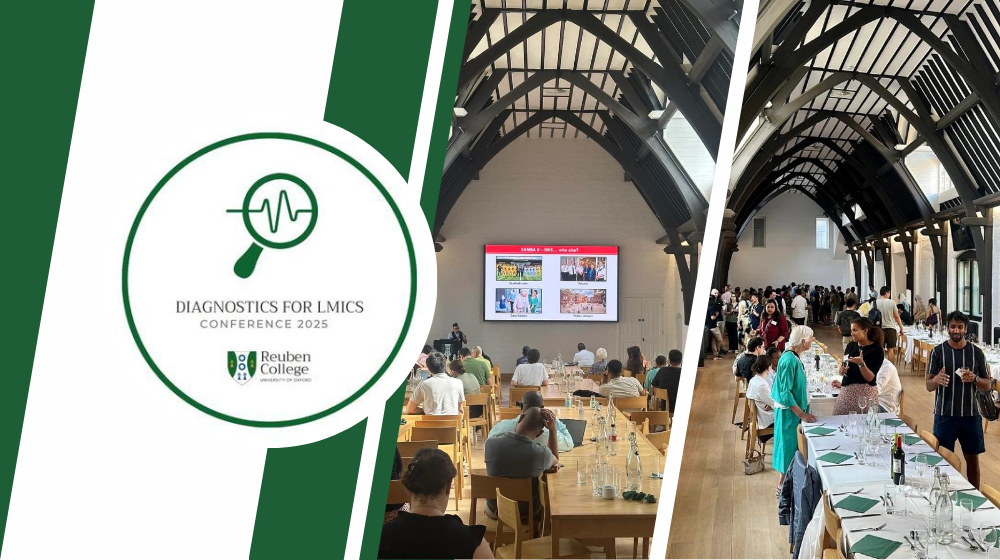
As part of the Diagnostics for Lower Middle-Income Countries (Dx4LMIC) Conference, and in collaboration with the George B. Moody Physionet Challenges, I led a hands-on machine learning workshop for graduate students, with no coding or prior ML experience required. In fact, not a single line of code was written nor model architecture described. Instead, we introduced machine learning through three key data-centric considerations: 

  1. What good performance actually means
  2. Why data quality matters
  3. How hidden biases can dictate real-world utility. 

Each theme was initiated through research-focused keynote talks by Professor Antonio Ribeiro (Federal University of Minas Gerais), Professor Matthew Reyna (Emory University) and Dr. Alissa Hummer (Stanford University).

The workshop was framed around a real and complex challenge: diagnosing Chagas disease directly from ECG data. Attendees used an annotated, interactive Google Colab notebook that trained and evaluated a model on real clinical 12-lead ECGs and demonstrated the impact of the core themes by subsetting the data and retraining the model in real time. However, inspired by the Software Sustainability Institute’s collaborative events, much of the workshop was spent in breakout discussion groups with 5 experienced ML practitioners, exploring how each theme applies to participants’ own research domains.

The confidence with which attendees could engage in nuanced discussions, particularly around challenging topics like bias, demonstrates that core applied ML concepts can be effectively taught even in the absence of any modelling. This approach is harder to teach at first, but as long as attendees understand that what you put into the model shapes what you get out, it turns ML into a logic problem and helps them focus on what really matters - the data.

The workshop turned out to be a success, with positive feedback from attendees. Many said the sessions gave them a clearer understanding of how to approach ML in their own research, especially when working with messy or limited datasets. The collaborative discussions were a highlight, with several participants noting how valuable it was to slow down and focus purely on the problem, without pressure to code or troubleshoot. For many, it was the first time they had critically engaged with issues like bias, data quality, or performance beyond accuracy, a shift in perspective we were hoping to achieve. Discussions around next year’s workshop are already underway.

A huge thank you to Professor Gari Clifford and Professor Matthew Reyna, who provided the clean data and model and were invaluable sounding boards throughout. I'm also grateful to Reuben College for hosting the workshop under their banner, and to the Software Sustainability Institute, of which I am a fellow, for their generous funding that made the event possible. 


HomeNews and blogs hub

Stories from the SSI's Fellowship programme | Adrian

Bookmark this page Bookmarked

Stories from the SSI's Fellowship programme | Adrian

Author(s)
Anita Banerji

Anita Banerji

EDIA Research Lead

Shoaib Sufi

Shoaib Sufi

Community Team Lead

Caroline Jay

Caroline Jay

Research Director

Aishah Rashid

Posted on 8 October 2025

Estimated read time: 3 min
Sections in this article
Share on blog/article:
LinkedIn

Stories from the SSI's Fellowship programme | Adrian

SSI logo, a person in the spotlight

This is the last of 6 Fellows’ stories sharing how the Fellowship programme has supported both their career and advocacy for good software practices. The stories were developed as part of the Fellows Impact Evaluation. The full report can be found here. Pseudonyms have been used for anonymity.

Adrian: Advocating for software in research policy roles.

“Yes, absolutely, I do still feel like an SSI fellow… whenever I talk about research data as an output, I always include code and workflows and protocols and all the sort of stuff that is the SSI’s kind of bread and butter.”

Adrian’s motivation for applying for a Fellowship was wanting to bring software into the conversations about research outputs within his role. He wasn’t a software expert and therefore didn’t fit his perceived idea of an SSI fellow. However, he found the SSI community to be inclusive and approachable in terms of professional role. His understanding of software best practice and policy increased and the Fellowship provided him with an excellent platform for knowledge sharing and finding collaborators. He also enjoyed contributing his own expertise to the Fellows’ community, especially as he could provide a wider research perspective.

Adrian found that being a fellow of an established programme with alumni who are well respected in the research community supported his professional reputation. His profile was also raised by writing blogs for the SSI website that were then shared and received positive responses. He wrote these blogs with other fellows, and the process allowed him to develop an evidence base from which to advocate for change.

The role Adrian had at the start of his Fellowship was compatible with his Fellowship plans and he attended a number of events that were relevant and beneficial. However, he then moved to a role where this wasn’t the case. Nevertheless, he still considered himself to be an SSI fellow and continued to advocate for good software practices. He now has a new role which he believes will allow him to re-engage with the SSI, and is encouraged to do so by the ‘Fellow for life’ ethos. He hopes to attend further Collaborations Workshops, be more frequent on the SSI fellows’ communication channels and is aware that he could apply for more financial support for SSI aligned activities if he wished too.

Other blogs in this series

Vicky: Becoming a leader in research reproducibility

Theresa: Making the transition into research policy

Sophie: Becoming a domain-specific community leader

Cara: Becoming a university-wide expert in software sustainability

Frank: Becoming an expert in improving software good practices

Adrian: Advocating for software in research policy roles


HomeNews and blogs hub

Stories from the SSI's Fellowship programme | Frank

Bookmark this page Bookmarked

Stories from the SSI's Fellowship programme | Frank

Author(s)
Anita Banerji

Anita Banerji

EDIA Research Lead

Shoaib Sufi

Shoaib Sufi

Community Team Lead

Caroline Jay

Caroline Jay

Research Director

Aishah Rashid

Posted on 1 October 2025

Estimated read time: 3 min
Sections in this article
Share on blog/article:
LinkedIn

Stories from the SSI's Fellowship programme | Frank

SSI logo, a person in the spotlight

This is the 5th of 6 Fellows’ stories sharing how the Fellowship programme has supported both their career and advocacy for good software practices. The stories were developed as part of the Fellows Impact Evaluation. The full report can be found here. Pseudonyms have been used for anonymity.

Frank: Becoming an expert in improving software good practices.

“I think, coming from a self-trained RSE background, it really helped that the SSI community… was very open from the get-go… it helped me build confidence around the [software sustainability] topics that I’m working on at the moment.”

Frank is a self-taught programmer from a less computational research area. He became interested in software practices when he noticed the inadequate maintenance of his software when fixed-term contracts ended.  At the start of his Fellowship he lacked confidence as he perceived his background to be less technical than that of most other SSI fellows. However, he found that the community was interested in what he had to say and the SSI leaders were approachable. This supported him to build confidence around good software practices and quickly develop a sense of belonging at the SSI. Additionally, Frank is a first-generation graduate who didn’t have university educated role models within his family. Instead, during his upbringing, he was encouraged to explore different possibilities and he felt this approach was welcomed at the SSI.

Gaining the SSI Fellow’s title increased Frank’s professional standing and the SSI network gave him a forum to discuss his ideas, find collaborators and gain input and expertise from the wider community. When he experienced some initial difficulties with his SSI project, the SSI community supported him to understand that it was still worthwhile pursuing. His project then went on to have highly successful outcomes and it was the collaborative ethos of the SSI that he felt was instrumental to this success.

Frank’s career has changed significantly over the course of the Fellowship through connecting him with key people in his new domain. Additionally, access to a network of policymakers, funders, and RSEs through the SSI supported his professional development, especially when starting his new role. He now feels confident that he could find future work if he needs to as the Fellowship has allowed him to understand the value of his skill set. This has reduced the anxiety associated with the precarity of short-term contracts.

Frank still has a close relationship with the SSI, continues to do collaborative work with other fellows and advertise his SSI fellow status. He would expect his relationship with the SSI to remain mutually beneficial into the future and continues to attend Collaborations Workshops which he sees as a highlight of the year.

Other blogs in this series

Vicky: Becoming a leader in research reproducibility

Theresa: Making the transition into research policy

Sophie: Becoming a domain-specific community leader

Cara: Becoming a university-wide expert in software sustainability

Adrian: Advocating for software in research policy roles


HomeNews and blogs hub

Stories from the SSI's Fellowship programme | Cara

Bookmark this page Bookmarked

Stories from the SSI's Fellowship programme | Cara

Author(s)
Anita Banerji

Anita Banerji

EDIA Research Lead

Shoaib Sufi

Shoaib Sufi

Community Team Lead

Caroline Jay

Caroline Jay

Research Director

Aishah Rashid

Posted on 24 September 2025

Estimated read time: 3 min
Sections in this article
Share on blog/article:
LinkedIn

Stories from the SSI's Fellowship programme | Cara

SSI logo, a person in the spotlight

This is the 4th of 6 Fellows’ stories sharing how the Fellowship programme has supported both their career and advocacy for good software practices. The stories were developed as part of the Fellows Impact Evaluation. The full report can be found here. Pseudonyms have been used for anonymity.

Cara: Becoming a university-wide expert in software sustainability.

“They want their fellows to be successful because then they advocate… in more varied and higher places.  And I definitely feel that I have succeeded in that element.”

Before the Fellowship, Cara felt she was viewed as fairly junior and was more focused on her research topic than building wider research expertise. She was self-taught in terms of good research software practices but, recently, her own software skills development had somewhat stagnated due to not being connected to others with more expertise. This had led to a sense of restlessness in her role. However, through the Fellowship she was inspired to keep learning and developing her skills. She could then fulfil her role as lead programmer offering further guidance to others in her group.

The Fellowship was the first time Cara had undertaken a project independently outside of her research group. She was daunted at first due to receiving less guidance than she had expected but then saw it as an opportunity to be proactive. She found the Fellowship was a supportive environment and her confidence was increased when an SSI staff member expressed their belief in her abilities. She still reminds herself of this conversation when experiencing self-doubt today.

The Fellowship had a pivotal effect on Cara’s career, supporting her to develop her unique skill set and, through engaging with other Fellows, clarify her own ideas and gain a sense of her own successes. The Fellowship highlighted further opportunities to her, and she was awarded a substantial fellowship that is strongly aligned with the SSI’s work. She now understands the transferability and desirability of the skill set she has developed and feels that the Fellowship has increased her employability.

Through the SSI Fellowship, Cara has become more ambitious, has more responsibility at a department and university level, and colleagues outside of her research group now seek her opinion. Her increased professional standing has led to her being in a position of greater influence to advocate for the SSI. Due to her career progressing, Cara no longer has the capacity for regular engagement with the SSI. However, she remains interested in the institute’s activities, continues to be an ambassador for the SSI, and considers herself to be a ‘fellow for life’.

Other blogs in this series

Vicky: Becoming a leader in research reproducibility

Theresa: Making the transition into research policy

Sophie: Becoming a domain-specific community leader

Frank: Becoming an expert in improving software good practices

Adrian: Advocating for software in research policy roles


HomeNews and blogs hub

The N8 CIR RSE Annual Meetup

Bookmark this page Bookmarked

The N8 CIR RSE Annual Meetup

Author(s)
Mike Simpson Profile Picture

Mike Simpson

SSI fellow

Posted on 23 September 2025

Estimated read time: 4 min
Sections in this article
Share on blog/article:
LinkedIn

The N8 CIR RSE Annual Meetup

N8 CIR logo

This summer, I attended the N8 CIR RSE Annual Meetup. I was there primarily to discuss my SSI Fellowship, where I am continuing the conversation around mental health in our community. However, it was also an opportunity to meet other RSEs from across the N8 network, find out about some of the work they’re doing, and collaborate on a range of projects and challenges.

About the N8 CIR 

The N8 is a collaboration between the eight research-intensive universities in the north of England, a partnership that includes my home institution, Newcastle University. The N8 CIR is a Centre of Excellence in Computationally Intensive Research, focusing on “CIR methods, skills and facilities to reinforce the N8 Universities’ strategic research objectives”.

There is currently a focus on addressing several challenges in the research software community. These include personal challenges, such as mental health; social challenges, including inclusion, diversity, recognition, and isolation; organisational challenges, like funding and career progression; and technical challenges, including maintenance, green RSE, and working with non-technical teams. I had previously given a talk about mental health at an online event, which was part of a series discussing the challenges as a precursor to this meetup. You can read more about this on the N8’s RSE Community Challenges wiki.

My talk

I had a ten-minute slot to talk about my SSI Fellowship work. I told the story of how I burned out and had an anxiety attack after becoming a father in lockdown, and how that inspired me to apply for the Fellowship. I then summarised my work so far, including the launch of the ConveRSE website, and repeated the call for blog posts and other contributions to the project. 

I presented a longer version of the talk at RSECon25, but this was an excellent opportunity to discuss my work with the community. With 40 people in attendance, it was one of the largest audiences I’ve presented to so far, and it seemed to go well; the response was positive and encouraging.

The rest of the event

The opening talks, which included Oscar Seip discussing the SSI and its activities, were followed by a series of lightning talks. Highlights included Ava Dean talking about how she uses Notion to organise her work, which was particularly interesting given my involvement in the Task Management for Humans as Self Care project. I also particularly enjoyed Samantha Finnigan nerding out about how she did some hardware and software hacking to solve a problem with the Carpentries Offline project, which included some fun props. All the talks were excellent, covering a broad range of interesting topics.

After the talks, there were some discussion sessions and opportunities for networking. In our group, we discussed some of the challenges faced by the community and explored ways to address them. I also had a number of interesting conversations about mental health, the importance of the work we’re doing with the ConveRSE project and even had some people volunteer to share their stories and tips on the blog.

Final Thoughts

It was my first time attending this meetup. I didn’t know what to expect, but I was pleasantly surprised by the breadth and accessibility of the talks and conversations. I’m delighted that I was able to attend and that I could not only encourage people to get involved in supporting better mental health in the community, but also make some progress towards addressing some of the other challenges we all face. 


HomeNews and blogs hub

Giving a digital humanities voice to skills and competencies for digital research professionals at DHA 2025

Bookmark this page Bookmarked

Giving a digital humanities voice to skills and competencies for digital research professionals at DHA 2025

Author(s)
Phil Reed Profile Picture

Phil Reed

SSI fellow

Dave Horsfall

Dave Horsfall

SSI fellow

Aleksandra Nenadic

Aleksandra Nenadic

Training Team Lead

Picture of Lucia Michielin

Lucia Michielin

Edinburgh Carpentries Coordinator

Anna-Maria Sichani

Anna-Maria Sichani

SSI fellow

Posted on 19 September 2025

Estimated read time: 7 min
Sections in this article
Share on blog/article:
LinkedIn

Giving a digital humanities voice to skills and competencies for digital research professionals at DHA 2025

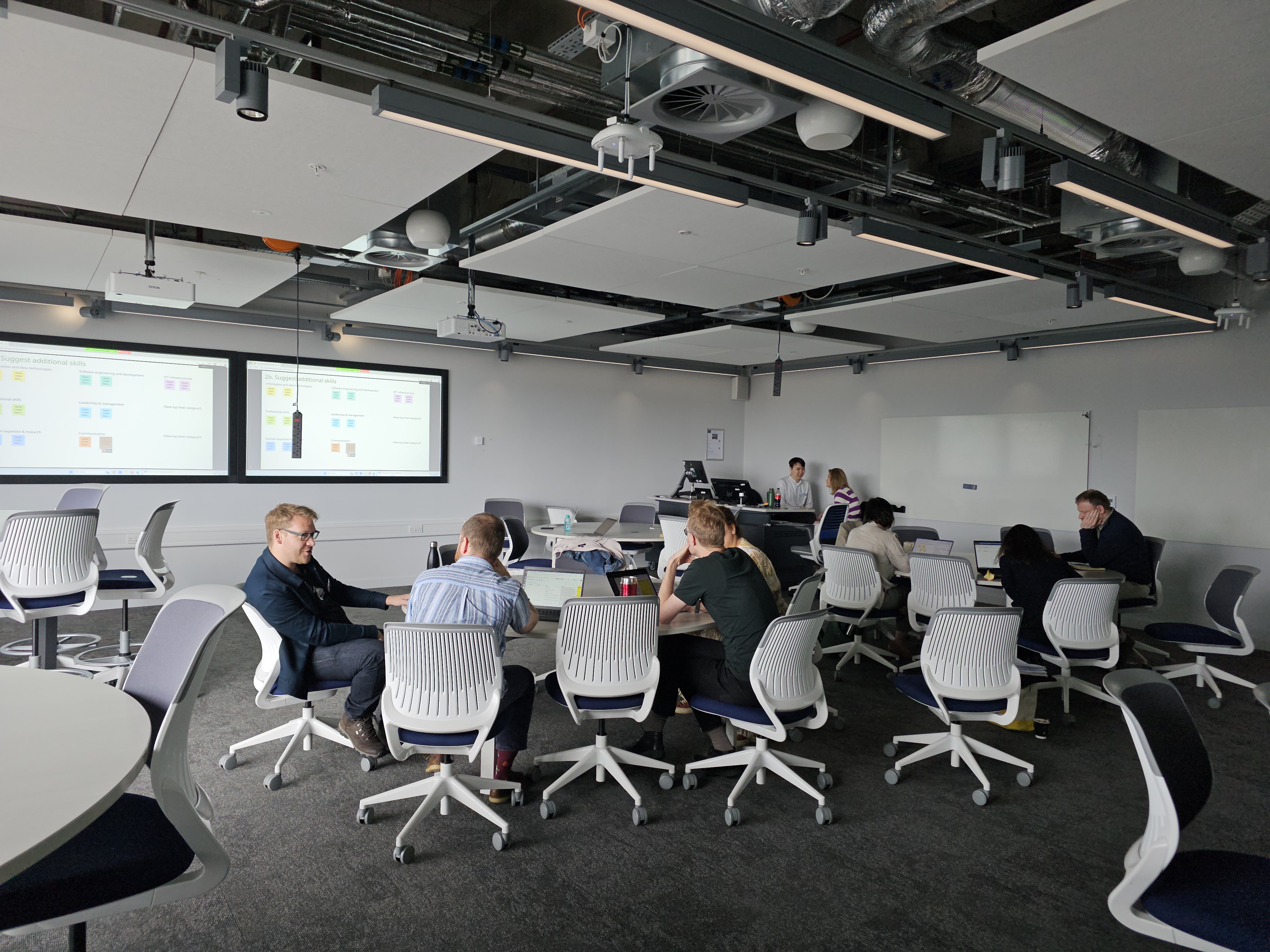
Image of a group of people sitting on chairs around a table and discussing in a meeting room with a screen in the back.

This blog post describes the motivation and learnings from a workshop organised by Phil Reed as part of his SSI Fellowship 2025. It describes challenges facing those working in digital research technical professional roles and a community-driven resource which is being built to address them. It considers the specific challenges that affect digital humanities research and the workshop that was designed and delivered for a UK-Ireland conference in June 2025.

Digital Research Technical Professionals (RTPs) are essential to advancing research in the digital humanities. This diverse group includes Research Software Engineers (RSEs), Data Scientists, Digital Archivists, and other experts who provide crucial support across the research lifecycle. These emerging roles drive the development of digital tools, infrastructure, and data that underpin academic research, particularly within the Arts, Humanities, and cultural heritage sectors.

As digital research becomes more integrated into these fields, the role of RTPs has become increasingly vital, facilitating collaboration and innovation. However, the growing demand for RTPs has highlighted the need for clearer definitions of the skills required and pathways for professional development. To address this gap, a new ‘DIRECT Framework’ is proposed – a community-driven resource designed to define, visualise and track the progression of essential skills. The Toolkit will offer a structured collection of skill sets and levels, accompanied by a range of visualisations. It will provide immediate value to individuals, allowing them to periodically assess their skills (individually or with a manager) and identify opportunities for progression, with five levels largely mapped to Bloom’s taxonomy [1]. Managers will benefit from a clear view of their team's current and projected skill status, aiding in task allocation. The Toolkit will cover both technical and non-technical skills, including time management and interpersonal skills. While the Toolkit’s initial focus has been on RSEs, professionals in the Digital Humanities face similar challenges in identifying and articulating the multidisciplinary skills they possess. Additionally, many academics in these fields perform work that aligns with RSE and RTP roles, even if they don’t hold these titles, and would benefit from exposure to this skills framework.

An interactive workshop aimed to extend the Toolkit to better capture the evolving expertise of RTPs in the Digital Humanities, including roles such as Digital Humanities Developers, Data Archivists, and Research Infrastructure Engineers. We are creating a more inclusive and comprehensive resource that provides career pathways and skills development for individuals, teams, and organisations, ensuring that Digital Humanities professionals have the tools and recognition they need to thrive.

Various initiatives have tried so far to map community needs, such as the RSE AH iDAH task force [2], the RSE AH community interest group of the DH UK IR Association, and the recent Roadmap work around a National Research Software Engineering Capability in Arts and Humanities Research as part of the Data/Culture project at the Alan Turing Institute. In addition, collaborative summer schools and training initiatives have been organised over the last years to “assess by practice” the necessary skills and knowledge for an RSE in Arts and Humanities and the paths to undertake such a role. We think it's time for the DIRECT Framework to assess and give a Digital Humanities voice for RTPs, and our workshop was the first step towards this goal.

DIRECT Framework meets DH: Outputs from the collaboration

Work has begun to populate the skills and requirements in the DIRECT Framework and develop the platform and interface. So far, most engagement has been with STEM (science, technology, engineering, and medicine) research software engineers. Phil Reed (corresponding author of this blog post) has received a Fellowship with the Software Sustainability Institute (SSI) to take the DIRECT Framework to galleries, libraries, archives, and museums (GLAM) communities and Digital Humanities researcher networks through workshops and conferences. We delivered a workshop at the UK-Ireland Digital Humanities Association (DHA) annual event, this year 16-18 June in Glasgow, Scotland.

The outputs from the workshop include:

  • Recommendations for a schema of skills that considers the needs of digital humanities researchers and their career development opportunities.
  • Further feedback on the Toolkit for the development team, considering the needs of digital humanities research and other areas.
  • Continued discussions and collaborations between the DHA RSE community interest group and the RSE Society and community.

Format of the DHA workshop

One month before the workshop, we shared a short video introduction to the project, inviting delegates to look through the current schema of skills. People could share contributions with us in advance, even if they could not attend the workshop. We asked questions to help us preallocate participants to mixed groups, such as:

  • How many years have you been in the role?
  • What kind of digital skills/tools are you using in your work?
  • Share with us any other relevant competency frameworks you know about.

Our 90-minute workshop was organised into three main parts.

First, attendees worked in pairs to perform some assessments and give feedback. They were able to study a subset of skills from the Framework and self-assess against, considering a recently completed research project they have been a part of. We applied the “Three Stars and a Wish” method to help complete this task and observe where they find gaps.

Second, we looked at a schema of skills, collecting suggestions from the DH audience and comparing them against the existing STEM-led schema collected from RSECon24.

Third, we planned to relate the Toolkit to existing alternative or complementary toolkits, asking participants to create an action plan relevant to their home institution or domain. There was no time to complete this section due to a delayed start of the session.

Our audience included researchers, research technical professionals, trainers, and funders. It was a hybrid format, with participants in the room and on Zoom. We chose Miro as the digital engagement tool for the workshop. It provides a good balance of features for presenting and collecting content; we could share our screen with people in person and online, while participants could also progress individually at their own pace on their devices. The educational offer from Miro allows anyone with a university or college email address to set up a board with my preferred sharing permissions, so that participants can contribute without having to register for a Miro account first, thus removing a barrier to engagement. Our Miro board remains open for all to view.

Next steps

We confirmed that there is an appetite for career progression support tools for research technical professionals in the digital humanities, and that there are particular considerations which will inform the development of the DIRECT Framework. The outputs of the workshop have been shared with the Toolkit team to update the schema of skills accordingly. The team are meeting with other interested groups in the UK and internationally, where there is further interest and overlap. For Phil’s Fellowship, the next steps include participating in these and other efforts, considering the wider landscape of research software competency frameworks in Europe.


[1] Bloom, B. S.; Engelhart, M. D.; Furst, E. J.; Hill, W. H.; Krathwohl, D. R. (1956). Taxonomy of educational objectives: The classification of educational goals. Vol. Handbook I: Cognitive domain. New York: David McKay Company.

[2] iDAH Research Software Engineering (RSE) Steering Group. (2023). iDAH Research Software Engineering (RSE) Steering Group Working Paper (v.0.2). Zenodo. https://doi.org/10.5281/zenodo.8060003

 

HomeNews and blogs hub

Stories from the SSI's Fellowship programme | Sophie

Bookmark this page Bookmarked

Stories from the SSI's Fellowship programme | Sophie

Author(s)
Anita Banerji

Anita Banerji

EDIA Research Lead

Shoaib Sufi

Shoaib Sufi

Community Team Lead

Caroline Jay

Caroline Jay

Research Director

Aishah Rashid

Posted on 17 September 2025

Estimated read time: 3 min
Sections in this article
Share on blog/article:
LinkedIn

Stories from the SSI's Fellowship programme | Sophie

SSI logo, a person in the spotlight

This is the 3rd of 6 Fellows’ stories sharing how the Fellowship programme has supported both their career and advocacy for good software practices. The stories were developed as part of the Fellows Impact Evaluation. The full report can be found here. Pseudonyms have been used for anonymity.

Sophie: Becoming a domain-specific community leader.

“Saying I've got an SSI fellowship has given me a lot of confidence and capital… to approach deputy directors, team leads, directors, director generals who I would never have spoken to.”

Sophie applied for an SSI Fellowship as she saw a need to expand good software practices across her organisation. She wanted to replicate the collaborative ethos and transparent working practices of the SSI to engage her colleagues and give longevity to her activities. Others have since copied this way of working, demonstrating the reach of her SSI activities beyond her institute.

Both Sophie’s technical and management skills improved during the Fellowship through other fellows sharing their experience and recommending resources, as well as through gaining feedback on her own ideas from the SSI community. She also improved her knowledge through formal learning settings such as seminars and training courses. Her management skills developed further through needing to understand better how best to advocate for good practices within her institute. She is now confident in being able to fulfil the range of skills required when looking at potential promotion opportunities.

The non-judgemental attitude within the SSI towards diverse professional backgrounds and levels of experience encouraged Sophie to engage with the Fellowship and supported her to gain confidence in her knowledge and skills. Sharing her own experience and knowledge within the SSI community led to her feeling valued, and having an SSI fellowship gave her the confidence to approach senior staff whom she would not have otherwise.  She also gained an increased sense of purpose from seeing how her SSI activities benefitted her organisation.

The Fellowship gave Sophie an insight into possible career paths and she would now consider RSE roles in the future.  She found the Fellowship very meaningful and chose not to apply for potential new roles during her inaugural period due to her commitment towards completing her plans as she could see the benefit for her institute. She continues to strongly engage with the SSI community.

Other blogs in this series

Vicky: Becoming a leader in research reproducibility

Theresa: Making the transition into research policy

Cara: Becoming a university-wide expert in software sustainability

Frank: Becoming an expert in improving software good practices

Adrian: Advocating for software in research policy roles


HomeNews and blogs hub

2025 SSI Fellows on the Code for Thought Podcast

Bookmark this page Bookmarked

2025 SSI Fellows on the Code for Thought Podcast

Author(s)
Peter Schmidt

Peter Schmidt

SSI fellow

Oscar Seip

Oscar Seip

Research Community Manager

Posted on 16 September 2025

Estimated read time: 1 min
Sections in this article
Share on blog/article:
LinkedIn

2025 SSI Fellows on the Code for Thought Podcast

Code for thought logo, mic and sound waves

Launched in 2021, SSI Fellow Peter Schmidt’s Code for Thought podcast has become an important space for conversations about research software and the people who make it. In a recent episode, Peter speaks with three of our 2025 SSI Fellows about their motivations, research interests, and what they hope to achieve through the SSI Fellowship Programme.

HomeNews and blogs hub

Stories from the SSI's Fellowship programme | Theresa

Bookmark this page Bookmarked

Stories from the SSI's Fellowship programme | Theresa

Author(s)
Anita Banerji

Anita Banerji

EDIA Research Lead

Shoaib Sufi

Shoaib Sufi

Community Team Lead

Caroline Jay

Caroline Jay

Research Director

Aishah Rashid

Posted on 28 August 2025

Estimated read time: 3 min
Sections in this article
Share on blog/article:
LinkedIn

Stories from the SSI's Fellowship programme | Theresa

SSI logo, a person in the spotlight

This is the 2nd of 6 Fellows’ stories sharing how the Fellowship programme has supported both their career and advocacy for good software practices. The stories were developed as part of the Fellows Impact Evaluation. The full report can be found here. Pseudonyms have been used for anonymity.

Theresa: Making the transition into research policy.

“I think I’m probably a pretty good example of [someone who] has hardly done anything [included in my fellowship plans] but has done all the other things with the SSI that no one could have known would be a thing when I put in my application.”

Theresa applied for a SSI Fellowship as it would support her to promote good software practices within her workplace and provide certification of her professional standing from a community she respected. During the Fellowship, she built her professional skills through attending training courses with the stipend removing the need to justify the expense to her manager. She also broadened her experience through SSI-related opportunities, such as Fellows’ selection and the SSI’s Collaborations Workshop organising committee.

Theresa felt a sense of belonging in the SSI and benefitted from the supportive fellows’ network. The Fellowship gave her the freedom and confidence to advocate for good software practices in her institute, including delivering related workshops that were new to her institute. Due to a change in work role during her Fellowship she could not follow her original planned activities. Instead, some alternative opportunities arose through the SSI that allowed her to pursue her interests in research policy.

Her engagement with the SSI was encouraged through having a shared ethos of wanting to influence positive change in the research environment alongside the opportunity to act on this collaboratively. As an SSI Fellow, she felt she was seen as a trusted collaborator which led to opportunities that, along with the support of the fellows’ network, enabled her to move from a traditional university research support role to one that has more autonomy. She now works with organisations that are strongly aligned with the SSI.

Other blogs in this series

Vicky: Becoming a leader in research reproducibility

Sophie: Becoming a domain-specific community leader

Cara: Becoming a university-wide expert in software sustainability

Frank: Becoming an expert in improving software good practices

Adrian: Advocating for software in research policy roles


Subscribe to Fellows
Back to Top Button Back to top