
Skip to main content Site map
Old Tag
Fellows 2013
Fellows 2014
Fellows 2015
Fellows 2016
Fellows 2017
Fellows 2018
Fellows 2019
Fellows 2020
Fellows 2021
Fellows 2022
Fellows 2023
Fellows inaugural meeting
Fellows newsletter
Fellows selection
Category
HomeNews and blogs hub

Lessons on Lessons: How CLDT Is Shaping Our Approach

Bookmark this page Bookmarked

Lessons on Lessons: How CLDT Is Shaping Our Approach

Author(s)
Deborah Udoh Profile Picture

Deborah Udoh

SSI fellow

Posted on 24 April 2025

Estimated read time: 3 min
Sections in this article
Share on blog/article:
LinkedIn

Lessons on Lessons: How CLDT Is Shaping Our Approach

Close up of hands working on a laptop. The Carpentries logo.

By the Pre-Seeds Team

From the 25th to the 28th of March, the Pre-Seeds team participated in Part One of the Carpentries Collaborative Lesson Development Training (CLDT). It was an enriching experience, and we are deeply grateful to our facilitators, Toby Hodges, Aleksandra Nenadic, and the larger Carpentries leadership team. We learned a lot and want to share our reflections on what worked well, what could be improved, and how this training will shape our approach moving forward.

What Worked Well?

One of the standout aspects of the training was the simplicity and clarity of the sections. The lessons were structured in a way that was easy to follow, with a great balance of theoretical concepts and hands-on practice. The “show and tell” approach made it easier to understand and retain information, ensuring that learning was interactive rather than passive.

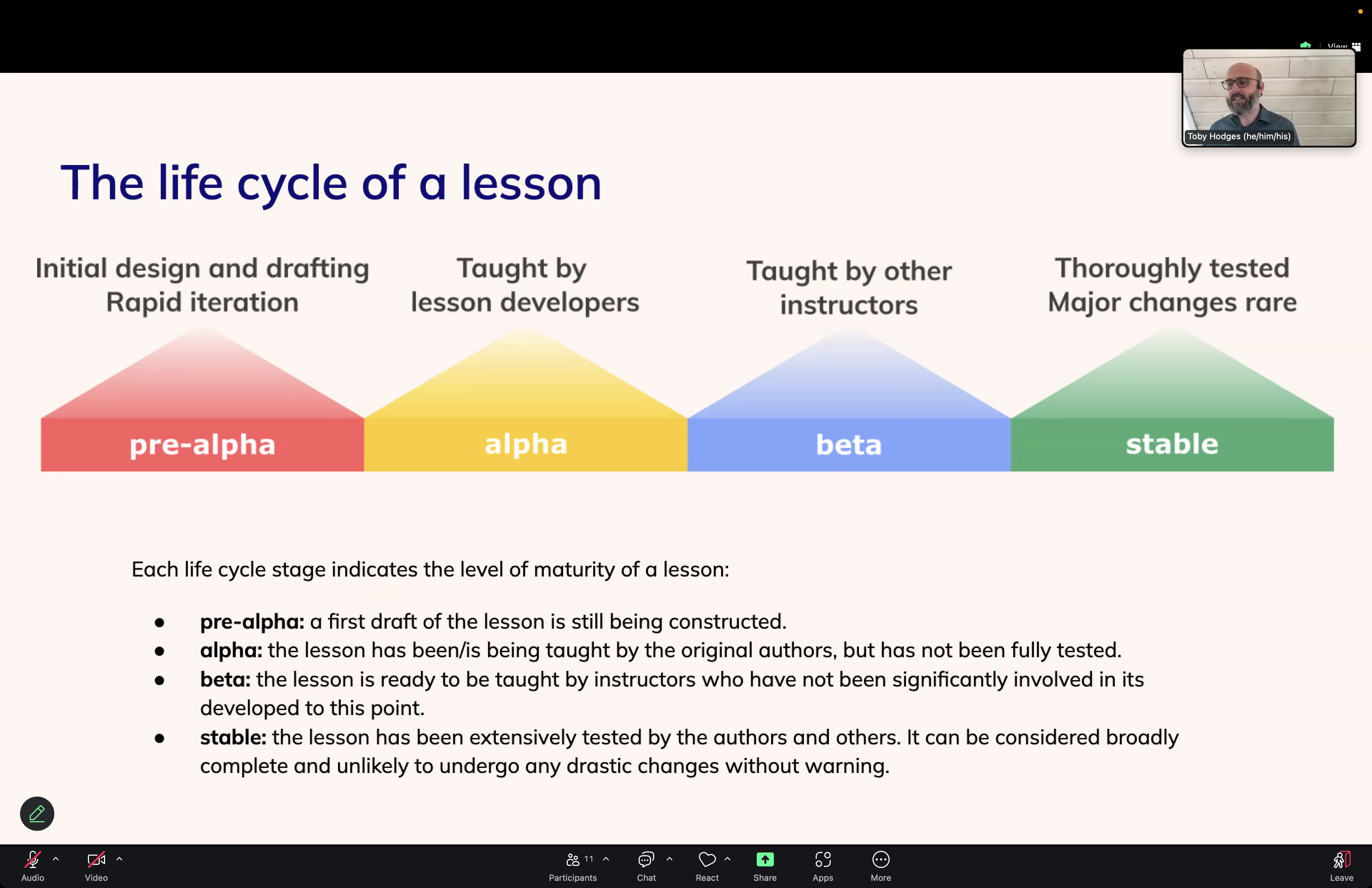
The life cycle of a lesson

The training was highly interactive, with numerous breakout sessions that encouraged teamwork and the application of new knowledge. These sessions allowed us to collaborate effectively, refine our lesson drafts, and exchange ideas. We also appreciated the facilitators’ commitment to continuous feedback—at every step, they checked in to ensure we understood the content and had space to ask questions.

A particularly memorable part of the training was the structured approach to lesson development. We learned to start with preliminary considerations, such as identifying our target audience, understanding their prerequisite knowledge, and pinpointing knowledge gaps. From there, we moved into crafting clear learning objectives and exercises, and using storytelling to make lessons more engaging.

We were also introduced to the Carpentries Workbench as a platform for hosting our lesson, which was incredibly exciting. Learning about different types of fenced divs and how they render on the site was an eye-opener. The wealth of additional reading resources provided us with valuable opportunities to explore concepts further at our own pace.

What Could Be Improved?

While the training was well-structured and engaging, we felt that having a little more time for collaboration in breakout rooms would have been beneficial. Given the depth of each section, we sometimes felt rushed to complete activities. We understand that extending the training time may not be feasible, but perhaps adjusting the pacing slightly could help balance deep learning with time constraints.

What Will We Do Differently?

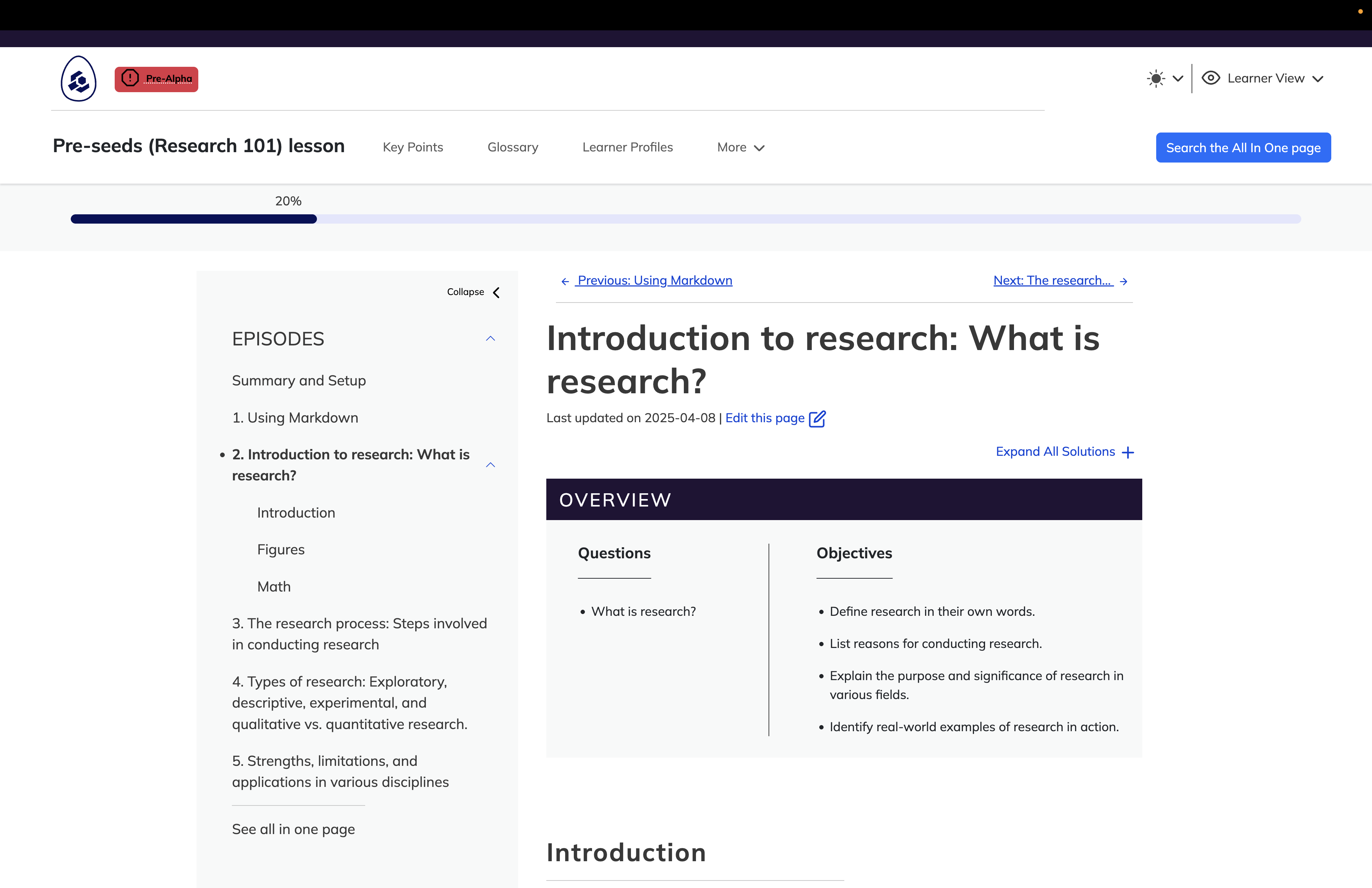
Introduction to research: What is research?

The insights we gained from CLDT will significantly impact how we design and refine our lessons. Moving forward, we will:

  • Design our lessons as episodes, using a storytelling approach to enhance engagement.
  • Integrate both formative and summative exercises into each episode.
  • Leverage breakout rooms to encourage collaboration in our training sessions.
  • Pilot our lesson with a small group (5–20 people) to gather feedback and iterate on improvements.
  • Host our course on the Carpentries Workbench, ensuring it is well-structured and accessible.

The training has given us not just the tools but also the confidence to build high-quality, collaborative lessons. We appreciate the patience and support of our facilitators and look forward to applying everything we’ve learned.

Once again, a huge thank you to Toby, Aleks, and the Carpentries team for this incredible learning experience!

HomeNews and blogs hub

Exploring VR sustainability: An SSI fellow’s experience

Bookmark this page Bookmarked

Exploring VR sustainability: An SSI fellow’s experience

Author(s)
Magesh Chandramouli Profile Picture

Magesh Chandramouli

SSI fellow

Posted on 23 April 2025

Estimated read time: 3 min
Sections in this article
Share on blog/article:
LinkedIn

Exploring VR sustainability: An SSI fellow’s experience

Man in a brown suit using a white VR headset. The SSI logo.

In this article, I’d like to briefly recount my experience as an international fellow of the Software Sustainability Institute, UK (SSI) since 2023. As a Professor of Computer Graphics with a VR focus, I have been working with XR (VR, AR, MR, & Desktop VR) applications for quite some time when I was selected as an SSI international fellow. Being involved in VR for engineering and technology applications for a while, my perspective towards the UI/HCI aspects was narrowed down and biased from earlier works completed. I realised the need to explore other potential choices in the search space that could optimally serve the intended audience as well as the learning outcomes. During the SSI fellow selection process, my presentation focused on promoting sustainable VR and optimal UI/HCI experience. The fellowship enabled me to organise panels and workshops and offer lectures and interactive sessions in universities and research centres, which enhanced my approach towards sustainable XR. Interacting with VR experts from academia and industry facilitated a better understanding of the UI/HCI aspects vis-à-vis user learning styles and preferences (visual, auditory, and kinaesthetic).

Recently, the Global Online Learning Consortium (GOLC) awarded me second place for the VR/AR applications in manufacturing education and training and for the online portals for web dissemination. The SSI experience played a pivotal role not only in this recognition but also in reshaping my outlook on designing virtual/augmented environments and presenting them to diverse audiences. The immense learning, sharing, and collaboration resulting from the networking and interaction as an SSI fellow have helped me customise and deliver tailored experiences based on the audience's project-specific learning outcomes. 

In view of VR’s critical role in the metaverse, sustainable VR practices are more important than ever today as many academic and industrial domains are exploring and deploying metaverse applications. To this end, another important development during my SSI fellowship experience was the focus on sustainable XR practices, especially open-source software. During my fellowship, I delivered lectures and workshops at the Technological Institute of the Philippines, the Indian Institute of Technology (IITM, IITB), the Royal University of Bhutan, and the Politecnico di Torino, Italy. These institutions were not only geographically diverse but also had unique focus and approaches to different applications, which allowed deeper insights into the selection of tools and techniques that are problem-specific. Consequently, I had to explore a plethora of XR/VR tools with a specific focus on open-source software, which allowed for greater access/usability as well as dissemination.

The SSI fellowship allowed me to conduct panels involving VR practitioners from the US, Asia, and Australia and detailed deliberations were held to discuss various aspects of VR sustainability. I am developing a website to disseminate the activities and learning from the SSI fellowship. Over time, I hope this website can bring together fellow XR enthusiasts interested in sustainable practices. As Max Planck stated precisely: ‘When you change the way you look at things, the things you look at change’. I am grateful for the enhanced perspective from being an international fellow of the SSI and I look forward to continuing learning, networking, and contributing towards sustainable VR practices.

HomeNews and blogs hub

Supporting Mental Health in the Research Software Community

Bookmark this page Bookmarked

Supporting Mental Health in the Research Software Community

Author(s)
Mike Simpson Profile Picture

Mike Simpson

SSI fellow

Posted on 12 March 2025

Estimated read time: 7 min
Sections in this article
Share on blog/article:
LinkedIn

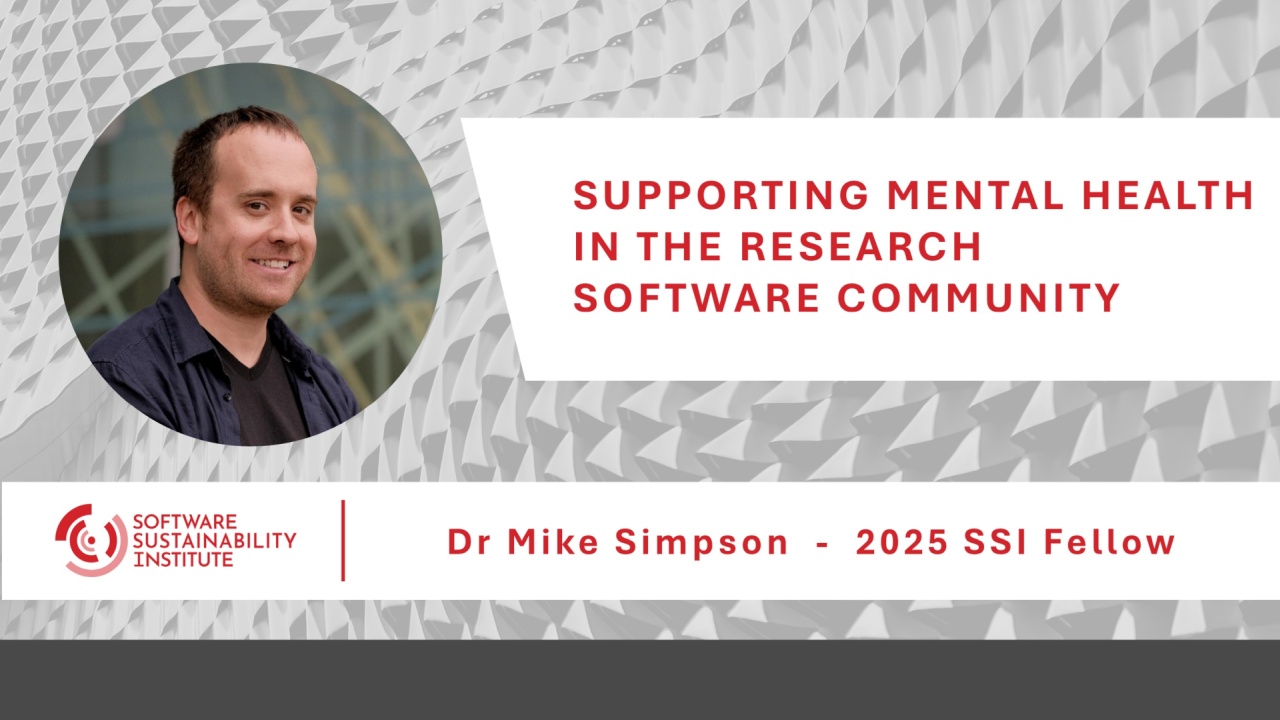
Supporting Mental Health in the Research Software Community

Mike Simpson, Supporting Mental Health in the Research Software Community

Hello there! My name is Mike. I’m an RSE at Newcastle University, Trustee of the RSE Society and 2025 SSI Fellow.

For my SSI Fellowship, I will be continuing the conversation around mental health in our community and building upon the work of Dave Horsfall and the survey he conducted in 2022.

My plans include three main activities:

1.      Telling my story - to help break the stigma around mental health.

2.      Sharing tips and resources - to help people support their mental health.

3.      Creating and supporting initiatives to improve mental health in our community.

In this post, I will discuss these plans in more detail and explain what made me want to do all this in the first place.

Trigger warning: This blog post describes my experience of mental health issues during the COVID-19 pandemic, including mention of an anxiety attack.

Why am I doing this?

I became a father in April 2020, at the beginning of the UK’s first lockdown of the COVID-19 pandemic. I was able to be there when my son was born but then had to leave them in the hospital to recover for the first two days of his little life. When I did bring them home, we had to learn how to be parents and deal with a range of health problems without any outside support. Meanwhile, I had to return to work (from home), and pressures continued to mount. It wasn’t long before I was burnt out and everything became too much to bear. The resulting anxiety attack meant I had to take two months off work and give up my other responsibilities. It took me a long time – and a lot of hard work and therapy - to recover physically, mentally and professionally.

That was the most challenging time in my life, and it isn’t easy to talk about it even now. But I want to share my story and what I learned from it - to try and make it less likely that this kind of thing will happen to anyone else. Those were exceptional circumstances, and a lot of what happened was out of my control, or anyone else’s. But I still think there are things we can learn from my experiences - and the experiences of others.

It is important to keep the conversation going. There is still a stigma surrounding mental health. It can be particularly daunting to discuss it with colleagues or your boss for fear that it might be seen as a sign of weakness. But I am not weak. Given the circumstances, I believe I actually handled it remarkably well. And my resilience comes from my previous experiences with mental health problems. I have developed tools to manage my condition, I know my limits, and I won’t allow myself to get into that situation again; I will raise a red flag and seek help before it becomes a problem. This is why it’s so important to smash the stigma, because keeping quiet and pretending that everything is OK only makes things worse in the long run.

There are many challenges facing our community that can affect our mental health. This industry is rife with context switching, imposter syndrome and a lack of career opportunities and recognition. These can lead to a range of issues, including anxiety, stress, burnout and depression. I think it's vital we do what we can to tackle these problems so that they aren’t the thing that drives people away from this profession. If we want research software to be more sustainable, we have to help sustain the people writing the software too!

So, what’s my plan?

There is no magic bullet, no one perfect solution that will improve the mental health of every RSE in the UK. But I believe I can make a difference in a number of ways.

Telling my Story

I hope that by telling my story, I can share some tips & advice, help people feel seen and help erode the stigma. I have prepared a talk to submit to the RSE Conference, which I hope to give at other events and institutions over the coming months.

This talk will include:

-          My mental health story and what I learned from that experience.

-          Tips for individuals to help look after themselves.

-          Tips for managers on looking after their teams.

-          What to do when things go wrong and where to get help.

-          More details about my other plans for the Fellowship (as discussed below).

It will also include interactive elements to engage with the audience, whether they are in the room or online.

Providing Resources

I will be collaborating with Dave Horsfall and others to create a website that will serve as a hub for our efforts to support mental health in our community, which will include:

-          The results of Dave’s Mental Health Survey.

-          Definitions of common issues with links to additional information and support.

-          A series of blog posts focussing on mental health stories and advice on self-care.

The idea of the blog is to encourage people to share their experiences (anonymously, if they prefer). Not all stories and advice will be relevant to everyone, but if they help or resonate with even a small section of the audience, then I believe it will have been successful.

Creating and Promoting Projects and Initiatives

Finally, I want to get involved with new and existing projects and communities related to mental health. I have submitted a lightning talk to CW25 to encourage people to consider mental health when developing plans for the Hack Day. I’m also hoping that we can run workshops or ‘Birds of a Feather’ sessions at other events.

To give you an example of the sort of thing I want to support, check out this post about Task Management for Humans as Self-care. This was the prize-winning idea from CW24, which involved teaching people about task management tools - not to make them more productive, but to improve their life-work balance and mental health. This is an example of a project that is probably of most interest to people with anxiety, ADHD or neurodiversity, and may not be relevant to everyone. However, if we can support several smaller projects like this, which help different subsets of the community or tackle specific problems, then they will add up to make a big difference.

Get Involved

If you have ideas for new projects, communities or other resources connected to mental health – or are part of existing ones and would like to collaborate - please get in touch. I’m also interested in collecting stories and blog posts from a diverse range of people and communities with different experiences.

Final Thoughts

So, that’s a brief summary of my plans for the Fellowship. I look forward to some interesting collaborations and discussions at CW25 and other events over the next year or so.

Hopefully, I’ll have more to share soon. Follow me and the SSI to keep up to date with news and announcements. Please get in touch (mike.simpson@newcastle.ac.uk) if you have any ideas, want to collaborate or would like me to present at your event/institution.

Thank you for reading.

Take care of yourselves!


HomeNews and blogs hub

The FOSDEM 2025 Experience

Bookmark this page Bookmarked

The FOSDEM 2025 Experience

Author(s)
Deborah Udoh Profile Picture

Deborah Udoh

SSI fellow

Posted on 11 March 2025

Estimated read time: 6 min
Sections in this article
Share on blog/article:
LinkedIn

The FOSDEM 2025 Experience

FOSDEM 25 logo

Let me start by saying that this trip almost didn’t happen. A visa application I started in early November was still unresolved a day before FOSDEM. Without my passport, I had to cancel my flight. But with just a few hours to go, something changed.

On January 30th, I received a notification that my passport had reached Abuja, and DHL would take at least 24 hours to get it to Port Harcourt. Long story short? I wrote a letter authorising a friend in Abuja to pick up the passport and check the visa approval status. The outcome was positive! The next morning (January 31st), I was on the first flight to Abuja. After a first flight, a long layover and a second flight, I finally reached Brussels on Saturday morning — just in time to rush straight to FOSDEM.

Amidst all this chaos, I missed the first conference I had planned to attend before FOSDEM — CHAOSScon25.

First-Time FOSDEM Experience

This was my first time attending FOSDEM in person. Last year, I had only given a talk online — my first international talk. Being there in person this year was an awesome experience, and I can’t thank OLS enough for making it happen.

Organiser

Meeting long-time organisers of the Open Research Devroom was a learning experience. I was exposed to the challenges of scheduling online talks across different time zones and learned how to use Pretalx for reviewing abstracts and proposals.

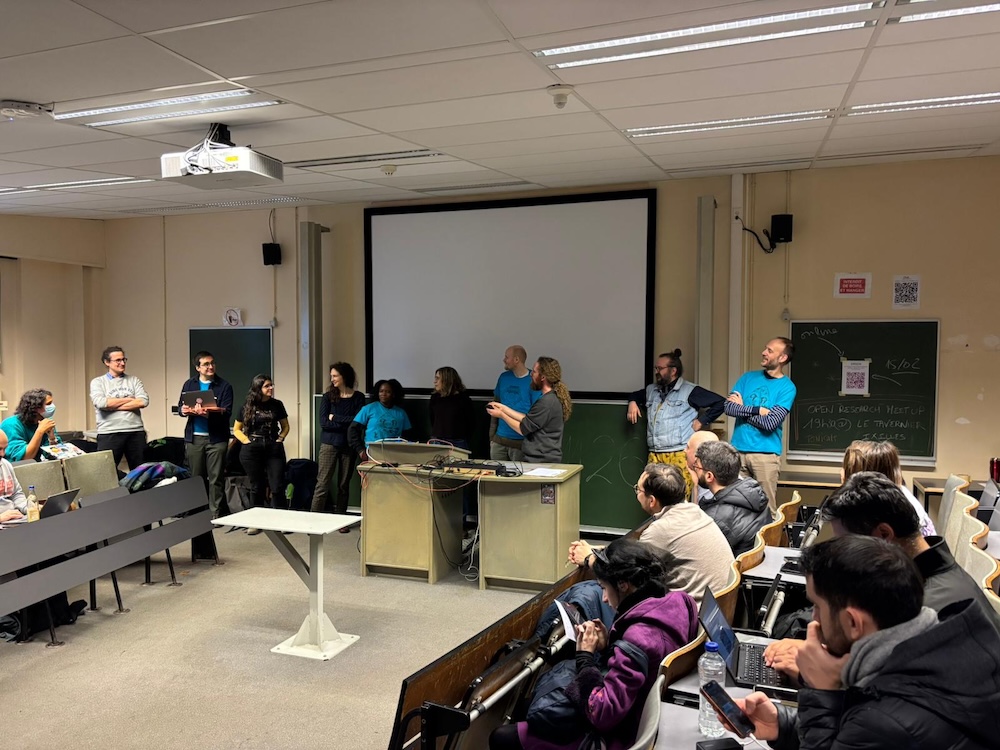
A small classroom, with attendees sitting in rows of chairs, forming an "n" shape. In front of the room is a group of ten (10) people from varying nationalities and gender groups. They are the members of the organising committee of the conference. Behind them is a blank projector screen, and in front, a beige table.

One of my small but exciting contributions was adding the schedule to the website and enhancing it with a little CSS for better aesthetics and UX.

I also got to experience the subtle power of keeping speakers on schedule — holding up signs to let them know they had “x minutes left.” So much power!

Speaker

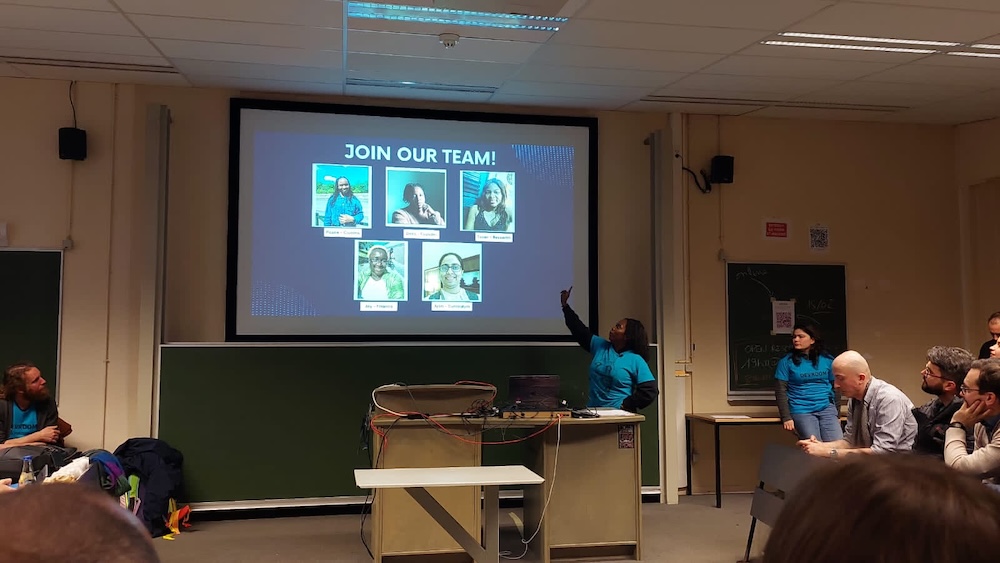
I gave a lightning talk on Pre-seeds, sharing early insights from our ongoing survey on underrepresented groups in research. We have a small team working on this, with a roadmap in place and a survey aimed at understanding what people want in a course like Pre-seeds. This was a great opportunity to showcase our progress and gather feedback.

A conference room, with a speaker, Debs, delivering a talk. Debs is an African woman of average height and dark hair. She is wearing a blue "FOSDEM Organisers" t-shirt over her black long-sleeved sweater, and is pointing at the projected slide. The current slide is a blue page with a title in white text, which reads JOIN OUR TEAM with 5 members of an all-female team in display.

Attendee

Day 1: Open Research Devroom

Some of the standout talks were:

1. “Applying the ‘Do No Harm’ Principle to Open Source Practices and Technology”

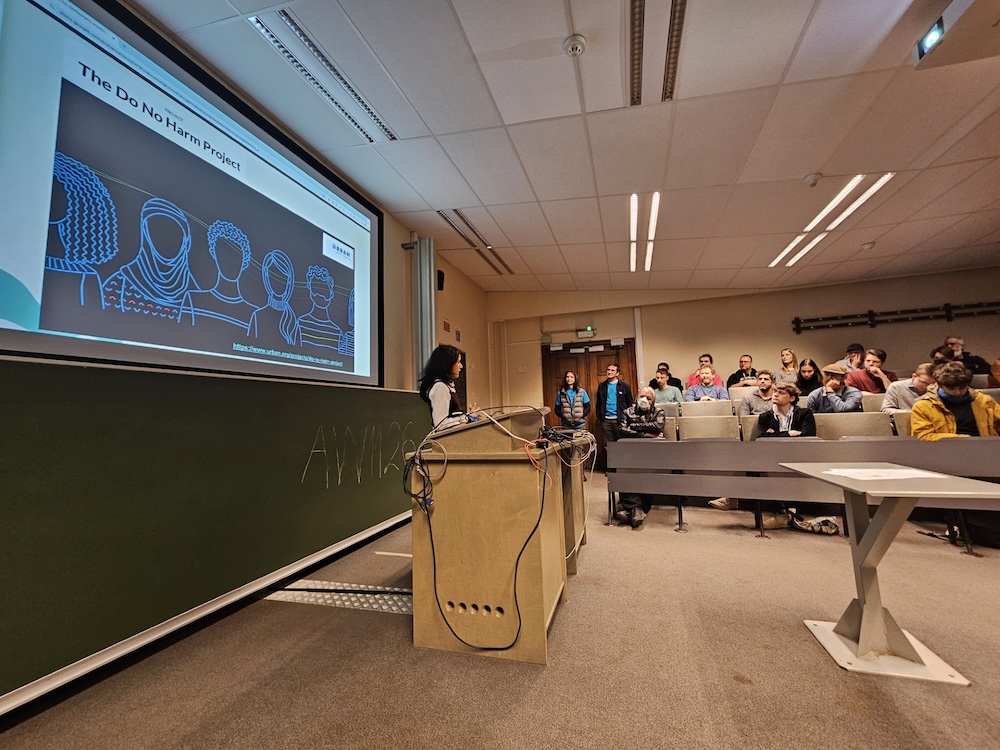
This talk drew inspiration from the Hippocratic Oath, where doctors swear to do no harm. It made me reflect on how, while we can’t prevent all harm in open source, we should strive to minimise intentional and avoidable harm. Dr. Malvika Sharan discussed how openness — our invitation for people to use, remix, and build on our work — can sometimes perpetuate harm. This thought-provoking session initiated deeper discussions about the ethical aspects of open science and responsible research practices.

A conference room photographed from the left side of the room, showing a speaker, and some members of the audience. The speaker, Malvika, is an Indian woman of small stature and silky dark hair, wearing a white long-sleeved shirt under a sleeveless maroon dress. She is presenting from a slide that reads The Do No Harm Project
2. JOSSCast: Experimenting with Storytelling in Open Research

Abigail Cabunoc Mayes and Arfon Smith spoke about their experiment with JOSSCast, a podcast designed to connect researchers, developers, and contributors through storytelling. They shared insights into what worked, what didn’t, and how podcasts can strengthen open research by engaging both technical and non-technical audiences. This session reinforced the power of storytelling in science communication and community-building.

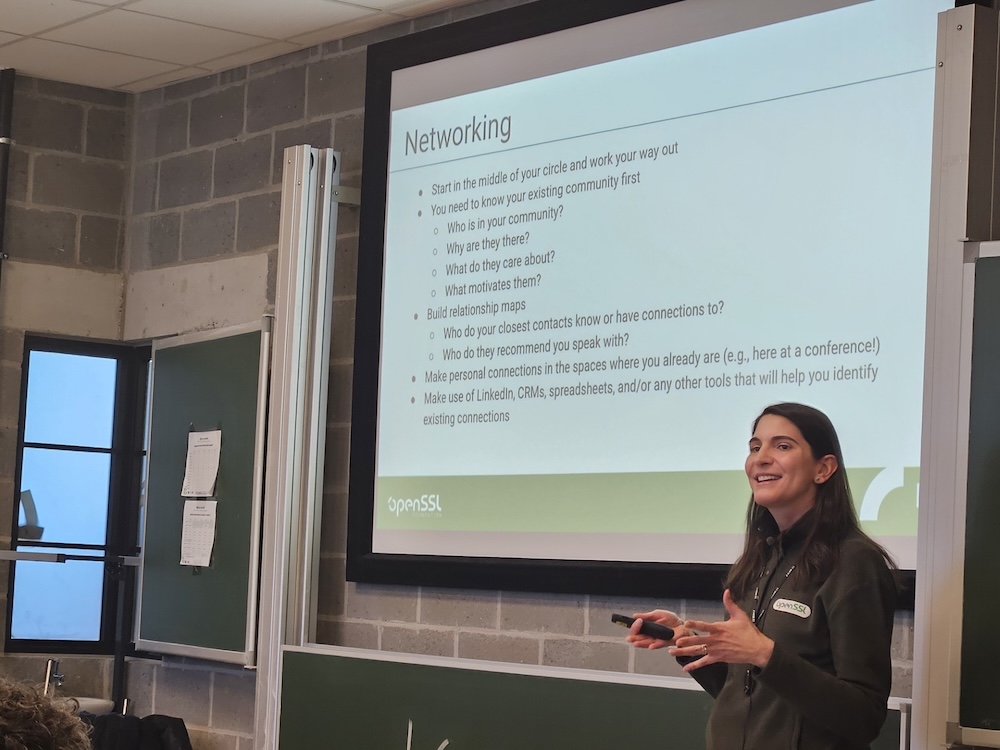
Image shows a speaker, Amy Parker, in front of a well-lit classroom, presenting on "Three Keys to Successful Fundraising." Amy is a white woman with dark hair, wearing an OpenSSL sweater and a bright smile. The slide projected behind her is titled "Networking" and shares on the importance of building connections and relationships.

Day 2: Funders Devroom

The highlights of my day were:

1. “Storytelling, Networking, and Strategy: Three Keys to Successful Fundraising” by Amy Parker.

This was easily my favourite session of the day. She broke down fundraising success into three key components: “the right ask (Storytelling) to the right person (Networking) at the right time (Strategy).” It was a brilliant talk on how to align these elements to secure funding.

2. Funders Devroom organisers AMA Session

I was looking forward to Emmy Tsang’s talk on “Funding the FOSS Ecosystem”, but unfortunately, it was canceled due to her Eurostar delay. That was heartbreaking. However, the Devroom organisers salvaged the situation with an impromptu Ask Me Anything (AMA) session.

3. “Small Seeds — Why Funding New Ideas Matters”

This talk by Marie Kreil and Marie-Lena Wiese (of Prototype Fund) struck a personal chord. They emphasised the importance of supporting young and novel ideas, which resonated with me as I work on Pre-seeds.

4. “When is it Right to Say No to Funding?” by Karen Sandler.

It was a surprising but essential session. In a room with people trying to secure funding, this talk took a different approach — outlining cases where declining funding is the better choice, such as misaligned values, unreasonable workloads, or funders attempting to rewrite the purpose of a project.

The FOSDEM Maze

The sheer size of FOSDEM was overwhelming — multiple buildings, endless rooms, and long queues outside popular Devrooms. Trying to navigate was a bit daunting for a first timer, and I imagine this might be the case even for people who are already familiar with how FOSDEM works.

However, one of the best things about FOSDEM is that all talks are recorded. So, when the chaos becomes too much, you can take a break, grab some waffles, and catch up later.

Also, I can’t not mention ‘sticker heaven’ — There was an entire section dedicated to stickers, and I wanted one (or six) of everything. I need more laptops to put these on!

The Friendships

One of the best parts of FOSDEM was reconnecting with friends and meeting new people:

  • My friend and SSI brother, David Luiz, gave me the most amazing hug — thank you!
  • Sara Petti and I snuck into the Funders Devroom, sat through talks, and chatted about life.
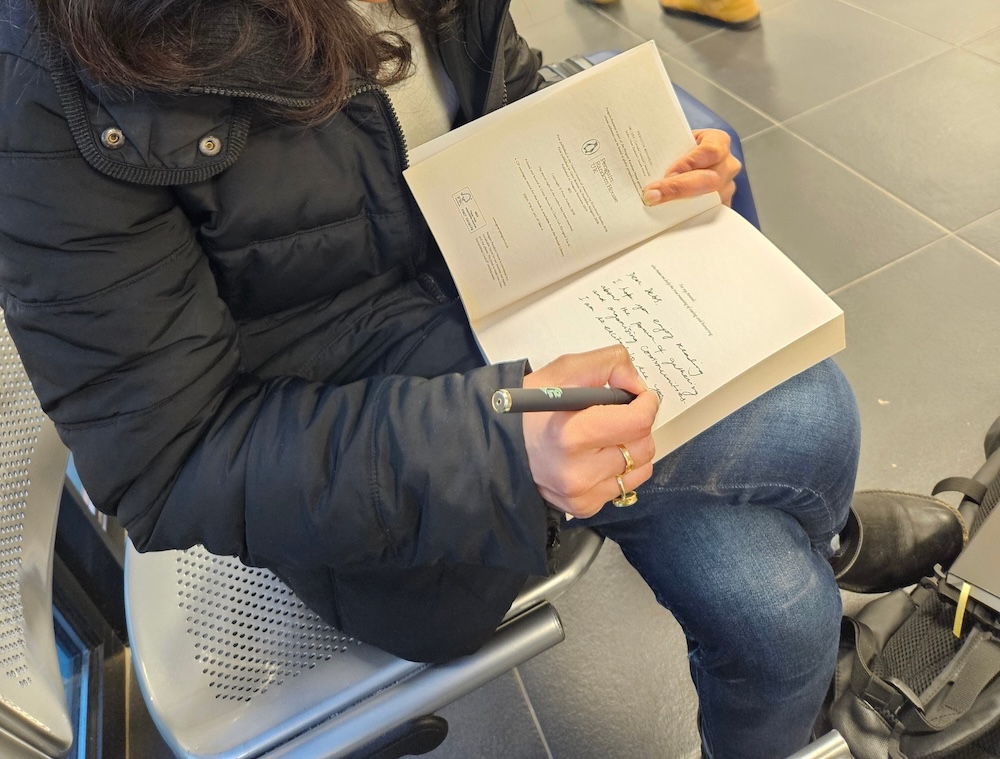
  • Malvika Sharan treated me to lunch on both days, unaware of how much that “small” gesture meant to me. Thank you for the book!
A woman wearing jeans and a black winter jacket sits on a metal chair, with her right leg crossed over the left. An open book is placed on her leg, and she is writing a note on the second preliminary page of the book, with a black pen.
  • Meeting the Open Research Devroom team in person was great too, as they were all welcoming and kind.
  • I finally got to chat with Ruth Ikegah, someone I’ve admired from afar for her efforts to represent Africa in tech.
  • The GitHub Maintainers Afterparty was another highlight — I hung out with Duncan Hall and met Ruth Cheesley, whose calm demeanour was exactly what I needed after two intense days of FOSDEM-ing.

Finally…

I regret not being able to attend CHAOSSCon25, but will try extra hard to be there come 2026 — even though that outcome is not mine to decide.

I also can’t attend the German RSE Conference (25–27th) to present my poster because my visa is only valid until the 21st.

Despite the challenges of getting to FOSDEM’25, it was worth every moment. From speaking and organising to attending brilliant sessions and making meaningful connections, this experience will stay with me for a long time.

Until next time, Brussels!


HomeNews and blogs hub

CarpentriesOffline at CCHB24

Bookmark this page Bookmarked

CarpentriesOffline at CCHB24

Author(s)
Jannetta Steyn

Jannetta Steyn

SSI fellow

Posted on 3 March 2025

Estimated read time: 7 min
Sections in this article
Share on blog/article:
LinkedIn

CarpentriesOffline at CCHB24

The Carpentries logo, wires

I was fortunate enough to get my request for funding to attend CarpentryConnect Heidelberg submitted and approved just before the major clamp down on expenses at my university. Just as well as I had two sessions, a workshop and a mini hackathon, accepted. My next bit of fortune came when the Software Sustainability Institute approved funding, from the Further Development Fund, to purchase more Raspberry Pis (and some peripherals) which could be used for the workshop as well as further development of the miniHPC which is part of my SSI Fellowship project.

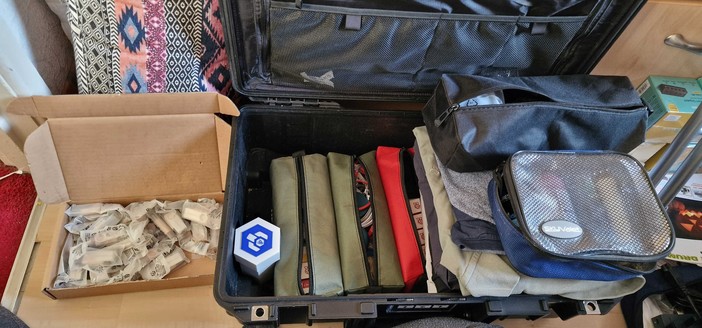
I boarded the plane with probably enough computing power to send a rover to Mars, let alone a flight to Germany from England. From the beginning, I did not want to have the hardware put in the hold luggage because if the airline decided to lose my luggage I’d end up not being able to run the workshop. I bought a really fancy protective case but as I got closer to the departure date I realised that the case itself was very heavy and there was no way I was going to get everything I needed into the hand luggage with the case’s extra weight. I also decided that I didn’t want to check any other luggage in since that would mean lugging several items between trains, planes and automobiles on the several legs between Durham, UK, and Heidelberg, Germany. I was pretty impressed with myself when I managed to pack 10+ Raspberry Pis, five mini network switches, 3 Anker charging stations, loads of ethernet cables, USB cables, USB to Ethernet connectors and whatnot, AND all my clothes in a carry-on case and a backpack. There was one thing I couldn’t take along as I was worried it would break and that was a little monitor. And then there was one thing that I, somehow, forgot and that was an HDMI to micro HDMI cable.

Packing for CCHB25.

Packing for CCHB25. This is all the stuff that I had to take along. In the end, I didn’t use the hard case which you see in the photo because it is just too heavy. I used a normal carry on of about the same size and I packed my clothes in a small backpack.

Apart from having had to run from what felt like the west to the east of the Netherlands, through Amsterdam airport because my first flight was late and then to freeze at the station in Frankfurt because the train was delayed, the trip went really well. I managed to, successfully, lug all 17kg of the allowed 12kg of hand luggage all the way to Germany and back with no complaints, extra charges or dislocated shoulders.

The conference itself was really good and I thoroughly enjoyed myself. I could only attend the keynotes and poster session because, obviously, I had my sessions to deliver at the other times. The keynote speakers were Radhika Khetani, Yanina Bellini Saibene and Malvika Sharan. It was such a privilege to hear them speak in person.

The mini hackathon was on the last day. There were only four of us but I think we managed to get a few things done. Redesigning the CarpentriesOffline website has been on my list for a long time and although we didn’t get much done I did come away from the session with some solid ideas and a good deal of motivation for the redesign.

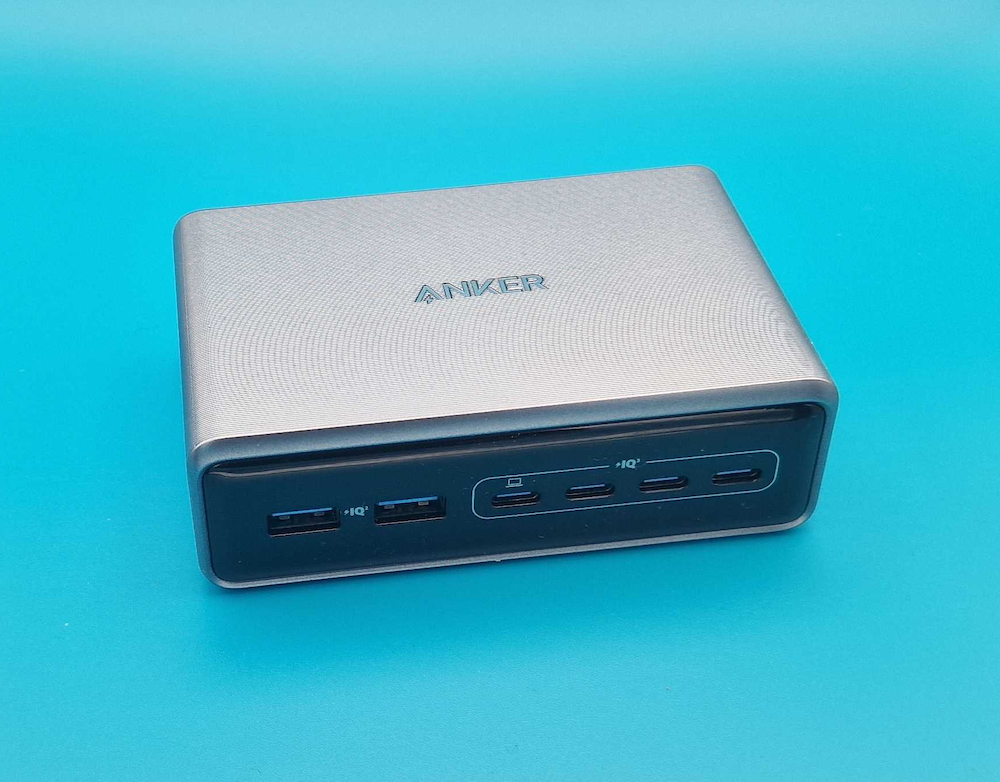
My plan for the workshop was as follows. I set a limit of 10 people for the workshop because I have 10 Raspberry Pi 5s. I also have 5 mini USB switches. When I realised that the power supplies I ordered for the RPis would not work in Germany, I returned them and bought some Anker USB power banks. Each power bank could supply up to 200W distributed between its six ports (2 USBC and 4 USB A). I have an RPi 4 which runs RaspAP and could act as an access point. If RaspAp won’t connect to Eduroam there is the option to tether from a mobile phone connected to either Eduroam or data (if all else fails). Attendees were asked to bring laptops and I had a few USB to ethernet converters for those new laptops that do not have Etherports.

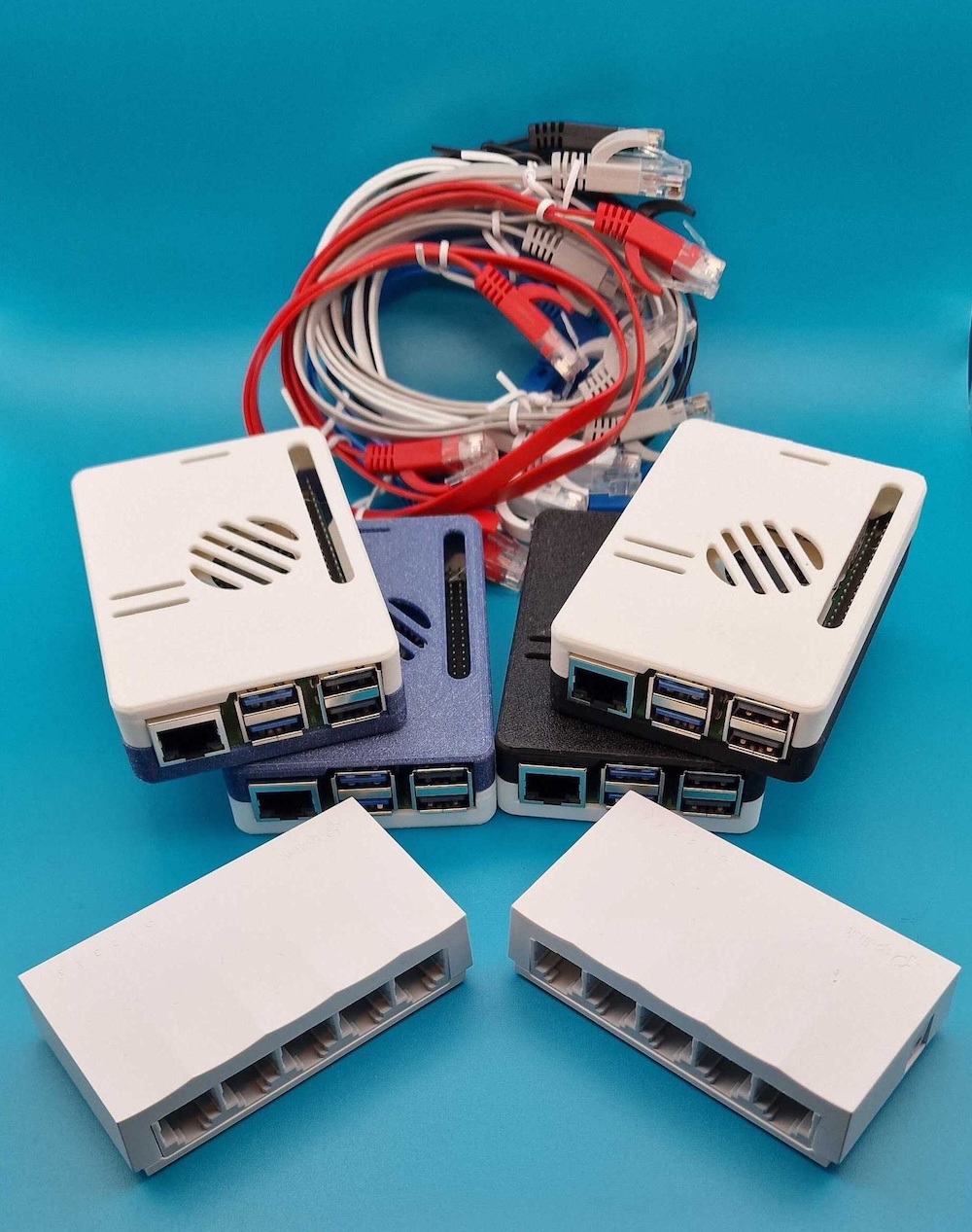
Four Raspberry Pi 5s, two mini ethernet switches and ethernet cables.

Four Raspberry Pi 5s, two mini ethernet switches and ethernet cables.

I pre-prepared 10 SD cards, five for login nodes and five for compute nodes. Attendees had to work in pairs, using two RPi 5s which they had to connect to a mini switch. One loaded with the login node SD card and the other with the compute node SD card. One laptop also had to be connected to the switch as this would be the only way to connect to the RPis if, for some reason, they wouldn’t connect to the RaspAP.

Anker USB Power Bank

I would say that things went according to plan up to this point. But, the moment we switched the RPis on it all went to pot! Some of the RPis wouldn’t boot. I discovered beforehand that, sometimes, the RPis need their EPROMS reflashed and I had an SD card at hand for that. Despite the reflashing, some still wouldn’t boot. We suspected that some of the SD cards might have a problem, so we went through the steps of installing the Raspberry Pi Imager and writing pre-prepared node images to the cards. Some RPis would still not boot, so we thought that my node image might be faulty. We then wrote the RPi Os Lite to the SD cards and attendees started following my lesson notes to install the software manually. We still had some RPis that wouldn’t boot at all and some problematic SD cards. Some of the RPis would boot but not connect to the RaspAP access point and without a monitor and a keyboard we were stuck.

One of the attendees managed to get the login and compute node to work. My hope was that it could be done without access to the Internet but at this point, we realised that, because the nodes were set up to use EESSI, they still needed Internet access.

My worry was that attendees would have been disappointed with the session but they all said that it was good fun to get their hands on the RPis and to be able to work through the process of trying to get everything up and running.

We did learn several lessons with regards to what works and what can go wrong and all this experience will be documented (eventually) on the CarpentriesOffline website. I am still looking for a server where I can make the RPi OS images available for anyone to download. They are too large for GitHub, unless one zips and splits the files which I don’t really want to do. In the meantime, do keep an eye on the website as I have been updating it over the last couple of months.

As always, I would welcome any help and/or suggestions with our CarpentriesOffline projects. Do get in touch if you are interested. You should be able to track me down on the Carpentries and RSE Slack workspaces and I also lurk around on Mastodon, BlueSky and LinkedIn.


HomeNews and blogs hub

UK activity blooms at European ‘CarpentryConnect’ community event in Heidelberg, Germany

Bookmark this page Bookmarked

UK activity blooms at European ‘CarpentryConnect’ community event in Heidelberg, Germany

Author(s)
Phil Reed Profile Picture

Phil Reed

SSI fellow

Posted on 30 January 2025

Estimated read time: 5 min
Sections in this article
Share on blog/article:
LinkedIn

UK activity blooms at European ‘CarpentryConnect’ community event in Heidelberg, Germany

Panorama of Heidelberg castle and old town.

Panorama of Heidelberg castle and old town. Photograph by Phil Reed.

From 12 to 14 November 2024, I attended the joint BioNT and The Carpentries event titled ‘CarpentryConnect Heidelberg 2024’. Participants travelled from all over Europe for this conference and mini hackathon, with one keynote speaker flying in from South America. In this blog post, I will look at the presenters with UK connections, the keynote presentations, sharing my thoughts and highlights, then look ahead at what is next for the community of research software trainers. Thank you to BioIndustry 4.0 who funded my travel. I presented some of these reflections at the UK monthly Carpentries call on 17 December 2024.

About the host

EMBL campus and Heidelberg city.

Photos of EMBL campus and Heidelberg city. 

The event took place at EMBL (European Molecular Biology Lab) in the city of Heidelberg in Germany and was hosted by BioNT (Bio Network for Training). BioNT is a collective that empowers digital skills in life sciences, particularly working with biotech and biomedicine SMEs, and everyone is welcome. They have provided quality training and community development with over 10 years of Carpentries activity. My travel founder was BioIndustry 4.0 who are revolutionising technology for a sustainable future and I'm very grateful for their support.

Many presenters with UK connections

Seven of the presenters had UK connections:

  • Malvika Sharan (Turing Institute, OLS) gave the first keynote presentation.
  • Matthew Bluteau (UK Atomic Energy Authority) co-hosted a hackathon project and presented a poster.
  • Aleksandra Nenadic (SSI), Jannetta Steyn (Newcastle University) and Samantha Ahern (UCL) each co-hosted a hackathon project, workshops and breakout sessions.
  • I presented a lightning talk.

These presenters (and the other UK attendees) played an important role in the overall engagement and delivery of the event.

My highlights and discussion points

In Malvika Sharan’s keynote (Carpentering Communities), Malvika spoke about lessons learned from working with communities in open science. Throughout these lessons, she considered two concurrent aspects: community and community management. In other words, there are different lessons to learn if you are a member of a community as opposed to being a manager or organiser of a community. A lesson which stood out for me is “clarity is kindness”; where ‘clarity’ means different things to different people. As community members, when new ideas merge, we must be strategic about where we put our time. As community managers, the focus is different; for example, we should set up clear processes for on- and off-boarding members. 

Hugo Gruson (data.org) described how the Carpentries Workbench (latest lesson template) is being used in other communities already, including universities and businesses on both sides of the Atlantic. He found it tricky to identify all these users since there is no registry or requirement for people to share their intentions when they fork the open-source code. I have observed equivalent concerns with my work when we wish to audit or communicate with everyone who has adapted our team’s code. It was helpful to hear Hugo’s approach to the problem.

The third keynote speaker was Yanina Bellini Saibene (rOpenSci, LatinR).  

Yanina spoke about her experience of building connections through community participation. She mentioned how she applied the CSCCE Community Participation Model which describes four modes of member engagement that can occur within a community. These modes are: convey/consume, contribute, collaborate, and co-create. I will take some more time to study this model to see how it could improve my own work.

Sarah Kaspar (EMBL) led a breakout session looking at tools for creating training materials, whether the materials are for Carpentries-related work or otherwise. We discussed how there is much overlap between the tools and their applications, there is no one-size-fits-all solution. We created a shared list of free products to create scalable vector graphics (SVG) that can be used in documentation, illustration and web design. I have since used one of these (draw.io) in documentation I maintain for the ELIXIR TeSS platform.

Prosperity for early 2025

Participants enjoying a visit to the EMBL exhibitions.

Participants enjoying a visit to the EMBL exhibitions.

All of the mini hackathon projects progressed, not always in the ways that people anticipated. Most relevant to the SSI are the materials being developed regarding lesson translation and how to develop intermediate level training.  Several community events are planned in the coming weeks and months, relating to the activity in Heidelberg. For example, there are community calls in January 2025 for how to move Software Carpentry forward, and there are monthly calls for progressing CarpentriesOffline and miniHPC. Details can be found in my December 2024 UK Carpentries presentation, slide 7

Conclusions

I could see from attending CarpentryConnect that The Carpentries community is maturing, its priorities are adjusting since I was first involved in 2018. The scope is expanding but the core message remains true. I made more connections than I expected relating to my core job; I am a Research Community and Training Manager, mostly facilitating life sciences research data, tools and training. It was great to overlap with people I know through ELIXIR Europe, some of whom I had never met face-to-face.  

I found inspiration on how to better run my own mini hackathons, events and other activities, experiencing how the CarpentryConnect sessions were so well organised and planned.  Finally, I could see how there is no one-size-fits-all solution to many challenges yet we can still work together harmoniously and collaboratively.


HomeNews and blogs hub

Introducing the 2025 Fellowship Cohort: Insights and Celebrations

Bookmark this page Bookmarked

Introducing the 2025 Fellowship Cohort: Insights and Celebrations

Author(s)
Oscar Seip

Oscar Seip

Research Community Manager

Posted on 12 December 2024

Estimated read time: 8 min
Sections in this article
Share on blog/article:
LinkedIn

Introducing the 2025 Fellowship Cohort: Insights and Celebrations

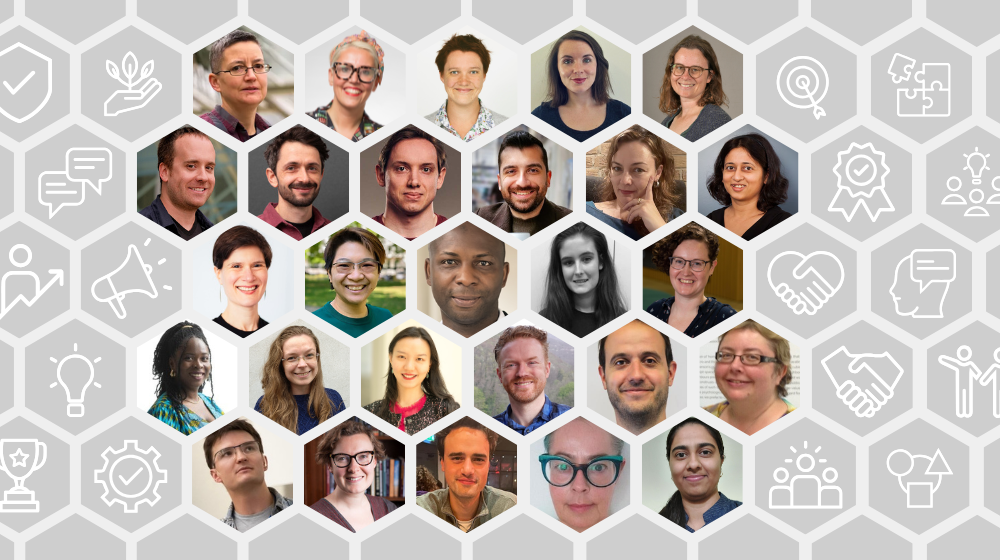
SSI Fellows 2025 collage

The SSI Fellowship Programme supports passionate individuals in research and software, empowering them as ambassadors of good practice to shape the future of research software. The selection process for this year’s cohort has now ended and we’re excited to introduce the 2025 Fellows and share their inspiring plans.  

For the 2025 cohort, we received 69 applications from 43 institutions, spanning 40 research areas and 11 countries. After rigorous review — 207 assessments by 29 reviewers, mostly Fellows — we shortlisted 36 candidates.  

The shortlisted applicants participated in our Online Selection Day, featuring group discussions and event planning activities that tested collaboration, communication, and contribution. Based on these activities and initial scores, 27 exceptional new Fellows were selected to join the Fellowship Programme.

Insights from the 2025 Selection  

This year’s recruitment cycle brought plenty of exciting developments, as well as some areas where we still have room to grow:  

  • Improving support: We’ve worked hard to improve support for prospective applicants by updating our website for full transparency, sharing eligibility criteria and, for the first time, the shortlisting and online selection day criteria. We also hosted an Online Launch Webinar with 180 registrants, organised three Ask Me Anything sessions, and received invaluable support from 10 current Fellows who dedicated their time to assist applicants with their plans.
  • Broadening horizons: The 2025 cohort includes Fellows from nine institutions that had never been represented before. We also welcomed Fellows from previously underrepresented fields in the Fellowship Programme, including the creative sector, GLAM (Galleries, Libraries, Archives, and Museums), Subjects Allied to Medicine, and Social Studies.
  • Gender and career trends: While most applicants are men, women and nonbinary candidates had higher success rates in the selection process, making up 66% of selected Fellows. Mid-career researchers made up the largest and most successful group, but we’d love to see more junior and early-career researchers apply in future years.  
  • RSEs leading the way: Nearly half (42%) of shortlisted candidates are RSEs, with another 17% holding roles like data steward or application specialist. While it’s encouraging to see these critical roles gaining recognition and confidence to step into leadership positions, it’s important to emphasise that the Fellowship Programme is open to a wide range of applicants from all backgrounds (including researchers who code to those who are advocates and supporters of better software practice whether they code or not).

Driving Innovation: The Plans of the 2025 SSI Fellows

The new Fellows have exciting plans that showcase the wide impact of the Fellowship Programme. They’re building diverse Communities of Practice (CoPs) focused on areas like the FAIR principles, high-performance computing, LGBTQ+ networks in the R community, and collaborations between artists and AI researchers. 

The new cohort of Fellows also aims to boost open-source contributions, upskill GLAM professionals, and develop tools for environmental monitoring and historical map digitisation. Their global collaborations span Finland, the UK, and Asia, while addressing mental health and inclusivity in the RSE community. Their projects cover AI ethics, sustainable software repositories, and taxonomic research tools, all advancing research software and open science.

(The new 2025 Fellows are listed here in alphabetical order by first name)

Alessandro Felder

Bridging the gap between microscopists and research software engineers to foster collaboration and innovation.

Arielle Bennett

Exploring the culture of open source contributions in academia.

Deborah Udoh

Developing the Pre-seeds (Research 101) course to make research education accessible and foster diversity in the Research Software Engineering community.

Dylan Adlard

Improving collaboration and software sustainability in clinical microbiology.

Ella Kaye

Nurturing rainbowR: a Community of Practice for LGBTQ+ folks who code in R.

Esther Plomp

Facilitating contributions of both paid and volunteer contributors to the Turing Way.

Gerui Wang

Building a Community of Practice to connect artists and AI researchers through conferences, publications, and seminars, promoting collaboration and best practices.

Godwin Yeboah

Establishing a Community of Digital Humanities Research Software Engineers in the Midlands.

Hui Ling Wong

Boosting research reproducibility with short, accessible talks on software tools like Git, while fostering a collaborative community around effective software practices in academia.

Jack Atkinson

Investigating how the publication of research driven by software could be improved, in line with becoming more FAIR.

Jo Walsh

Leading workshops on the development of open source hardware for environmental monitoring.

Joe Shingleton

Building AI resilience within the RSE community.

Jyoti Bhogal

Investigating the Research Software Engineering (RSEng) landscape in Asia.

Katherine McDonough

Building a community and long-term sustainability plan for the MapReader software library.

Laura Shemilt

Establishing a community around Cloud-Native technology and its uses. 

Melissa Nolas

Investigating the possibilities and limitations of co-developing a social science visual research informed model that allows for the classification of large batches of photographs. 

Mike Simpson

Advocating for mental health in the RSE community and other similar professions through resources, initiatives, and open conversations.

Milena Dobreva

Empowering Communities of Practice focused on "Collections as Data" with educational resources on the sustainability of software tools supporting datafication.

Nicky Nicolson

Building a community focused on defining what software tools we need to use digital specimen data to accelerate taxonomic research to describe the world's plant species and protect them from threats.

Niko Sirmpilatze

Establishing a Community of Practice for Open Source tools in animal behaviour with training for early-career researchers.

Phil Reed

Growing the RSE Competencies Toolkit for digital humanities and GLAM sectors while exchanging knowledge with life sciences.

Rachael Stickland

Promote and enhance the activities of the Physiopy community.

Robert Chisholm

Establishing a community of practice on Reasonable Performance Computing, dedicated to the research, development and advocacy of performance best practices.

Rosa Filgueira

Leveraging AI and NLP to develop tools that enhance the FAIRness of software repositories, while fostering a collaborative community to advance repository analysis and usability in research.

Samantha Wittke

Growing the RSE community in Finland by bringing people together, sharing ideas, and learning from others to support better research software practices.

Sangeeta Bhatia

Leading a brainstorming workshop on collection and use of non-pharmaceutical data for epidemiology.

Saskia Lawson-Tovey

Expanding FAIR training, connecting research technical professionals (RTPs) and showcasing RTP careers, and hosting a national event to advance FAIR data in musculoskeletal research.

Challenges and Opportunities  

While we’re celebrating this year’s successes, we’re also reflecting on where we can improve:  

  • Improving diversity: While applications show a trend of increased ethnic diversity, the percentage of applicants from mixed, multiple, and other ethnic groups decreases during shortlisting and selection. We are reviewing our selection procedures to identify any barriers and make sure we are working towards making our processes more fair and inclusive, reflecting the diversity we aim to support.
  • Reaching new disciplines: While Computer Sciences remains dominant, we’ve seen a dip in Biological and Physical Sciences applications, and continue to see underrepresentation from the Social Sciences. On the other hand, our outreach to the Arts and Humanities has paid off, with strong representation from that group in this year’s cohort. Expanding our efforts to engage other underrepresented fields for future calls will help build a more diverse and multidisciplinary Fellowship Programme that addresses the full range of research software needs.
  • Refining evaluation: We’ve seen differences between shortlisting scores and final selections, indicating that our evaluation criteria could be clearer and more consistent. To address this, we’re exploring ways to refine our processes to ensure that the most promising candidates are selected. This review will help strengthen the robustness and transparency of our selection process, ensuring that it accurately reflects the potential and contribution of each applicant.

Looking Ahead  

The SSI Fellowship Programme is about more than just professional development. It’s about building a dynamic, supported, and inclusive research software community. The 2025 cohort embodies this mission with their diverse backgrounds, ambitious projects, and commitment to making a difference.  

To our new Fellows: welcome to the SSI community! We can’t wait to see how your work takes shape and the positive change you’ll inspire.   

To everyone else: keep an eye out for updates on these exciting projects and if you’re interested in what they are doing consider getting in touch via fellows-management@software.ac.uk. If you’re passionate about research software, think about applying next year. Together, we can shape the future of sustainable, inclusive, and innovative research software. 

HomeNews and blogs hub

Venezuela, Ecuador, Colombia and Peru on the podium at CoAfina 2024

Bookmark this page Bookmarked

Venezuela, Ecuador, Colombia and Peru on the podium at CoAfina 2024

Author(s)
Reina Camacho Toro

Reina Camacho Toro

SSI fellow

Ysabel Briceño

Alexander Martínez

Posted on 30 October 2024

Estimated read time: 5 min
Sections in this article
Share on blog/article:
LinkedIn

Venezuela, Ecuador, Colombia and Peru on the podium at CoAfina 2024

CoAfina 2024, people sitting around a desk, a lightbulb over their heads

Migration and Xenophobia, microplastics, public domain works and wetlands were the four major social impact themes tackled by the winning teams of CoAfina 2024, the Latin American science and education hackathon, held on 19, 20 and 21 July. They convinced the judging panel by the quality of the solutions proposed using open access data. In this third edition, the podium was made up of students from seven universities in Venezuela, Ecuador, Colombia and Peru.

Eighty students from more than forty universities in Latin America dared to form multidisciplinary and multicultural teams to remotely solve one of the twelve challenges proposed in different scientific and humanistic areas of social impact, presented by professionals and researchers from different parts of the world. CoAfina thus achieves its mission: to create communities in Latin America and train new generations around knowledge and open data. See the challenges presented in the third edition of CoAfina, here.

The first place was awarded to the team called “Función Delta Pizza“, made up of four physics students from the Universidad Centroccidental Lisandro Alvarado in Venezuela: Adriana Araña, Dalia García, Víctor Sánchez, and Bárbara Guanipa, who provided a solution to the detection of negative topics and discourses presented in the news of Colombian newspapers about Venezuelan migration. This challenge was presented by Mairene Tobón, a member of the Entre Dos Tierras Foundation in Colombia.

Second place went to the team “Neotropical 2.0″, made up of students from the Universidad Simón Bolívar, Universidad de Los Andes and Universidad Central de Venezuela (Venezuela); and the Escuela Superior Politécnica del Chimborazo, in Ecuador. The areas of study of the participants in this team were: biology (Emilio Toledo and Rubén Niño), physics (Andrés Caña and Cristian Usca) and anthropology (Isabella Sánchez). This team convinced the jury with their solution route for the citizen classification of microplastics, a challenge presented by Marga Rivas from the University of Cadiz (Spain) and Iskya Garcia from Creative Commons Venezuela.

Third place was awarded to the “Book Finders” team, made up of four Venezuelan students from the Universidad de Los Andes, Universidad Nacional Experimental del Transporte and Universidad Central de Venezuela, in the areas of physics (Reinaldo Díaz, Juan Martínez and Richard Brito) and engineering (Anibal Pico). This team focused its solution on the idea of optimising a Venezuelan search tool for public domain works, scalable to other countries, a challenge created by José Luis Mendoza from the Latin American Centre for Internet Research in Venezuela.

Finally, the team called “Data Fixers” received a special mention for the solution to the idea of citizen recognition of wetland transformations in Colombia, a challenge created by Alejandra Melfo and Yelitza León, from the Universidad de Los Andes (Venezuela) and Óscar Altuve from the Universidad Simón Bolívar de Venezuela. This team was made up of two systems engineering students from the Universidad Autónoma de Bucaramanga (Colombia): Adrián Parra and Luis Jaimes; a physics student from the Universidad Nacional de Trujillo (Peru); and an electronic engineering student from the Universidad Nacional de Ingeniería (Peru).

Highlights of CoAfina 2024

David Sierra, professor at the Technological University of Bolivar (Colombia), who proposed two challenges at CoAfina 2024, expressed his satisfaction with the enthusiasm and creativity that the teams brought to their proposals: ‘I am amazed by the agility of these students from all over the Americas, by the willingness they have and the ideas they generate as a team,’ said Sierra. For her part, Iskya García, a challenger and member of the CoAfina organising committee, explicitly congratulated all the teams for their commitment to accepting something that transcends their area of expertise and described it as an expression of taking on a role as an agent of change in Latin America.

Finally, Reina Camacho, researcher at the French National Research Centre (CNRS) and one of the coordinators of CoAfina, underlined the capacity of the new generations in Latin America to actively participate in good practices that constitute different ways of doing science: ‘We are excited to know that some of the challenges that have been solved in these three editions can become prototypes to be developed in the medium term, with the participation of the community that joins in CoAfina’, an initiative that has already compiled some twenty challenges in the use of open data and that can become examples to be replicated in Latin America.

The awards ceremony culminated with a thank you to the organisations that have been strengthening the sustainability of this initiative. CoAfina is co-organised by LA-CoNGA Physics in collaboration with Creative Commons Venezuela, RedCLARA and the Academic Network of Ecuador (CEDIA). This edition was funded by the Open Research Funders Group (ORFG), inait.ai, the Software Sustainability Institute (SSI) and the Open Life Science (OLS) organisation. ‘See you at the next edition’ was the promise of this community that is growing every year.


HomeNews and blogs hub

Fellows Newsletter: September 2024

Bookmark this page Bookmarked

Fellows Newsletter: September 2024

Author(s)

Catherine Inglis

Posted on 19 September 2024

Estimated read time: 4 min
Sections in this article
Share on blog/article:
LinkedIn

Fellows Newsletter: September 2024

A series of red outlined envelopes with the icon of the SSI.

Welcome to this month's SSI Fellows Newsletter which shares activities and opportunities taking place within the SSI Fellows' community. Read on for:

  • Fellows' Spotlight: Loïc Lannelongue
  • July Community Call recap
  • Fellows' and related activities
  • Upcoming events and calls

Fellows’ Spotlight

Loïc Lannelongue, Research Associate, University of Cambridge

Updates from call 

The call was an opportunity to update the SSI community on the recent launch of Green DiSC, a new certification scheme which provides a roadmap for research groups and institutions who want to tackle the environmental impacts of their computing activities. Three levels of certifications will be available: Bronze, Silver and Gold. The criteria were selected following some key principles: evidence-based, to ensure that the criteria included have the maximum impact on research sustainability while favouring engagement with the framework; open access, so that all scientists can engage with this framework; iterative, so that the criteria developed evolve as institutions’ policies change and our understanding of environmental impacts progresses; community-based, to leverage the great resources being designed internally by different institutions.

Green DiSC was launched at the end of June, and has received very positive feedback from the community, so we are now working on building capacity to be able to onboard as many groups as possible.

  • My non-work highlight: Going down the DIY rabbit hole to redecorate the whole house (starting from a very low baseline, putting a picture up on a wall was the most DIY I had done before that)… who knew there were so many different paint brushes, and paint colours?!
  • My recommendations:
    • The book Atlas of AI by Kate Crawford is a brilliant read to better understand the multiple ways in which modern compute, and AI in particular, affect communities and the environment. The focus on people in particular is striking (if a bit depressing). 
    • And to unwind: the tv show Gray is quite gripping, and a bit different from the usual spy show. 

Community Call Recap

During the July SSI Fellows Community Call, we heard Fellows’ updates from Loïc Lannelongue and Meag Doherty. Loïc‘s presentation, “Green DiSC and the sustainable computing community”, provided an update on his Fellowship project, while Meag talked about life after the Inaugural Fellowship year and how the Fellowship can have an impact on your career. After the presentations, discussions on these topics continued in the break-out rooms. You can watch the recordings of the presentations here.

Fellows’ and related activities

  • Ukrainian section in Glosario - via Olexandr Konovalov, University of St Andrews (2014 Fellow): “In summer I have coordinated a student group project to add Ukrainian translation to Glosario - a multilingual glossary for computing and data science terms, established by the Carpentries. We have translated almost 100 terms, and now Ukrainian is in the top 5 most represented in Glosario languages. There are more terms to translate - contributors welcome!”.
  • Workshop on the next generation of environmental models - via Sam Harrison, UK Centre for Ecology & Hydrology (2022 Fellow): “SSI Fellow Sam Harrison is coordinating a 4-day retreat in the Lake District this Autumn, with the goal of envisioning the future models of the natural world. Topics will include digital twins, underpinning software engineering and architecture, scalability and optimisation, collaborative development platforms, FAIR software, environmental sustainability of computing, and the impact of AI. Registrations for the workshop are already full (you can still register, but you will be placed on a waiting list), but we have several people involved in the SSI community involved, and I am sure outcomes from the workshop will be of interest to the SSI.”

Upcoming events and calls

HomeNews and blogs hub

Can open science and science diplomacy help each other?

Bookmark this page Bookmarked

Can open science and science diplomacy help each other?

Author(s)
Reina Camacho Toro

Reina Camacho Toro

SSI fellow

Posted on 24 July 2024

Estimated read time: 3 min
Sections in this article
Share on blog/article:
LinkedIn

Can open science and science diplomacy help each other?

Three figures holding up three pieces of a jigsaw puzzle.

Open Science is key for innovation, efficiency, accessibility and transparency. In the last years, many great open science initiatives have been launched in all areas including open access to publications, research data, open-source software, open collaboration, open hardware, open peer review, educational resources, citizen science and even research crowdfunding. Making open science a norm will need to support these button-up initiatives while at the same time making sure to bridge them with other important open science stakeholders such as public policy and decision-makers. This transition to open science can be greatly facilitated by leveraging diplomatic capabilities to bridge national and international interests, which is the realm of a field known as science diplomacy. 

How can science diplomacy support and strengthen the open science movement? How can open science be exploited for decision-making support, knowledge resources and science diplomacy governance frameworks? 

In the last months, in collaboration with the Science Diplomacy Network for Latin America and the Caribbean (DiploCientífica), we have performed a study to shed some light on these questions. This research employed a quantitative survey of 50 organisations promoting open science in Latin America and two qualitative focus groups. Latin America has been a leader in pioneering open access strategies and has shown a significant interest in science diplomacy. The study aims to assess how these organisations use science diplomacy to achieve their goals. By shedding light on the current landscape and dynamics of open science in Latin America, we hope to enhance science diplomacy, facilitate informed decision-making and the formulation of open science policies in the region. 

The study considered three axes in order to map the activities of the organisations in relationship with science diplomacy: 1) “access”, i.e. do their activities secure access to resources through bilateral or multilateral collaborations? 2) “promotion”, i.e. do the organisations promote national or regional open science work in global discussions? And 3) “influence”, i.e. do they interact with society, policymakers, and decision-makers at national or regional levels? The study found that “access” through training activities was the primary contribution of open science actors within the science diplomacy framework. International “promotion” of national and regional open science best practices was the second highest ranked contribution. In that sense, the region’s long-standing tradition of open access to publications and the establishment of open-access repositories is commonly used as an example in the international context. 

We invite you to read this study’s results, where the team also provided a set of recommendations for organisations promoting open science in Latin America and public policy and decision-makers regarding the need for infrastructure, recognition and funding. 

Subscribe to Fellows
Back to Top Button Back to top